 The U.S. Supreme Court
Senate Votes 53-47 To Bring SCOTUS Nominee To Final Floor Vote
 Judge Ketanji Brown Jackson (screen capture)
CNN: Biden To Nominate Ketanji Brown Jackson To Supreme Court
 Judge Ketanji Brown Jackson
Supreme Court Will Hear Case Of Homophobe Refusing Services To Gays Who Never Asked For Them
The U.S. Supreme Court (2021)
Justice Stephen Breyer To Retire From Supreme Court

Justice Stephen Breyer will retire from the Supreme Court at the end of the current term, according to NBC News. Continue reading “Justice Stephen Breyer To Retire From Supreme Court”
News Round-Up: January 24, 2022
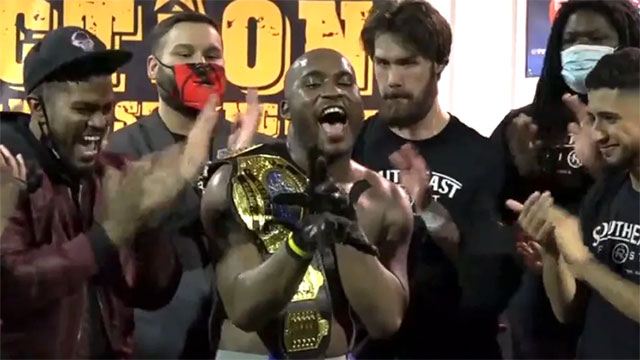
Some news items you might have missed: • Outsports: Pro wrestling history was made Friday night when AC Mack became the first out LGBTQ man to win a world championship. Continue reading “News Round-Up: January 24, 2022”
Supreme Court Rejects Trump Attempt To Block Release Of White House Docs

The Supreme Court has rejected Donald Trump’s attempt to block the release of White House documents to the House committee investigating the violent January 6 invasion of the U.S. Capitol building. Continue reading “Supreme Court Rejects Trump Attempt To Block Release Of White House Docs”
Supreme Court Declines To Block Face Mask Requirement During Air Travel

The U.S. Supreme Court has declined a request to block a federal requirement for wearing face masks during air travel. Continue reading “Supreme Court Declines To Block Face Mask Requirement During Air Travel”
Supreme Court Blocks COVID Vaccine Requirement For Large Businesses
The Supreme Court, by a 6-3 vote, has blocked the Biden administration from enforcing its COVID vaccine requirements for large private companies. However, similar regulations for healthcare workers at medical facilities that take Medicare or Medicaid payments have been allowed to go into effect. Continue reading “Supreme Court Blocks COVID Vaccine Requirement For Large Businesses”
SCOTUS Declines To Hear Appeal For Anti-LGBTQ Florist
 (stock image via Depositphotos)
The U.S. Supreme Court declined to hear an appeal by anti-LGBTQ florist Barronelle Stutzman of Washington state who refused to sell flowers to a same-sex couple for their wedding.
Stutzman’s petition is listed on Friday’s orders list indicating the high court had denied certiorari, or refused to take up the case. No reason was given although the orders note that Justice Thomas, Justice Alito, and Justice Gorsuch would have granted the petition to hear the case. In the Supreme Court, at least four justices have to agree to take up a case.
The decision means the ruling by the Washington Supreme Court will stand.
The sad story began in 2013 when Rob Ingersoll and Curt Freed, longtime customers of Arlene’s Flowers owned by Stutzman, approached the florist for flowers for their dream wedding. Stutzman refused claiming doing so would violate her religious beliefs.
In 2017, the case had made its way up to the Washington state high court which ruled Stutzman had violated the state’s anti-discrimination laws which prohibit discrimination against LGBTQ people in public accommodations. The florist was ordered to pay a $1,000 fine.
Stutzman appealed to the U.S. Supreme Court in 2018 wherein SCOTUS vacated the lower court’s decision and asked the Washington court to review the case in light of a narrow ruling in the case of Jack Phillips, owner of the Colorado bakery Masterpiece Cakeshop.
A year later, in June 2019, the Washington Supreme Court reaffirmed its decision finding there had been no animosity involved against Stutzman in the original ruling.
Today’s decision is the end of the road in terms of legal options for Stutzman.
The Supreme Court is once again effectively saying that non-discrimination laws protecting LGBTQ people can stand.
Now we need them across the country, and in every walk of life. That's why we need the #EqualityActNow. https://t.co/1wFKTbDjbc
— Human Rights Campaign (@HRC) July 2, 2021
Alphonso David, president of Human Rights Campaign, said in a statement, “The Supreme Court has once again said that critical nondiscrimination laws protecting LGBTQ people are legally enforceable and has set a strong and definitive precedent.”
Kristen Waggoner, general counsel for the virulently anti-LGBTQ legal organization Alliance Defending Freedom, called the U.S. Supreme Court’s refusal to hear the case “tragic.”
So ends the saga of Barronelle Stutzman, who the hate group ADF has been fundraising off for the better part of a decade.
She lost before *and* after Masterpiece Cakeshop in the lower courts. LGBTQ nondiscrimination protections aren't going to be totally overturned this week. https://t.co/y8pLVIyYHl
— Zack Ford (@ZackFord) July 2, 2021
This is the third high profile LGBTQ-related case addressed by the Supreme Court.
In June, SCOTUS issued a unanimous but very narrow ruling in favor of Catholic Social Services (CSS) in Philadelphia which had refused to certify same-sex couples who applied to become foster parents.
The ruling was not the broad ‘license to discriminate’ anti-LGBTQ advocates had hoped for. Instead, the justices found in favor of CSS because the city hadn’t applied its own policy of exemptions uniformly. The decision only applies to CSS and its contract with Philadelphia.
And earlier this week, SCOTUS also rejected to hear an appeal by a Virginia school board seeking ban transgender students from using bathrooms that align with their gender identity. That decision sets precedent regarding restroom discrimination in schools in at least five states.
SCOTUS Declines To Hear Challenge To Trans Bathroom Rights https://t.co/fQ3JmnV18N #LGBTQrights #GavinGrimm pic.twitter.com/b3xWUFipWw
— The Randy Report (@randyslovacek) June 28, 2021