Canadian Idol winner Theo Tams (press photo)***Re-upping this post as it didn’t seem to post correctly last night*** Some news items you might have missed: • OutSports: Brock Weston, a 25-year-old college hockey player from Marion University in Font du Lac, Wisconsin, came out to his hockey team and was surprised by the reaction. “People I thought would disown me or become even more cruel were among the first to voice their acceptance.” • NBC News: A top Health and Human Services official who said he was transferred from his post for pushing back on “efforts to fund potentially dangerous drugs promoted by those with political connections” felt pressured to rush access to chloroquine treatments for coronavirus after President Donald Trump had a conversation about it with a mega-rich donor • Out Music: Canadian singer/songwriter and pianist Theo Tams (above) drops his new video “The Last Song” which features the Canadian Idol winner as a character chameleon of sorts, all in the name of self-love and care. “The song represents the moment you realize your own self-worth,” says Tams. “It’s about recognizing you are enough and letting go of the past. Finally.”
• NY Times: The Trump administration is considering cutting back on sharing intelligence with partner countries that criminalize homosexuality as part of a push by the acting director of national intelligence, Richard Grenell, to prod those nations to change their laws. • OUT: On April 26, the Schitt’s Creek cast will join other Canadian celebrities in a commercial-free 90-minute special to support front-line workers fighting the global pandemic. Titled Stronger Together, Tous Ensembles, the display will feature musical artists like Michael Buble and Justin Bieber, as well as Cirque Du Soleil and Avril Lavigne. • SiriusXM: Host Jess Cagle speaks to Eric McCormack, Sean Hayes, and Debra Messing about the pride they feel over their “goofy sitcom” and its cultural impact. The final episode of the series airs tonight at 9 pm ET on NBC. The finale is followed by a retrospective, “A Will & Graceful Goodbye,” at 9:30 p.m.
Out Olympic silver medalist Gus Kenworthy is making one more run at the Olympics, but this time he’ll be skiing Brit-style. After two Winter Olympics competing for the United States, Kenworthy, 28, says he will switch to represent Great Britain after his application to switch to GB Snowsport was approved Tuesday by the International Ski Federation. The handsome Gus says the 2022 Winter Olympics in Beijing will most likely be his last. Born in Chelmsford, England, his family relocated to Colorado in the US when he was three. His mother is British and he holds a British passport. He currently resides in Los Angeles. Kenworthy shared with his Instagram followers: “I am very excited to announce that I will be competing for Team GB on the road to the 2022 Winter Olympics in Beijing. “Although I was raised in the US I was born in the UK and my mum is British through-and-through. She has been my #1 fan for my entire life and has proudly stood at the bottom of the mountain waving the stars and stripes in support of me for two Olympic cycles. “Now, in what is sure to be my last Olympic appearance, I’d like to return the honor by proudly holding up the British flag for her.”
Kenworthy told the BBC: “I think for sure 2022 is my final Olympic Games, and I decided I wanted to do it for my mum.” “I have no doubt in my mind that I could go back for the US, but this is definitely going to be a much smoother approach for me. This gives me a path where I’m not taking a place away from one of my friends in the US.”
Adam Rippon (photo credit: Peter Yang) By now, we all know Olympic bronze medalist Adam Rippon is witty, smart, inspirational, and utterly sassy. As the oldest rookie to qualify for the Olympics at 28-years-old, and the first openly gay American figure skater to compete at the Olympics, his path to success has been groundbreaking, although it hasn’t been without setbacks. In his new memoir, Beautiful On The Outside, Rippon hilariously reveals what it’s like to be an elite figure skater – from the glitz of sequined costumes to the unglamorous act of cleaning bugs off the ice at a competition, and all the failure and quad lutz practice (the hardest quad jump to land in competition) that led him to a spot on the Olympic team in Pyeongchang. Your mom probably told you it’s what on the inside that counts. Well, then she was never a competitive figure skater. Rippon has been making it pretty for the judges even when, just below the surface, everything was an absolute mess. Traveling to practices on a Greyhound bus next to ex-convicts, being so poor he could only afford to eat the free apples at his gym, Rippon got through the toughest times with a smile on his face, a glint in his eye, and quip ready for anyone listening. Beautiful On The Outside looks at his journey from a homeschooled kid in Scranton, Pennsylvania, to a self-professed American sweetheart on the world stage and all the disasters and self-delusions it took to get him there. Sure, it may be what’s on the inside that counts, but life is so much better when it’s beautiful on the outside. I recently chatted one-on-one with the Dancing with the Stars champion about his new memoir, the journey taken and what’s next for the sassy world-class athlete. You can listen to the full chat with Adam below:
Here’s some highlights from my chat with Adam: The Randy Report: First of all, congratulations on the memoir. It reads just liketheAdamRippon America has grown to love. Adam Rippon: Thank you. It was so important to me that it felt more like a conversation I would have with someone rather than at someone. TRR: When I first started reading I was not prepared for how much of your humor would be in this. Every page…good for you for capturing that aspect of you. AR: Honestly, it’s still surreal to speak to people who have read the book because it’s been this project I’ve been working on for a long time. It was important to me that it was something funny. I feel this book has been an opportunity for me to speak about a chapter of my life as I move into the next chapter. TRR: Early in the book you write that you loved looking back at crushes on girls when you were young, and you saw it as an early form of ‘diva worship,’ which I totally get as a gay man because I loved girls too. What a great way to put that. AR: I think that like when you don’t know what’s going on in your body and how you actually feel that when I look back, the girls that I honestly felt like I was really attracted to, it was they had these really, these personalities that I admired, and these are the attributes that I thought were so great. I so badly did not want to be gay, but I tried so hard to associate these feelings of admiration with love. And looking back, I truly did have feelings for the girls that I was with. But – like the first time I was ever with a boy, I was like…”Oh.” TRR: Yeah… AR: It felt so different that I was like, “Oh no, I’m done.” Like I figured it out. What was I thinking before? TRR: Later, you write that you didn’t have sex with girls sometimes because you thought you were being the ‘good guy. I think there are a lot of gay men who will read that, and feel they did the exact same thing. AR: I just remember that feeling of not doing anything because, like, ‘I’m one of the good guys,’ you know? Then you learn. You’re like, ‘Oh no…’ TRR: And nature kicks in… AR: It’s like this isn’t for you, and you’ll figure out why in a little bit. And then, it hits you over the head like a bag of rocks.
TRR: Let’s talk about skating because the chapter chronicling the 2015 Nationals beautifully captures you finding and bringing your A-game. AR: Thank you. To be honest, I had such a great team help me write this book because I would describe myself more as a storyteller than a writer. And so, a lot of people worked with me to put it together. It was important for me to share that story in particular because, at 2015 nationals, I skated these two great programs. In the first one, there was this sort of feeling that I was a little bit shafted. And the next one was the long program where I get this amazing score and I felt like everything was coming together. I had just left this boyfriend that was a nightmare, and it was like, “Oh my God, in this moment, everything’s coming together.” And then the last skater goes out – they win, I’m second. And I’m like come on really? But then I realized that was such a non-issue because I was so proud and happy about everything I had done. And then, when I could take a step back, I was actually really excited and proud of the boy that had won because he had a lot of pressure on him to skate well, and I realized that the placement really had nothing to do with it, or like the award had nothing to do with your self-worth. And once I was able to like disassociate the two, I felt that it was such a life-defining moment because I was able to focus more on myself than I was on anything else going on.
TRR: And then you get to the Olympics. Finally. And you share that you wanted to show the world you had more than ‘sass’ to offer. You had overcome a LOT, and you’re in such a good headspace at that point. As the reader, I feel like we’re really there with you. AR: It was like this hyper-focused period of my life where I was so in control of what I was doing, and I was so in the present moment. That was really a culmination of everything I had gone through, and how I had learned to be there, I’d learned to separate the media aspect of a competition from the competition part. And it was like I was giving myself this masterclass of mastering how to juggle two things at once. I was so in the moment, and I felt so how powerful. Looking back, I’m like, “Holy shit, I don’t really know how I did that!” But I think all of the ups and downs I went through prepared me for it. TRR: You also share a bit on how you and fellow out Olympian Gus Kenworthy came to be virtual friends prior to the Games, and then you met at the opening ceremonies and entered together. AR: It felt like a moment that was not just for me; it felt like a moment that was for my younger self and for other people to see who might be gay but think that they would never share it with someone else. And here I am standing with someone from a different sport, from a different part of the U.S., different corners of the sporting world. So different. And here we are walking in as like friends, and we’re representing the (LGBTQ) community as we’ve gone through these different journeys at the same time. I can look at him and he can look at me and we were like, “I get it.” And that’s why it was so powerful. I walked away from the Games with Gus being somebody who, in that moment, our whole lives kind of changed together. I really feel we are linked together because of a moment like that.
TRR: Speaking of post-Olympics, there’s a great quote from you near the end of the book as you’re performing in Stars On Ice and competing at the same time on Dancing with the Stars (which you won, btw). And you’re exhausted. But you stop and get down to the realness telling yourself, “I earned being this tired, I did not earn getting bitter.” What a great moment of self-awareness. AR: I was doing all of those interviews, a lot of press, I was touring, doing Dancing with the Stars, and I was sleeping two or three hours a night. And working to be ‘on’ so that I could give everybody my best self, and be physically and mentally there. And it was really, really challenging. I remember thinking to myself, there is probably not going to be another time in your life where you have two huge projects going on at the same time and they’re organized down to the minute so that you can get a nap every night. You’re allowed to, you know, have those ups and downs emotionally, and it’s emotional what you’re doing. But – be really grateful. Because think of where you were a year ago; think of where you were five years ago. You would have killed to be in the shoes of the person you are right now. I reminded myself that the way that you feel this exhaustion is what you would have done anything to feel. You can’t look at it and be in this moment now and think, “But I didn’t know any better!” You knew this is what it is, this is what comes with it. Accept it and enjoy it.
TRR: Thank you for the chat, Adam. You are truly America’s sweetheart. AR: Thank you so much. You have a great day. Thank you. In addition to releasing Beautiful On The Outside (available now online and at book stores), Rippon shares that he will be hosting a new daily show on Quibi, the upcoming short-form mobile TV streaming service set to launch in the spring of 2020. On This Day In Useless Celebrity History, Rippon will take viewers on a ride down memory lane, revisiting the wildest and most outrageous events in celebrity history that might have been forgotten, but shouldn’t have. Make sure to catch up with Adam on his book tour beginning today in New York City and heading out across the country from there.
Two-time NCAA champion Abrahm DeVine (image via Instagram) Last week, two-time NCAA champion swimmer Abrahm DeVine shared a lengthy message on his Instagram addressing homophobia he said he experienced as an openly gay athlete at Stanford University. DeVine, who graduated from the university this year but is continuing to take classes, accused the Stanford Swim coaching staff of removing him from the Stanford swim team because of his sexuality. “There are surface level reasons I was kicked off the Stanford swim team, but I can tell you with certainty that it comes down to the fact that I am gay,” wrote DeVine.
The coaching staff of Stanford Swim issued a statement refuting DeVine’s claims and added that the athlete wasn’t being allowed to train with the team “for reasons entirely unrelated to his sexuality.” I remember reading the story and at the time both the ‘surface reasons’ and the ‘reasons entirely unrelated’ comments stuck out as intentionally vague.
The Stanford Daily is now reporting DeVine’s “expulsion came after he drank at a Team USA swim meet instead of showing up to support his teammates who were competing, a violation of the National Team’s Honor Code.” The Daily also makes a point to clarify that DeVine wasn’t kicked off the swim team but was “barred from the University’s pro-training group after finishing his collegiate career.” DeVine told the Daily that while he stands by his Instagram post, he feels people focused on just one aspect of the essay and not his main point. “I think that I wrote this entire Instagram post where every sentence is very important, but the only one that people are really focusing on is me calling out Stanford, and that makes my message sound very aggressive and that I’m out for blood, when in reality that is not what I wanted at all,” DeVine said. “I’m here to just say this is a systemic issue.” DeVine says his message was meant to highlight what he feels is a homophobic environment on the Stanford team and to “call out” the homophobia he says he experienced. During his time on the Stanford swim team, DeVine recalls coaches attempting to motivate swimmers by appealing to “masculine stereotypes,” and when he tried to explain why he felt excluded from the team as a gay athlete, the coaching staff would “get defensive and unwilling to listen to him.” DeVine came out in an interview with Swimming World magazine in September of 2018. At the time, he told the magazine he felt his teammates and coaches “received the news warmly” and expressed regret that he had struggled with deciding to come out to them. “I remember that being a pretty emotional time, and just feeling my whole team wrap around me and feeling that love in a place where I hadn’t really felt it, that was definitely pretty special for me,” DeVine said. “Just seeing them kind of prove me wrong was definitely special, something I’ll never forget.”
Ryan Russell, currently an NFL free agent, hopes to return to the game after missing all of last season with a shoulder injury. But before he begins his journey to redemption, he had a little business to take care of. In a first-person essay for ESPN, Russell has come out as bisexual, writing, “My truth is that I’m a talented football player, a damn good writer, a loving son, an overbearing brother, a caring friend, a loyal lover, and a bisexual man.” “Today, I have two goals: returning to the NFL, and living my life openly,” penned the 6’5″ 267-pound defensive end. “I want to live my dream of playing the game I’ve worked my whole life to play, and being open about the person I’ve always been.” Back in 2015, Russell was a fifth-round draft pick for the Dallas Cowboys. Alas, he only played in a single game for the Cowboys before being traded to the Tampa Bay Buccaneers for the 2016 and 2017 seasons. Having missed all of last year’s season, he’s now working to get back in the game. More from his ESPN piece:
Growing up, I always felt as though my existence slipped between the cracks of two worlds.
I wasn’t flamboyant, tidy, or any other stereotypes kids are forced to construct their world around.
I wasn’t straight, hyper-masculine or aggressive; I cried quite a bit, and, as a young black man, I didn’t fit the bill.
I played football — so I put that in the straight column. I wrote poetry and romance stories — so I put that in the gay column.
Over time, I came to build two worlds. There was football, the drive to play at a professional level, a place that catered to my competitive instincts. Football was a world of opportunity where, if I performed well, I could earn a scholarship, support my family and build a life for myself long after I stopped playing.
Then there’s my personal world, which probably isn’t much different from most people who are figuring out who they are in adulthood.
I admire his honesty and authenticity. At this point, the question is, after the Michael Sam / NFL debacle of 2014, can an openly bisexual man return to the game? https://www.instagram.com/p/B1wP7kwgjmQ/
Meet Chris “Big Bear” McNaghten, the openly gay Northern Ireland strongman who recently attended his first Pride event and is featured in the new BBC documentary, My First Pride.
McNaghten shares in the documentary that he is “the first openly gay strongman to come out in the UK and Ireland, possibly even Europe.”
The beefy 30-year-old shares other ‘firsts’ in his life as well, including coming out as gay.
McNaghten explains that coming out to one of his coaches, who had become a close friend as well, was one of his more difficult challenges to overcome.
“I was just as nervous about telling him about it as I was about my dad,” explains the Strongman champion. “It was a wee bit emotional. That was just a massive weight off my back.”
After the coming out process, it was finally time to attend his first Pride. So off to Belfast, Northern Ireland, he went with his fiancé, Jon.
The couple is engaged although same-sex marriage isn’t legal (yet) in Northern Ireland.
While the LGBTQ landscape in his home country hasn’t caught up with the dozens of countries around the world that have embraced marriage equality, he has seen how social attitudes have shifted in other countries.
Take, for example, public displays of affection.
“Whenever we have been in London together, there’s no issue with holding hands, there are no issues being in restaurants with each other or kissing or showing any type of affection with each other,” says McNaghten. “But back home, we have yet to do it.”
Still, even at home, beefy “Big Bear” does enjoy many of the same things LGBTQ folks do, like RuPaul’s Drag Race, which he sees as comparable to what he does in his sport.
“Drag is about putting on a performance and about performing for people,” he says. “It’s the exact same way whenever I’m on stage competing.”
And speaking of “the exact same,” McNaghten is looking forward to the day when his sexuality isn’t really a part of his fame in the sports world.
“I want to be Ireland’s strongest man,” he says. “I don’t want to be Ireland’s strongest gay man.”
PinkNews also produced this short video profile of McNaghten:
The 2018 film, Bear Strong, chronicles his quest to become Ireland’s strongest man, his coming out journey, and how he learned to conquer his battles with mental illness. The full film is available on YouTube here.
Twitter is abuzz with a new account – The Gay Footballer – who has told the world he is currently a player in the Sky Bet Championship.
The athlete says he just came out to his family, and he’s preparing to come out to the world as well.
His Twitter profile reads, “I’m a professional footballer, currently playing in The Championship. I will reveal my identity soon, but I am a PROUD gay man.”
The account has garnered over 26k followers in four days.
And, we wait.
I’m a professional footballer, playing for a club in the @SkyBetChamp. I will be revealing my identity soon, but I am a proud gay man, hoping to break the mould. I am under the age of 23, and today I came out to my family. Soon, I will come out publicly. #loveislove#Pride#LGBTpic.twitter.com/CFzvOQ5Q1L
— The Gay Footballer (@FootballerGay) July 5, 2019
Today I came out to my family. I have hid my sexuality for far too long. My family responded amazingly well, and other than a few close friends, they were the first to know. #Pride#Pride2019#PrideMonth#LGBTQoftwitter#LGBT#gay
— The Gay Footballer (@FootballerGay) July 5, 2019
I’ve got a meeting this afternoon with my manager and chairman. They don’t know it yet, but I will be coming out to them at this meeting. The time is right. The time is now. #Pride@PrideInLondon
— The Gay Footballer (@FootballerGay) July 6, 2019
A huge % of the interactions I’ve had have been positive. I completely understand the scepticism, but once I’ve gone public, hopefully those sceptics will at least be respectful. Tweets like this however are why this situation has to be handled carefully, for myself and my club. pic.twitter.com/FWTXaxwNfM
— The Gay Footballer (@FootballerGay) July 6, 2019
Thank you to all those who have sent supportive messages. Please understand that I only came out to my family in the last few days, I want/need the opportunity to prepare myself, and those around me, before going public. Please be patient with me.
— The Gay Footballer (@FootballerGay) July 7, 2019
For those suggesting I am looking for financial gain by doing this, I’m not. Should any financial offers be made for interviews etc, I will be asking that they are shared between @stonewalluk, @JustLikeUsUK, @LGBTfdn and @Kaleidoscope_T.
— The Gay Footballer (@FootballerGay) July 9, 2019
After his first meeting with team management, the anonymous footballer says another meeting will take place on July 14.
He also notes that management told him his coming out would not impact his place on the team.
After hearing that the openly lesbian U.S. women’s soccer team co-captain, Megan Rapinoe told a reporter, “I’m not going to the f**king White House,” if her team should win the the World Cup, Donald Trump took to his Twitter to rant at the soccer legend.
Trouble is, Trump being Trump, he tweeted his rage at the wrong ‘Megan Rapino.’
“Women’s soccer player, @meganrapino, just stated that she is “not going to the F…ing White House if we win.” Other than the NBA, which now refuses to call owners, owners (please explain that I just got Criminal Justice Reform passed, Black unemployment is at the lowest level…….in our Country’s history, and the poverty index is also best number EVER), leagues and teams love coming to the White House. I am a big fan of the American Team, and Women’s Soccer, but Megan should WIN first before she TALKS! Finish the job! We haven’t yet invited Megan or the team, but I am now inviting the TEAM, win or lose. Megan should never disrespect our Country, the White House, or our Flag, especially since so much has been done for her & the team. Be proud of the Flag that you wear. The USA is doing GREAT!”
It appears someone at the White House tipped off the Donald about his latest gaffe and he retweeted.
Women’s soccer player, @mPinoe, just stated that she is “not going to the F…ing White House if we win.” Other than the NBA, which now refuses to call owners, owners (please explain that I just got Criminal Justice Reform passed, Black unemployment is at the lowest level…
….in our Country’s history, and the poverty index is also best number EVER), leagues and teams love coming to the White House. I am a big fan of the American Team, and Women’s Soccer, but Megan should WIN first before she TALKS! Finish the job! We haven’t yet….
….invited Megan or the team, but I am now inviting the TEAM, win or lose. Megan should never disrespect our Country, the White House, or our Flag, especially since so much has been done for her & the team. Be proud of the Flag that you wear. The USA is doing GREAT!
Guy who molests the flag regularly when he’s not raping someone or grabbing a pussy, and disrespects the country with his every vulgar utterance is sad that Megan Rapinoe doesn’t want his hamberders. https://t.co/dV6PpzcsEb
Trump is now going after Megan Rapinoe because the “fuck your feelings” president flips out when members of groups targeted by his policies criticize him rather than knowing their place.
Megan Rapinoe is an incredible athlete who for years has used her platform to speak out against police brutality and racial profiling. The President should not be attacking @mPinoe’s right to protest. https://t.co/QA5ee8loG7
Btw, Megan Rapinoe has been one of the greatest human-athletes on the planet since she showed up on the scene. She’s an advocate, she’s a wonder, she’s always been far ahead of the curve, like this 2014 op-ed. We have stanned, and continue to stan. https://t.co/6qKAij8TNppic.twitter.com/tiWFCwu2k8
• Instagram: Dan Tai shields his eyes from the sun (…or is he just flexing for us?…) #InstaHunk
• NY Times: Donald Trump Jr. and the Republican-controlled Senate Intelligence Committee reached a deal on Tuesday for the president’s eldest son to sit for a private interview with senators in the coming weeks.
• Daily Telegraph: Former Newcastle Jets player, Andy Brennan, becomes the first Australian male soccer player to come out as gay.
• JoeMyGod: Televangelist Pat Robertson says God will destroy America if The Equality Act passes. Just like when she was going to wipe us out after marriage equality and Gay Days at Disney.
• Bloomberg: Trump Tower, the 36-year-old Manhattan residence, is now considered one of the least desirable luxury buildings in New York City. Over the past two years, sales of condo units in the building have taken losses of up to 20 percent.
• New digital series Model Boy explores “the lives of the wide-eyed young men lured into New York’s notoriously fickle high fashion modeling world.”
• It’s the one year mark since Bruno the wonder dog crossed over the rainbow bridge. I’m celebrating his life today. My remembrance of The Brun here. He was the best dog I’ve ever worked for.
• The United Methodist Church on Tuesday voted to strengthen its ban on gay and lesbian clergy and same-sex marriages stating that “the practice of homosexuality is incompatible with Christian teaching.”
• “Call Me Maybe” singer Carly Rae Jepsen proves she’s soooo not a one-hit-wonder dropping two new tracks today: “Now That I Found You” and “No Drug Like Me.”
Check out the totally banging dance track “Now That I Found You” below, and click here for “No Drug Like Me.”


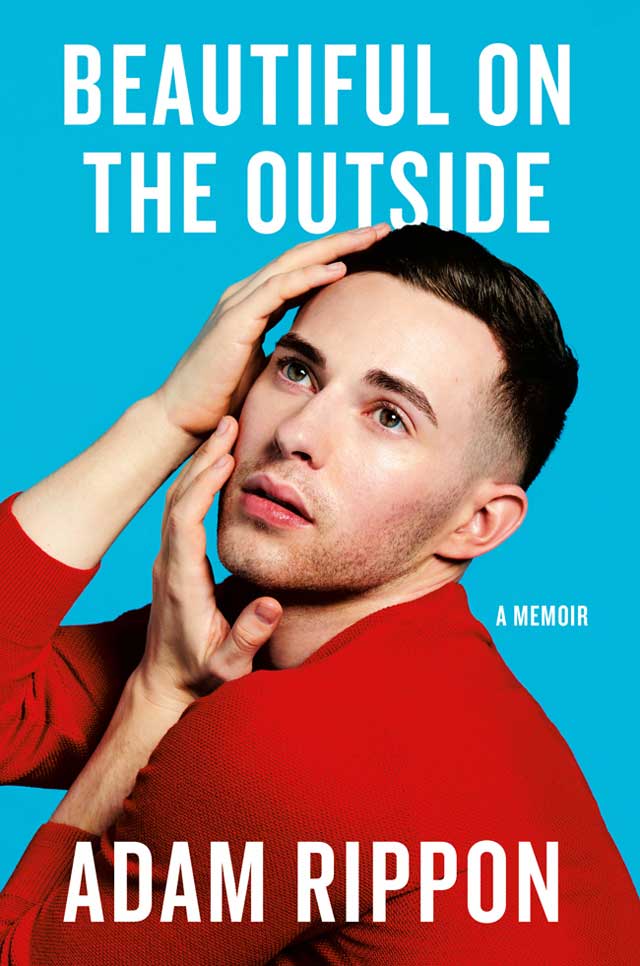 Your mom probably told you it’s what on the inside that counts. Well, then she was never a competitive figure skater. Rippon has been making it pretty for the judges even when, just below the surface, everything was an absolute mess. Traveling to practices on a Greyhound bus next to ex-convicts, being so poor he could only afford to eat the free apples at his gym, Rippon got through the toughest times with a smile on his face, a glint in his eye, and quip ready for anyone listening.