 By Lawrence Pfeil, Jr Every year as World AIDS Day approaches, I struggle with what to write about a subject so deeply woven into the fabric of our community, but this year the story was unfortunately clear. Three decades after “the first-ever world health day” was declared by the World Health Organization as “an opportunity for people worldwide to unite in the fight against HIV; show their support for people living with HIV and to commemorate people who have died,” World AIDS Day is largely forgotten. In New York City, the epicenter of the AIDS crisis, home of GMHC, BroadwayCares/EquityFightsAIDS, ACTUP, and openly HIV-positive City Council Speaker Corey Johnson, the Empire State Building won’t be lit red in recognition again this year. The last time was in 2015 when I noticed World AIDS Day wasn’t on the lighting schedule and submitted the request as a private New Yorker living with HIV/AIDS. (Requests are usually made by a major organization/corporation.) When I made the same request the following year, it was denied even though nothing else was scheduled. The Empire State Building hasn’t recognized World AIDS Day since.
  Empire State Building
- 9 million people across the globe with HIV/AIDS in 2018.
- 2 million were adults and 1.7 million were children
- 7 million were newly infected
- 770,000 died
And there is still no cure and no vaccine. What they’re really saying is HIV/AIDS isn’t killing enough people anymore; it’s not the “disease of the month;” and/or it won’t get enough “clicks” for their advertisers. Here are the results of that attitude and the stories not getting told. Current retroviral medications that are allowing people like me to live healthy full lives and PrEP – which is helping prevent the spread of HIV/AIDS – are lifesaving, but only if you have access to them. Many people in our community, especially people of color, don’t have the same access to treatment let alone afford the medication’s $1800/month price tag. Moreover, only 79% of people with HIV know their status. The 21% who don’t is due in great part to a lack of access to testing. A recent article on The Randy Report published the data from a study on the attitudes and behaviors of the youngest generations towards people with HIV and the results were horrifying.
- 28% of HIV-negative millennials said they have avoided hugging or interacting with HIV-positive people.
- 41% of Gen Z respondents were either somewhat informed or not at all informed about HIV, compared to 23% of millennials.
*via HIV.gov Even in our own community, there is a shocking lack of knowledge about HIV transmission which has fostered a campaign to educate, “Undetectable = Untransmittable.” Still, the stigma of HIV/AIDS continues, not so much out of fear as before but out of sheer ignorance.  At the other end of the spectrum are the long-term survivors of the AIDS epidemic which even fewer are talking about. I know many with severe health issues caused by the ravages of early drug treatments like AZT which are only now catching up with them. Coupled with growing older in a Community obsessed with youth who are oblivious to the basic facts of HIV/AIDS, it’s yet another bitter pill to swallow. Finally, an original purpose of World AIDS Day was to commemorate those lost in the plague, and those people still deserve to be remembered especially by our Community. The health care providers, researchers, activists, fundraisers, caregivers who fought for them (and continue to fight) expect nothing less. If we don’t care about their lives who will? Their stories are part of Our Story. World AIDS Day – attention must be paid because lives depend on it.


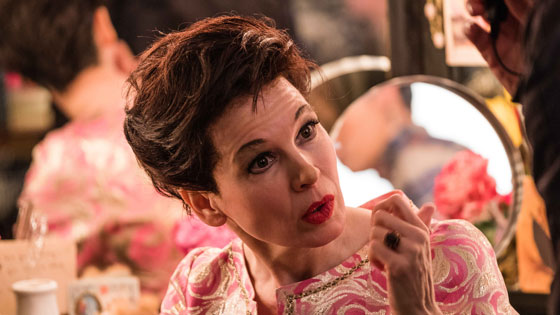
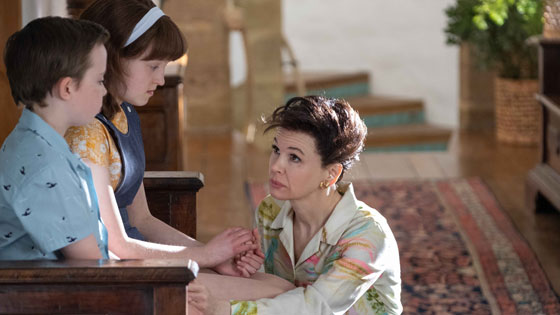
 Jessica Buckley as Rosalyn Wilder, Garland’s personal assistant assigned by her London concert producer is the woman caught in the middle. She sees the lonely, addicted, terrified woman off stage but responsible for getting a living legend on stage. Yet as compelling as that is, screenwriter, Tom Edge gives Buckley little to work with. In fact, he gives so little attention to the supporting characters in JUDY they have the depth of soundstage cutouts.
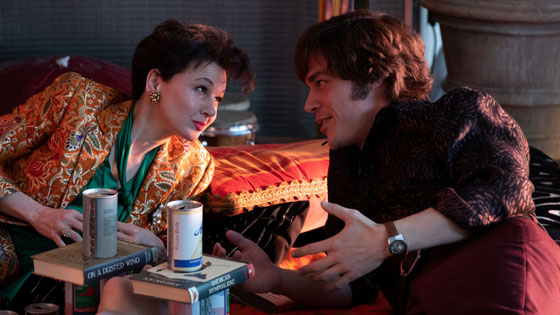
 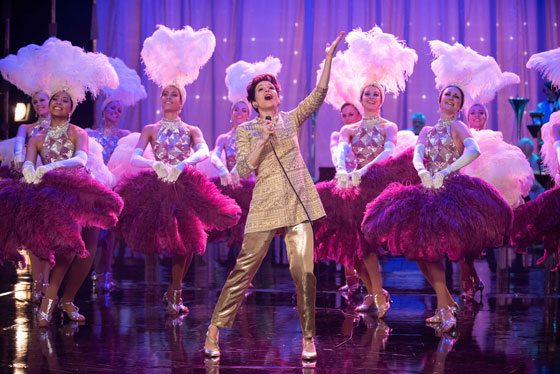 (Spoiler alert) Admittedly, one of the most touching scenes in JUDY is her late-night dinner with an adoring gay couple at their London flat. The problem is, it never happened. Of course, biopics dramatize events in the lives of their characters, but fabricating significant events with absolutely no basis, in fact, is wrong. What’s more, if the same fictional gay couple is in the audience and helps Garland when she can’t get through “Somewhere Over the Rainbow,” then obviously that didn’t happen either, but neither did the entire treacly final scene for that matter. Those scenes are phony and staged ala Louis B Mayer and MGM solely for the JUDY image. To have a film call out studio manipulation and deception only to do the exact same thing is hypocritical, disingenuous, adding more insult to Garland’s already injured truth. She never got redemption, an exit with head held high, her Hollywood ending. It’s tragic but, it’s the truth. It’s part what makes Judy Garland, Judy Garland, endearingly vulnerable, immensely talent, cripplingly flawed, and gone too soon. At the end of her rainbow, as the pot of gold she desperately needed grew ever more elusive, Garland was terrified she’d never be able to give her children a home. Given Renée Zellweger’s stellar performance, it’s a shame the people behind the curtain of JUDY, didn’t have the brains, heart, and courage to tell her story with more truth and honesty.
 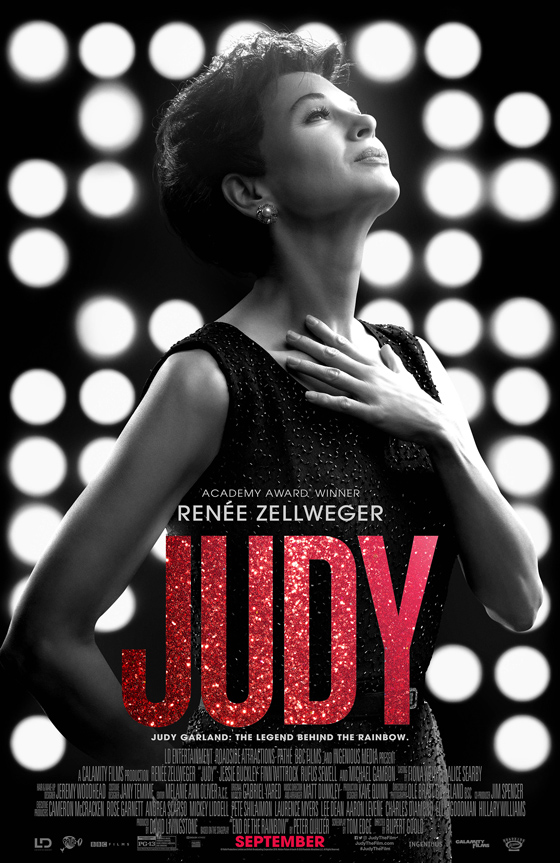 JUDY Renée Zellweger as Judy Garland Darci Shaw as young Judy Garland Finn Wittrock as Mickey Deans Rufus Sewell as Sidney Luft Jessie Buckley as Rosalyn Wilder Directed by Rupert Goold Screenplay by Tom Edge Based on the stage play “End of the Rainbow” by Peter Quilter BBC Films Pathé Calamity Films Roadside Attractions 118 minutes (photo credit for all images: David Hindley) Lawrence Pfeil, Jr., is a freelance writer/playwright who has reviewed film and theatre, both on and off-Broadway, for media outlets including The Randy Report, the New York Blade and Edge Publications.


