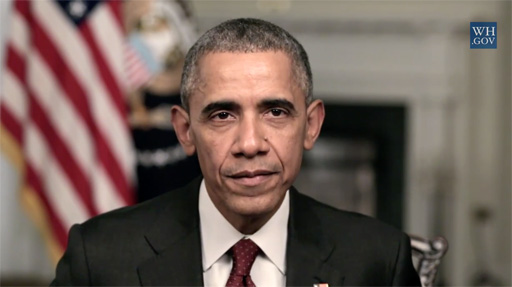
Barack Obama On World AIDS Day 2017

Former President Obama made this video message for late-night host Jimmy Kimmel’s special World AIDS Day event encouraging folks to take part in supporting the fight against HIV/AIDS.

“This World AIDS Day, everyone has a role to play. Jimmy Kimmel’s not just a talk-show host, he’s an activist. Bono’s not just a musician, he’s ring master of a whole shopping extravaganza,” Obama says in the video. “And me, I’m not just a former president, I’m a husband who hasn’t done his Christmas shopping yet.”

“When it comes to the fight against HIV/AIDs, there’s some genuinely good news to share,” Obama said. “For the first time in history, more than half of all people living with the virus are on life-saving medication.”

And he’s right. But those kinds of changes only happen when people actually DO something.

Hit the video below and find out what you can do this World AIDS Day, Friday December 1, 2017.

p.s. Remember what it was like to have a smart, dignified president who spoke about important issues like saving lives…?

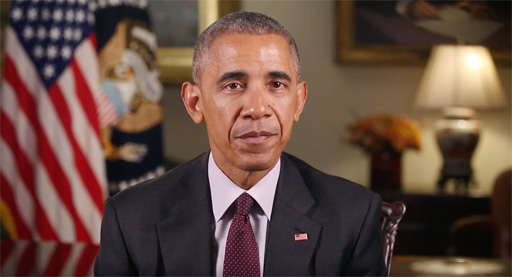
President Obama On World AIDS Day 2016: “Rededicate Ourselves To Ending This Epidemic Once And For All”

World AIDS Day is held on the 1st December each year and is an opportunity for people worldwide to unite in the fight against HIV, show their support for people living with HIV and to commemorate people who have died.

World AIDS Day was the first ever global health day, held for the first time in 1988.

In the U.S., President Obama’s administration was the first to develop the first comprehensive national HIV/AIDS strategy.

I’m sharing President Obama’s full proclamation below not only because today is World AIDS Day, but because I think it’s important to know the many varied efforts that take place throughout the year (and years) to help those affected by HIV/AIDS.

Via The White House:

Presidential Proclamation — World AIDS Day, 2016

WORLD AIDS DAY, 2016

– – – – – – –

BY THE PRESIDENT OF THE UNITED STATES OF AMERICA

A PROCLAMATION

Thirty-five years ago the first documented cases of AIDS brought about an era of uncertainty, fear, and discrimination. HIV/AIDS has taken tens of millions of lives — and far too many people with HIV have struggled to get the care, treatment, and compassion they deserve. But in the decades since those first cases, with ingenuity, leadership, research, and historic investments in evidence-based practices, we have begun to move toward an era of resilience and hope — and we are closer than ever to reaching an AIDS-free generation. On World AIDS Day, we join with the international community to remember those we have lost too soon, reflect on the tremendous progress we have made in battling this disease, and carry forward our fight against HIV/AIDS.

By shining a light on this issue and educating more communities about the importance of testing and treatment, we have saved and improved lives. Although we have come far in recent decades, our work is not yet done and the urgency to intervene in this epidemic is critical. In the United States, more than 1.2 million people are living with HIV. Gay and bisexual men, transgender people, youth, black and Latino Americans, people living in the Southern United States, and people who inject drugs are at a disproportionate risk. People living with HIV can face stigma and discrimination, creating barriers to prevention and treatment services.

My Administration has made significant efforts to fight HIV/AIDS, including by encouraging treatment as prevention, expanding access to pre-exposure prophylaxis, eliminating waiting lists for medication assistance programs, and working toward a vaccine. Thanks to the Affordable Care Act, no one can be denied coverage for pre-existing conditions like HIV, and millions of people can now access quality, affordable health insurance plans that cover important services like HIV testing and screening. In 2010, I introduced the first comprehensive National HIV/AIDS Strategy in the United States, and last year, through an Executive Order, I updated it to serve as a guiding path to 2020. This update builds on the primary goals of the original Strategy, including reducing the number of HIV-infected individuals and HIV-related health disparities, improving health outcomes for anyone living with HIV and increasing their access to care, and strengthening our coordinated national response to this epidemic.

Currently, more than 36 million people, including 1.8 million children, are living with HIV/AIDS across the globe, and the majority of people living with HIV reside in low- to middle-income countries. We need to do more to reach those who are at risk for contracting HIV/AIDS, and the United States is helping shape the world’s response to this crisis and working alongside the international community to end this epidemic by 2030. We have strengthened and expanded the President’s Emergency Plan for AIDS Relief (PEPFAR), with now more than $70 billion invested, to accelerate our progress and work to control this epidemic with comprehensive and data-focused efforts. With PEPFAR support for more than 11 million people on life-saving treatment and through contributions to the Global Fund to Fight AIDS, Tuberculosis, and Malaria — including a new pledge of more than $4 billion through 2019 — there are now more than 18 million people getting HIV treatment and care. Because in sub-Saharan Africa young women and adolescent girls are over eight times more likely to get HIV/AIDS than young men, we launched a comprehensive prevention program to reduce HIV infections among this population in 10 sub-Saharan African countries. This summer, PEPFAR established an innovative investment fund to expand access to quality HIV/AIDS services for key populations affected by the epidemic and reduce the stigma and discrimination that persists. We have also helped prevent millions of new infections worldwide, including in more than 1.5 million babies of HIV-positive mothers who were born free of HIV. By translating groundbreaking research and scientific tools into action, for the first time we are seeing early but promising signs of controlling the spread of HIV.

Accelerating the progress we have made will require sustained commitment and passion from every sector of society and across every level of government around the world. A future where no individual has to suffer from HIV/AIDS is within our reach, and today, we recommit to ensuring the next generation has the tools they need to continue fighting this disease. Let us strive to support all people living with HIV/AIDS and rededicate ourselves to ending this epidemic once and for all. Together, we can achieve what once seemed impossible and give more people the chance at a longer, brighter, AIDS-free future.

NOW, THEREFORE, I, BARACK OBAMA, President of the United States of America, by virtue of the authority vested in me by the Constitution and the laws of the United States, do hereby proclaim December 1, 2016, as World AIDS Day. I urge the Governors of the States and the Commonwealth of Puerto Rico, officials of the other territories subject to the jurisdiction of the United States, and the American people to join me in appropriate activities to remember those who have lost their lives to AIDS and to provide support and compassion to those living with HIV.

IN WITNESS WHEREOF, I have hereunto set my hand this thirtieth day of November, in the year of our Lord two thousand sixteen, and of the Independence of the United States of America the two hundred and forty-first.

BARACK OBAMA

Co-Hosting “Valley View Live” For World AIDS Day 2015

The folks over at Valley View Live here in Las Vegas asked me back co-host today, and we kicked off the show with a discussion of World AIDS Day.

I love how fast live TV goes – FAST. I enjoyed getting what I consider important information out there, but made a point to get as much in as possible.

Watching this, the one thing that gets me is I tripped up talking about the new injectable HIV meds in the pipeline that would allow folks to trade their daily meds for a single shot once every two months. As I started to talk about it, I thought the floor producer was indicating to us to start wrapping up the segment, so my formerly blond brain rushed a bit and I accidentally said, “once a year pill” instead of “once a day.” Fortunately Megan had my back and corrected that without pointing up my slip.

I was there for the entire hour, so at the half way mark they graciously allowed a segment about the launch of my new companion podcast, The Randy Report, on BlogTalkRadio. Glad I got a shoutout to my former radio show co-host, Candi.

Hit the two segments below. And if you like, feel free to tweet them or post on their Facebook page that you liked seeing me on the show 🙂

Video: President Obama On World AIDS Day 2015

President Obama on World AIDS Day 2015

President Obama and the White House issued this video today in honor of World AIDS Day 2015.

Obama correctly notes that while there has been progress to celebrate in the HIV/AIDS arena, today is also about remembering the fight ahead for a cure, and remembering those we have lost.

Short Film: When AIDS Was Funny

Absolutely chilling.

Filmmaker Scott Calonico juxtaposes the audio of Reagan-era press conferences – snickering and all – against a backdrop of dying AIDS patients.

From Vanity Fair:

Using never-before-heard audio tapes from three separate press conferences, in 1982, 1983, and 1984, When AIDS Was Funny illustrates how the reporter Lester Kinsolving, a conservative (and not at all gay-friendly) fixture in the White House press corps, was consistently scoffed at when he posed urgent questions about the AIDS epidemic.

With snickering, homophobic jokes and a disturbing air of uninterest, Speakes dismisses Kinsolving’s concerns about the escalating problem. “Lester was known as somewhat of a kook and a crank (many people still feel the same way),” says Calonico. “But, at the time, he was just a journalist asking questions only to be mocked by both the White House and his peers.”

World AIDS Day: “When Dogs Heal”

Dr. Robert Garofalo and Fred

When Dogs Heal is a photographic project that tells the stories of people who believe that the best medicine may not always be found at a pharmacy or in a doctor’s office; sometimes it comes in the form of a four-legged friend.

The project began with Dr. Robert Garofalo and his dog, Fred, who he adopted shortly after surviving cancer and later being diagnosed with HIV. Dr. Garofalo credits Fred for getting him through some of his darkest moments and helping him rediscover peace and joy in his life — things he thought he may have lost forever.

Information about project gallery exhibits and more at the official website.

(h/t JMG)

Dr. Frank Spinelli: The Stigma/Fears Faced During Height Of HIV/AIDS Epidemic

As part of observance of World AIDS Day today, Dr. Frank Spinelli, HIV/AIDS specialist, reminds us of the stigma and fears many gay men felt in the 1980s/90s during the early years of the epidemic.

This mindset still continues today even though there are anti-retroviral drugs which can make an HIV+ diagnosis manageable for many. That stigma keeps a lot of folks from getting tested, which is the important first step to getting the syndrome under control.

(h/t Queerty)

White House Releases World AIDS Day 2015 Proclamation

Via White House press release:

More than three decades ago, the first known cases of HIV/AIDS sparked an epidemic in the United States — ushering in a time defined by how little we knew about it and in which those affected by it faced fear and stigmatization. We have made extraordinary progress in the fight against HIV since that time, but much work remains to be done. On World AIDS Day, we remember those who we have lost to HIV/AIDS, celebrate the triumphs earned through the efforts of scores of advocates and providers, pledge our support for those at risk for or living with HIV, and rededicate our talents and efforts to achieving our goal of an AIDS-free generation.

Today, more people are receiving life-saving treatment for HIV than ever before, and millions of HIV infections have been prevented. Still, more than 36 million people around the world live with HIV — including nearly 3 million children. My Administration is committed to ending the spread of HIV and improving the lives of all who live with it. In the United States, the Affordable Care Act has allowed more people to access coverage for preventive services like HIV testing, and new health plans are now required to offer HIV screening with no cost sharing. Insurance companies can no longer discriminate against individuals living with HIV/AIDS or any other pre-existing condition. Additionally, this year marks the 25th anniversary of the Ryan White CARE Act, which established the Ryan White Program — a program that helps provide needed care to the most vulnerable individuals and touches over half of all people living with HIV in America.

To further our fight to end the HIV epidemic, my Administration released our country’s first comprehensive National HIV/AIDS Strategy in 2010. The Strategy provided a clear framework for changing the way we talk about HIV, and it offered a critical roadmap that prioritizes our Nation’s response to this epidemic and organizes the ways we deliver HIV services. Earlier this year, I signed an Executive Order to update the Strategy through 2020, focusing on expanding HIV testing and care, widening support for those living with HIV to stay in comprehensive care, promoting universal viral suppression among individuals infected with HIV, and increasing access to preventive measures, including pre-exposure prophylaxis for people at substantial risk of acquiring HIV.

Additionally, the primary aims of the Strategy include reducing HIV-related disparities and health inequities, because HIV still affects specific populations disproportionately across our country. Certain individuals — including gay and bisexual men, Black women and men, Latinos and Latinas, people who inject drugs, transgender women, young people, and people in the Southern United States — are at greater risk for HIV, and we must target our efforts to reduce HIV-related health disparities and focus increased attention on highly vulnerable populations. My most recent Federal budget proposal includes more than $31 billion in funding for HIV/AIDS treatment, care, prevention, and research. We are also making great progress toward achieving a greater viral suppression rate among those diagnosed with HIV, and in the last 5 years, we have made critical funding increases to ensure more Americans have access to life-saving treatment.

We cannot achieve an AIDS-free generation without addressing the pervasive presence of HIV throughout the world, which is why our Nation is committed to achieving the goals laid out in the 2030 Agenda for Sustainable Development to reach more people living with HIV, promote global health, and end the AIDS epidemic. The President’s Emergency Plan for AIDS Relief (PEPFAR) has helped save lives across the globe and has made significant impacts on the number of new HIV infections by strengthening international partnerships and expanding essential services for preventing and treating HIV. This year, I announced new targets for PEPFAR that aim to provide almost 13 million people with life-saving treatment by the end of 2017. The United States is also committing resources to support PEPFAR’s work to achieve a 40 percent decrease in HIV incidence among young women and girls in the most vulnerable areas of sub-Saharan Africa. This is a shared responsibility, and America will remain a leader in the effort to end HIV/AIDS while continuing to work with the international community to address this challenge and secure a healthier future for all people.

Working with private industry, faith communities, philanthropic organizations, the scientific and medical communities, networks of people living with HIV and affected populations, and governments worldwide, we can accomplish our goals of reducing new HIV infections, increasing access to care, improving health outcomes for patients, reducing HIV-related disparities, and building a cohesive, coordinated response to HIV. On this day, let us pay tribute to those whom HIV/AIDS took from us too soon, and let us recognize those who continue to fight for a world free from AIDS. Let us also recognize researchers, providers, and advocates, who work each day on behalf of people living with HIV, and in honor of the precious lives we have lost to HIV. Together, we can forge a future in which no person — here in America or anywhere in our world — knows the pain or stigma caused by HIV/AIDS.

NOW, THEREFORE, I, BARACK OBAMA, President of the United States of America, by virtue of the authority vested in me by the Constitution and the laws of the United States, do hereby proclaim December 1, 2015, as World AIDS Day. I urge the Governors of the States and the Commonwealth of Puerto Rico, officials of the other territories subject to the jurisdiction of the United States, and the American people to join me in appropriate activities to remember those who have lost their lives to AIDS and to provide support and compassion to those living with HIV.

Kiss A Hot Model To Commemorate World AIDS Day

What a great way to commemorate the occasion – On December 1st – for World AIDS Day – the National AIDS Trust (NAT) will be setting up a “Pop-Up Kissing Booth” in London’s Soho Square.

From LGBTQ Nation:

Sponsored by Attitude magazine and Sink The Pink, passerby will have the chance to either make out with an assortment of drag artists or the insipidly handsome model Alex Mountain, recently featured in the “Red Hot” campaign.

The booth is a direct response to research that suggests 16% of people still believe you can contract HIV merely from kissing – up, astonishingly, from 4% ten years ago.

“The booth is going to be great fun,” says NAT’s chief executive Deborah Gold, “but it also highlights an important message: That too many people in this country believe myths and scaremongering about HIV. This leads to stigma against people living with HIV, and increases the number of people getting the disease. Its time it ends.”

“The numbers of people who don’t know the basic facts about HIV and how it is transmitted is completely shocking,” says Attitude editor Matthew Todd. “And it should be cause for the government to bring in mandatory sex and relationships education in schools. The kissing booth is a fun way to make a really important point — that HIV is still here and more needs to be done to educate people about it.”

Bruce Springsteen and Chris Martin Step In For Injured Bono At World AIDS Day Concert

Bruce Springsteen sings with U2 in Times Square on World AIDS Day

After a Central Park bike accident put Bono in the hospital with serious injuries, it looked like U2’s World AIDS Day concert in Times Square was not going to happen.

Until, Bruce Springsteen (!) and Coldplay frontman Chris Martin stepped up and stepped in for the still recovering Bono.

Springsteen performed “Where the Streets Have No Name” and “I Still Haven’t Found What I’m Looking For” alongside U2’s Adam Clayton, The Edge and Larry Mullen Jr. in Times Square in front of few hundred fans, who stood in the rain.

Aside from highlighting the fight against AIDS, the night’s other theme was supporting an injured Bono. Springsteen said he hoped the 54-year-old was recovering in Dublin, and Martin told the crowd after performing: “Sending my love to Bono.”

A bike accident in Central Park last month left Bono with multiple injuries, including a facial fracture involving his left eye socket, a fractured left shoulder blade and a fractured left elbow. He underwent a five-hour surgery.

Martin, who wore a T-Shirt that read “Substitu2,” sang “Beautiful Day” and “With or Without You.”

Kanye West and Carrie Underwood also contributed performances. Watch the concert below:

Chris Martin of Coldplay with U2 on World AIDS Day

(from AP)