News Round-Up: October 31, 2017

(via Instagram)

Some news items you might have missed:

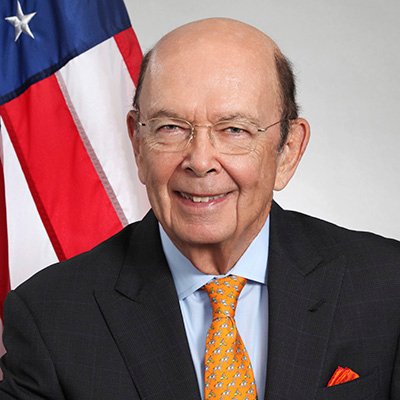
• Steve Pena (above) plans to “walk like an Egyptian” this Halloween. I’d follow his Pharaoh…

• Both chambers of Congress have now unanimously condemned Chechnya for anti-LGBTQ violence as President Trump and Secretary of State Rex Tillerson remain silent.

• In related news, Russia and Egypt are fighting to remove language in Principal 6 of the Olympic Charter which calls for banning discrimination based on sexual orientation. Both countries have been involved in anti-LGBTQ actions in past months.

• Marques Brownlee unboxes the new iPhone X – check out his thoughts below. Hubby Michael and I have both ordered the X as we haven’t upgraded our iPhones in years.

• While the majority of news outlets were covering yesterday’s indictments of three Trump campaign officials, several Fox News employees were embarrassed by their network’s obvious lack of coverage. At one point on Monday morning, Fox News was actually taking time to report on a hamburger emoji – “Look, the cheese is under the burger!!!”

• A new study indicates gay men (and straight women) are twice as likely to be attracted to guys with the same eye color as their father due to “sexual imprinting.” I do not fall into that category as my father had stunning ice blue eyes, but my hunky hubby Michael has beautiful brown eyes.

• No trick, total treat from 7-time Grammy Award winner Toni Braxton as she drops her new single, “Deadwood,” from her forthcoming album, Sex and Cigarettes, scheduled for a January release.

• One more Halloween post: “Super” Prime Minister Justin Trudeau of Canada arrived at work today dressed as “Clark Kent.” #WinnerWinnerWinner

Lewandowski: If Paul Manafort Or Roger Stone Colluded To Influence Election, They Should Go To Jail For Life

Corey Lewandowski

Corey Lewandowski, Donald Trump’s first campaign manager for the 2016 presidential campaign, publicly announced Tuesday that if Roger Stone, Paul Manafort, or anyone connected to the campaign colluded to influence the 2016 election, he hopes they “go to jail for the rest of their lives.”

From the Washington Examiner:

Lewandowski was responding to reports that Manafort, who became campaign manager after Lewandowski was fired, was wiretapped as part of a federal investigation into Manafort’s dealing with Ukraine. Reports say the surveillance, obtained through a secret Foreign Intelligence Surveillance Act warrant, was in effect at a time when Manafort was in communication with President Trump.

“I think if anybody, and I’ve said this, if Paul Manafort, Roger Stone, or Rick Gates or Carter Page, or anybody else attempted to influence the outcome of the U.S. election through any means that’s inappropriate — through collusion, coordination, or cooperation — I hope they go to jail for the rest of their lives. It’s very simple. Our election process is too serious, our democracy is too important to allow people to try and try and have influence from the outside for their own gain,” Lewandowski said during an event at George Washington University.

Lewandowski went on to defend Donald Trump saying he was by Trump’s side for 18 hours a day for the first 18 months of the campaign and he never heard Trump mention “anything to do with Russia.”

Russian Politician On TV: Of Course We Have Compromising Info On Donald Trump

Nikita Isaev

I’m just gonna leave this right here.

From The Independent:

A Russian politician has threatened to “hit Donald Trump with our Kompromat” on state TV.

Speaking on Russia-24, Nikita Isaev, leader of the far-right New Russia Movement, said the compromising material should be released in retaliation over the closure of several Russian diplomatic compounds across the US.

When asked whether Russia has such material, Mr. Isaev, who is also director of the Russian Institute of Contemporary Economics, replied: “Of course we have it!”

Mr. Trump has been plagued by allegations of Russian collusion since his election campaign.

News Round-Up: August 31, 2017

Andres Camilo (L) and Max Emerson (R)

Some news items you may have missed:

• Max Emerson and his boyfriend Andres Camilo have posed for a sexy, sultry photo shoot by Daniel Jaems for the Obsession series (above). More at Attitude.

• There are more out college football players today than ever before.

• Those “regular moms” in the recent hideous anti-same-sex marriage ad in Australia turn out to be liars, crackpots and “ex-gay” therapy advocates. #NoSurprise

• The Trump administration has ordered three Russian diplomatic facilities in the U.S. closed (NYC, SF, DC) “in the spirit of parity invoked by the Russians” after Russia demanded the U.S. reduce our presence in their country by hundreds of personnel.

• “Dreamers” are uneasy as President Donald Trump weighs whether to pull the plug on DACA (Deferred Action for Childhood Arrivals program), a program that protects undocumented immigrants who were brought to the United States as children.

• Check out the fun, new music video for Youngr’s acclaimed single “Monsters.” The artist describes the track as “a song for all the day dreamers and doodlers. I wrote this about my childhood at school. I used to draw my maths teacher as a monster whilst counting down the seconds until I could run home and play my drum kit! So if anyone out there is fed up with school or work, put this track on and turn it up.”

Watch below.

Special Counsel Focusing On How Much Trump Knew About Son’s Meeting With Russian Lawyer

Don Trump Jr. and father

Via HuffPost:

Special counsel Robert Mueller is reportedly questioning how much President Donald Trump knew about his son Donald Trump Jr.’s 2016 meeting with Kremlin-linked lawyers at Trump Tower and if the president sought to hide the purpose of that meeting, NBC reports.

Trump has denied knowing about the matter until it was revealed by The New York Times. The president did, however, help draft his son’s statement to the press in response to reports about the meeting, according to The Washington Post.

“Even if Trump is not charged with a crime as a result of the statement, it could be useful to Mueller’s team to show Trump’s conduct to a jury that may be considering other charges,” an unnamed source told NBC.

Trump Asked If Russia Is Security Threat: “I Consider Many Countries As A Security Threat”

During a press conference with the president of Finland, Donald Trump was asked if he considers Russia to be a security threat.

His answer: “Well, I consider many countries as a security threat.”

He. Just. Can’t. Say. It.

During the same press conference, Trump was asked why he pardoned former Arizona Sheriff Joe Arpaio during Hurricane Harvey.

“I assumed the ratings would be higher,” he replied.

Trump Lawyer Emailed Kremlin Directly For Help On Business Deal

For a year, Donald Trump has repeatedly denied having “nothing to do with Russia.”

Here’s just one sample of his denials:

But it turns out the Trumpster actually signed a “letter of intent” to build a “Trump Tower Moscow” four months into his presidential campaign.

From ABC News:

The involvement of then-candidate Trump in a proposed Russian development deal contradicts repeated statements Trump made during the campaign, including telling ABC News Chief Anchor George Stephanopoulos that his business had “no relationship to Russia whatsoever.”

The disclosure from Cohen, who has described himself as Trump’s personal lawyer, came as Cohen’s attorney gave congressional investigators scores of documents and emails from the campaign, including several pertaining to the Moscow development idea.

“Certain documents in the production reference a proposal for ‘Trump Tower Moscow,’ which contemplated a private real estate development in Russia,” Cohen’s statement says. “The decision to pursue the proposal initially, and later to abandon it, was unrelated to the Donald J. Trump for President Campaign.”

In a separate statement texted to ABC News, Cohen added that “the Trump Moscow proposal was simply one of many development opportunities that the Trump Organization considered and ultimately rejected.”

Cohen specifically says in his statement that Trump was told three times about the Moscow proposal.

“To the best of my knowledge, Mr. Trump was never in contact with anyone about this proposal other than me on three occasions, including signing a non-binding letter of intent in 2015,” his statement says.

Also found in the emails was a message from Trump associate Felix Sater to Cohen boasting of his ties to Russian President Vladimir Putin.

“I will get Putin on this program and we will get Donald elected,” Sater wrote in an email. “Buddy, our boy can become president of the USA and we can engineer it. I will get all of Putins team to buy in on this, I will manage this process.”

Click image to enlarge

Taking a trip on the way-back machine, we find this tweet from Cohen last December that doesn’t seem to have aged well:

Trump Blames Congress For “All-Time Low” Russian Relationship, McCain Slaps Back “Thank Putin For Attacking Our Democracy”

Sen. John McCain

A day after Donald Trump signed into law a bill passed with massive bipartisan support in Congress that imposes new sanctions on Russia and curbs the president’s authority to lift them, Trump took to Twitter to complain about the “flawed” legislation.

In addition to imposting new sanctions on Russia, Iran and North Korea, the legislation impairs the president’s ability to lift any sanctions put in place by the Obama administration in retaliation for Russian election meddling.

Veteran Republican Sen. John McCain didn’t miss a beat responding to Trump, saying any blame for bad blood lies at the feet of Russian President Putin:

And a few more voices from across the political spectrum:

Trump Signs Russian Sanctions Bill Calling Legislation “Flawed”

President Trump signed the bipartisan sanctions legislation passed in Congress today, but in doing so issued a signing statement explaining his thoughts on the bill.

Last week, Trump’s press secretary announced, “President Donald J. Trump read early drafts of the bill and negotiated regarding critical elements of it. He has now reviewed the final version and, based on its responsiveness to his negotiations, approves the bill and intends to sign it.”

But today, Trump says the legislation is “flawed.”

It’s worth noting the president really didn’t have a choice in signing the bill. The legislation was passed with a veto-proof bipartisan majority. Any veto would have easily been overridden, causing the Trump administration even further embarrassment.

He also offered remarks to reporters in a separate statement which, of course, takes a dig at the GOP-controlled Congress: “Congress could not even negotiate a health care bill after seven years of talking.”

And then there’s the last line: “I built a truly great company worth many billions of dollars. That is a big part of the reason I was elected. As President, I can make far better deals with foreign countries than Congress.”

Kushner Speaks: “I Did Not Collude With Russia”

Jared Kushner, White House Senior adviser and Trump son-in-law, spoke to the press today following his closed-door interview with members of the Senate Intelligence Committee.

Among other things, Kushner reiterated what he had already declared in an 11-page written statement, specifically that “did not collude with Russia, nor do I know of anyone else in camp who did so.”

He also underscored that he is “eager” to provide any information he may have because he has “nothing to hide.”

It is interesting that he isn’t issuing a complete denial of any possibility of Team Trump collusion, only that he doesn’t “know of” any taking place.

I also have an issue that he now refused to be placed under oath. My understanding is lying to Congress is a crime anyway, so why not testify under oath?

Just because he says something is true, doesn’t mean it is true.

Sen. Ron Wyden, D-Ore., has his doubts as well. Following Kushner’s statements, Wyden told reporters, “Kushner has repeatedly concealed information about his personal finances and meetings with foreign officials. There should be no presumption that he is telling the whole truth.”

“It is imperative that the public hears Jared Kushner testify in an open session, under oath, and support his claims with full transparency in the form of emails, documents, and financial records,” Wyden added.

Here’s Kushner’s 11-page statement he provided to Congress.

He concludes the statement saying, “Hopefully, this puts these matters to rest.”

I’m thinking that’s not the case.

STATEMENT OF JARED C. KUSHNER TO CONGRESSIONAL COMMITTEES

July 24, 2017

I am voluntarily providing this statement, submitting documents, and sitting for interviews in order to shed light on issues that have been raised about my role in the Trump for President Campaign and during the transition period.

I am not a person who has sought the spotlight. First in my business and now in public service, I have worked on achieving goals, and have left it to others to work on media and public perception. Because there has been a great deal of conjecture, speculation, and inaccurate information about me, I am grateful for the opportunity to set the record straight.

My Role in the Trump for President Campaign

Before joining the administration, I worked in the private sector, building and managing companies. My experience was in business, not politics, and it was not my initial intent to play a large role in my father-in-law’s campaign when he decided to run for President. However, as the campaign progressed, I was called on to assist with various tasks and aspects of the campaign, and took on more and more responsibility.

Over the course of the primaries and general election campaign, my role continued to evolve. I ultimately worked with the finance, scheduling, communications, speechwriting, polling, data and digital teams, as well as becoming a point of contact for foreign government officials.

All of these were tasks that I had never performed on a campaign previously. When I was faced with a new challenge, I would reach out to contacts, ask advice, find the right person to manage the specific challenge, and work with that person to develop and execute a plan of action. I was lucky to work with some incredibly talented people along the way, all of whom made significant contributions toward the campaign’s ultimate success. Our nimble culture allowed us to adjust to the ever-changing circumstances and make changes on the fly as the situation warranted. I share this information because these actions should be viewed through the lens of a fast-paced campaign with thousands of meetings and interactions, some of which were impactful and memorable and many of which were not.

It is also important to note that a campaign’s success starts with its message and its messenger. Donald Trump had the right vision for America and delivered his message perfectly. The results speak for themselves. Not only did President Trump defeat sixteen skilled and experienced primary opponents and win the presidency; he did so spending a fraction of what his opponent spent in the general election. He outworked his opponent and ran one of the best campaigns in history using both modern technology and traditional methods to bring his message to the American people.

Campaign Contacts with Foreign Persons

When it became apparent that my father-in-law was going to be the Republican nominee for President, as normally happens, a number of officials from foreign countries attempted to reach out to the campaign. My father-in-law asked me to be a point of contact with these foreign countries. These were not contacts that I initiated, but, over the course of the campaign, I had incoming contacts with people from approximately 15 countries. To put these requests in context, I must have received thousands of calls, letters and emails from people looking to talk or meet on a variety of issues and topics, including hundreds from outside the United States. While I could not be responsive to everyone, I tried to be respectful of any foreign government contacts with whom it would be important to maintain an ongoing, productive working relationship were the candidate to prevail. To that end, I called on a variety of people with deep experience, such as Dr. Henry Kissinger, for advice on policy for the candidate, which countries/representatives with which the campaign should engage, and what messaging would resonate. In addition, it was typical for me to receive 200 or more emails a day during the campaign. I did not have the time to read every one, especially long emails from unknown senders or email chains to which I was added at some later point in the exchange.

With respect to my contacts with Russia or Russian representatives during the campaign, there were hardly any. The first that I can recall was at the Mayflower Hotel in Washington, D.C. in April 2016. This was when then candidate Trump was delivering a major foreign policy speech. Doing the event and speech had been my idea, and I oversaw its execution. I arrived at the hotel early to make sure all logistics were in order. After that, I stopped into the reception to thank the host of the event, Dimitri Simes, the publisher of the bi-monthly foreign policy magazine, The National Interest, who had done a great job putting everything together. Mr. Simes and his group had created the guest list and extended the invitations for the event. He introduced me to several guests, among them four ambassadors, including Russian Ambassador Sergey Kislyak. With all the ambassadors, including Mr. Kislyak, we shook hands, exchanged brief pleasantries and I thanked them for attending the event and said I hoped they would like candidate Trump’s speech and his ideas for a fresh approach to America’s foreign policy. The ambassadors also expressed interest in creating a positive relationship should we win the election. Each exchange lasted less than a minute; some gave me their business cards and invited me to lunch at their embassies. I never took them up on any of these invitations and that was the extent of the interactions.

Reuters news service has reported that I had two calls with Ambassador Kislyak at some time between April and November of 2016. While I participated in thousands of calls during this period, I do not recall any such calls with the Russian Ambassador. We have reviewed the phone records available to us and have not been able to identify any calls to any number we know to be associated with Ambassador Kislyak and I am highly skeptical these calls took place. A comprehensive review of my land line and cell phone records from the time does not reveal those calls. I had no ongoing relationship with the Ambassador before the election, and had limited knowledge about him then. In fact, on November 9, the day after the election, I could not even remember the name of the Russian Ambassador. When the campaign received an email purporting to be an official note of congratulations from President Putin, I was asked how we could verify it was real. To do so I thought the best way would be to ask the only contact I recalled meeting from the Russian government, which was the Ambassador I had met months earlier, so I sent an email asking Mr. Simes, “What is the name of the Russian ambassador?” Through my lawyer, I have asked Reuters to provide the dates on which the calls supposedly occurred or the phone number at which I supposedly reached, or was reached by, Ambassador Kislyak. The journalist refused to provide any corroborating evidence that they occurred.

The only other Russian contact during the campaign is one I did not recall at all until I was reviewing documents and emails in response to congressional requests for information. In June 2016, my brother-in-law, Donald Trump Jr. asked if I was free to stop by a meeting on June 9 at 3:00 p.m. The campaign was headquartered in the same building as his office in Trump Tower, and it was common for each of us to swing by the other’s meetings when requested. He eventually sent me his own email changing the time of the meeting to 4:00 p.m. That email was on top of a long back and forth that I did not read at the time. As I did with most emails when I was working remotely, I quickly reviewed on my iPhone the relevant message that the meeting would occur at 4:00 PM at his office. Documents confirm my memory that this was calendared as “Meeting: Don Jr.| Jared Kushner.” No one else was mentioned.

I arrived at the meeting a little late. When I got there, the person who has since been identified as a Russian attorney was talking about the issue of a ban on U.S. adoptions of Russian children. I had no idea why that topic was being raised and quickly determined that my time was not well-spent at this meeting. Reviewing emails recently confirmed my memory that the meeting was a waste of our time and that, in looking for a polite way to leave and get back to my work, I actually emailed an assistant from the meeting after I had been there for ten or so minutes and wrote “Can u pls call me on my cell? Need excuse to get out of meeting.” I had not met the attorney before the meeting nor spoken with her since. I thought nothing more of this short meeting until it came to my attention recently. I did not read or recall this email exchange before it was shown to me by my lawyers when reviewing documents for submission to the committees. No part of the meeting I attended included anything about the campaign, there was no follow up to the meeting that I am aware of, I do not recall how many people were there (or their names), and I have no knowledge of any documents being offered or accepted. Finally, after seeing the email, I disclosed this meeting prior to it being reported in the press on a supplement to my security clearance form, even if that was not required as meeting the definitions of the form.

There was one more possible contact that I will note. On October 30, 2016, I received a random email from the screenname “Guccifer400.” This email, which I interpreted as a hoax, was an extortion attempt and threatened to reveal candidate Trump’s tax returns and demanded that we send him 52 bitcoins in exchange for not publishing that information. I brought the email to the attention of a U.S. Secret Service agent on the plane we were all travelling on and asked what he thought. He advised me to ignore it and not to reply — which is what I did. The sender never contacted me again.

To the best of my recollection, these were the full extent of contacts I had during the campaign with persons who were or appeared to potentially be representatives of the Russian government.

Transition Contacts with Foreign Persons

The transition period after the election was even more active than the campaign. Starting on election night, we began to receive an incredible volume of messages and invitations from well-wishers in the United States and abroad. Dozens of messages came from foreign officials seeking to set up foreign leader calls and create lines of communication and relationships with what would be the new administration. During this period, I recall having over fifty contacts with people from over fifteen countries. Two of those meetings were with Russians, neither of which I solicited.

On November 16, 2016, my assistant received a request for a meeting from the Russian Ambassador. As I mentioned before, previous to receiving this request, I could not even recall the Russian Ambassador’s name, and had to ask for the name of the individual I had seen at the Mayflower Hotel almost seven months earlier. In addition, far from being urgent, that meeting was not set up for two weeks — on December 1. The meeting occurred in Trump Tower, where we had our transition office, and lasted twenty- thirty minutes. Lt. General Michael Flynn (Ret.), who became the President’s National Security Advisor, also attended. During the meeting, after pleasantries were exchanged, as I had done in many of the meetings I had and would have with foreign officials, I stated our desire for a fresh start in relations. Also, as I had done in other meetings with foreign officials, I asked Ambassador Kislyak if he would identify the best person (whether the Ambassador or someone else) with whom to have direct discussions and who had contact with his President. The fact that I was asking about ways to start a dialogue after Election Day should of course be viewed as strong evidence that I was not aware of one that existed before Election Day.

The Ambassador expressed similar sentiments about relations, and then said he especially wanted to address U.S. policy in Syria, and that he wanted to convey information from what he called his “generals.” He said he wanted to provide information that would help inform the new administration. He said the generals could not easily come to the U.S. to convey this information and he asked if there was a secure line in the transition office to conduct a conversation. General Flynn or I explained that there were no such lines. I believed developing a thoughtful approach on Syria was a very high priority given the ongoing humanitarian crisis, and I asked if they had an existing communications channel at his embassy we could use where they would be comfortable transmitting the information they wanted to relay to General Flynn. The Ambassador said that would not be possible and so we all agreed that we would receive this information after the Inauguration. Nothing else occurred. I did not suggest a “secret back channel.” I did not suggest an on-going secret form of communication for then or for when the administration took office. I did not raise the possibility of using the embassy or any other Russian facility for any purpose other than this one possible conversation in the transition period. We did not discuss sanctions.

Approximately a week later, on December 6, the Embassy asked if I could meet with the Ambassador on December 7. I declined. They then asked if I could meet on December 6; I declined again. They then asked when the earliest was that I could meet. I declined these requests because I was working on many other responsibilities for the transition. He asked if he could meet my assistant instead and, to avoid offending the Ambassador, I agreed. He did so on December 12. My assistant reported that the Ambassador had requested that I meet with a person named Sergey Gorkov who he said was a banker and someone with a direct line to the Russian President who could give insight into how Putin was viewing the new administration and best ways to work together. I agreed to meet Mr. Gorkov because the Ambassador has been so insistent, said he had a direct relationship with the President, and because Mr. Gorkov was only in New York for a couple days. I made room on my schedule for the meeting that occurred the next day, on December 13.

The meeting with Mr. Gorkov lasted twenty to twenty-five minutes. He introduced himself and gave me two gifts — one was a piece of art from Nvgorod, the village where my grandparents were from in Belarus, and the other was a bag of dirt from that same village. (Any notion that I tried to conceal this meeting or that I took it thinking it was in my capacity as a businessman is false. In fact, I gave my assistant these gifts to formally register them with the transition office). After that, he told me a little about his bank and made some statements about the Russian economy. He said that he was friendly with President Putin, expressed disappointment with U.S.-Russia relations under President Obama and hopes for a better relationship in the future. As I did at the meeting with Ambassador Kislyak, I expressed the same sentiments I had with other foreign officials I met. There were no specific policies discussed. We had no discussion about the sanctions imposed by the Obama Administration. At no time was there any discussion about my companies, business transactions, real estate projects, loans, banking arrangements or any private business of any kind. At the end of the short meeting, we thanked each other and I went on to other meetings. I did not know or have any contact with Mr. Gorkov before that meeting, and I have had no reason to connect with him since.

To the best of my recollection, these were the only two contacts I had during the transition with persons who were or appeared to potentially be representatives of the Russian government.

Disclosure of Contacts on My Security Clearance Form

There has been a good deal of misinformation reported about my SF-86 form. As my attorneys and I have previously explained, my SF-86 application was prematurely submitted due to a miscommunication and initially did not list any contacts (not just with Russians) with foreign government officials. Here are some facts about that form and the efforts I have made to supplement it.

In the week before the Inauguration, amid the scramble of finalizing the unwinding of my involvement from my company, moving my family to Washington, completing the paper work to divest assets and resign from my outside positions and complete my security and financial disclosure forms, people at my New York office were helping me find the information, organize it, review it and put it into the electronic form. They sent an email to my assistant in Washington, communicating that the changes to one particular section were complete; my assistant interpreted that message as meaning that the entire form was completed. At that point, the form was a rough draft and still had many omissions including not listing any foreign government contacts and even omitted the address of my father-in-law (which was obviously well known). Because of this miscommunication, my assistant submitted the draft on January 18, 2017.

That evening, when we realized the form had been submitted prematurely, we informed the transition team that we needed to make changes and additions to the form. The very next day, January 19, 2017, we submitted supplemental information to the transition, which confirmed receipt and said they would immediately transmit it to the FBI. The supplement disclosed that I had “numerous contacts with foreign officials” and that we were going through my records to provide an accurate and complete list. I provided a list of those contacts in the normal course, before my background investigation interview and prior to any inquiries or media reports about my form.

It has been reported that my submission omitted only contacts with Russians. That is not the case. In the accidental early submission of the form, all foreign contacts were omitted. The supplemental information later disclosed over one hundred contacts from more than twenty countries that might be responsive to the questions on the form. These included meetings with individuals such as Jordan’s King Abdullah II, Israel’s Prime Minister Bibi Netanyahu, Mexico’s Secretary of Foreign Affairs, Luis Videgaray Caso and many more. All of these had been left off before.

Over the last six months, I have made every effort to provide the FBI with whatever information is needed to investigate my background. In addition, my attorneys have explained that the security clearance process is one in which supplements are expected and invited. The form itself instructs that, during the interview, the information in the document can be “update[d], clarif[ied], and explain[ed]” as part of the security clearance process. A good example is the June 9 meeting. For reasons that should be clear from the explanation of that meeting I have provided, I did not remember the meeting and certainly did not remember it as one with anyone who had to be included on an SF-86. When documents reviewed for production in connection with committee requests reminded me that meeting had occurred, and because of the language in the email chain that I then read for the first time, I included that meeting on a supplement. I did so even though my attorneys were unable to conclude that the Russian lawyer was a representative of any foreign country and thus fell outside the scope of the form. This supplemental information was also provided voluntarily, well prior to any media inquiries, reporting or request for this information, and it was done soon after I was reminded of the meeting.

****

As I have said from the very first media inquiry, I am happy to share information with the
investigating bodies. I have shown today that I am willing to do so and will continue to cooperate as I have nothing to hide. As I indicated, I know there has been a great deal of speculation and conjecture about my contacts with any officials or people from Russia. I have disclosed these contacts and described them as fully as I can recall. The record and documents I am providing will show that I had perhaps four contacts with Russian representatives out of thousands during the campaign and transition, none of which were impactful in any way to the election or particularly memorable. I am very grateful for the opportunity to set the record straight. I also have tried to provide context for my role in the campaign, and I am proud of the candidate that we supported, of the campaign that we ran, and the victory that we achieved.

It has been my practice not to appear in the media or leak information in my own defense. I have tried to focus on the important work at hand and serve this President and this country to the best of my abilities. I hope that through my answers to questions, written statements and documents I have now been able to demonstrate the entirety of my limited contacts with Russian representatives during the campaign and transition. I did not collude, nor know of anyone else in the campaign who colluded, with any foreign government. I had no improper contacts. I have not relied on Russian funds to finance my business activities in the private sector. I have tried to be fully transparent with regard to the filing of my SF-86 form, above and beyond what is required. Hopefully, this puts these matters to rest.