Craig Ramsay (via Instagram) Some news items you might have missed: • InstaHunks: New American citizen Craig Ramsay (above) has a message for his fellow citizens – “Wear a f**king mask, America🇺🇸” • Washington Post: A long-acting drug injected every two months is more effective at preventing HIV than the pills most commonly used by people at risk of acquiring the infection. The injectable drug cabotegravir (tested on more than 4,500 men and transgender women who have sex with men) proved to be even better than oral drug Truvada in blocking the virus. • Pink News: It only took around 240 mixed-sex couples across more than 16 years, but executives for the UK reality series Strictly Come Dancing are now allegedly considering not one, but two same-sex couples for the show’s upcoming season. • Boy Culture: Daniel Ryan Maples, a white insurance agent wearing a red ‘Running the World Since 1776′ shirt, lost his ever-lovin’ shit when asked by a fellow customer to wear a mask inside Costco. He approached the other customer aggressively, shouting the words that will follow him for the rest of his miserable life: ‘I Feel Threatened.’
Nobody who charges you with their whole body tensed up and barking at you with “I FEEL THREATENED” is actually threatened.
This asshole MUST be a cop. Those are the last words many unarmed Black people hear before being murdered by police. pic.twitter.com/aqAee1Ic2I — BrooklynDad_Defiant! (@mmpadellan) July 7, 2020
• Indiana Lawyer: The Indiana Court of Appeals ruled Monday former Illinois Congressman Aaron Schock and his campaign committee, Schock for Congress, are off the hook regarding the law firm’s unpaid legal bills totaling $159,946.37, plus interest. • Provincetown Reimagined: The gay mecca’s acclaimed international film celebration will present a modified festival with drive-in and virtual screenings running July 16-19, 2020. The Festival will kick off with two nights of screenings at the Wellfleet Drive-In including Mischa Richter’s documentary, I AM A TOWN, shot entirely in Provincetown; the 2020 Sundance hit, SAVE YOURSELVES!; and a special night hosted by John Waters with film titles announced soon. The Festival will also feature virtual screenings with selections curated to speak to this moment in time. • Twitter: Still no official word as to why RuPaul deleted his Twitter account and wiped his Instagram clean last week, but Twitter user @cheritaisrandom posits it might have something to do with several old photos of RuPaul dressed in Confederate flag attire, including a 2013 Instagram post that appears to be captioned, “The South will rise again!”.
For the first time, an HIV-positive patient has gone into long-term remission after being treated with a multi-drug cocktail raising hopes of a possible cure on the horizon. The patient, a 34-year-old Brazilian man diagnosed in 2012, was put on a three-drug regimen of antiretroviral therapy (ART) which was intensified with additional antiretrovirals plus a skin cancer preventative called Nicotinamide, a water-soluble version of vitamin B3. Dr. Andrea Savarino, of the Instituto Superiore di Sanitá in Rome, Italy, explained the approach in a presentation to the UK organization AIDSmap prior to the 2020 International AIDS conference in San Francisco. The intensified treatment was stopped after 48 weeks and he returned to his normal three-drug regimen. In March 2019, he began a medically-supervised treatment interruption, stopping his antiretroviral therapy. His last tests (taken on June 22, 2020) show his viral load has remained undetectable, meaning he has maintained viral suppression for more than 65 weeks without antiretroviral medications. The patient’s HIV antibody tests also came back negative. “The virus did not rebound, the viral DNA was maintained negative,” Savarino said. “The antibody response decreased over time, if the antibody decreases, it is possible that the virus has stopped its repetition.” (illustration of HIV cells) While exciting news, Savarino cautions “the result is highly likely not to be reproducible,” describing these results as “preliminary.” He noted that four other patients were given the same regimen but HIV was not found to have been put in check in those individuals. The Brazilian patient is still being monitored to see if HIV has truly been eradicated from his system. Since the early 1980s, scientists have worked diligently to find a cure for HIV, which has infected more than 75 million people and killed almost 33 million since the AIDS epidemic began. Modern medications available today allow patients to control the virus and keep HIV in check, but Reuters reports there are an estimated 38 million people are currently living with HIV. There have been three prior reports of individuals apparently being ‘functionally cured’ (long-term remission) of HIV, but those cases were the result of complicated, invasive bone marrow transplants. All three received transplants from donors with a mutated gene for the CCR5 protein found on white blood cells. While HIV relies on the protein to enter the cells, the mutated version apparently blocks the virus from attaching to those cells. (source: Reuters,AIDSmap)
A new report from Public Health England shows HIV infection rates in the UK have taken a steep decline since 2012. According to the figures released today, new infections among gay and bisexual men have dropped from 2,800 in 2012 to 800 in 2018, which represents a 71% decrease. Health authorities attribute the decrease to a number of factors. For one thing, encouraging the use of pre-exposure prophylaxis (PrEP) has become a focus for health officials. Studies show the once-a-day pill is almost 99% effective in preventing HIV infection. PrEP is currently available for high-risk patients in Wales and Scotland, but the BBC reports “many in England have had to wait until they can gain access to an impact trial that first began in September 2017.” That trial is scheduled to end later this year. Also aiding in reducing new infections is a public campaign encouraging people to get tested regularly for HIV. And when new infections are discovered, those patients are immediately placed on HIV medications to bring their viral load down to undetectable levels, which means the virus can’t be passed on to others. Of the estimated 103,800 people believed to be living with HIV in the UK in 2018, 93% of those had been diagnosed and 97% of those diagnosed were receiving treatment. Among the HIV patients on medications, 97% were found to have undetectable viral loads. Contrast that with the United States where the Centers for Disease Control estimate 83% of folks living with HIV have been diagnosed and just 63% have been deemed to be virally suppressed. However, Debbie Laycock, head of policy at the Terrence Higgins Trust, noted the new report isn’t all good. Laycock told BBC News that 43% of new diagnoses are being discovered at a late stage, particularly with men who identify as straight and those over 50 in age. Late-stage infections result in a much higher risk of death compared with early detection. And, there have been slight increases in new HIV infections among black people and south Asian men. But Health Secretary Matt Hancock told the BBC he feels the UK is on track to reach its goal of ending HIV transmission by the year 2030. “HIV has brought untold hurt and suffering to so many, so it is encouraging to see transmissions continue to fall across the UK,” said Hancock.
The Department of Health and Human Services announced details Tuesday for applying for free PrEP medications through the federal government. The new program – called Ready, Set, PrEP – will distribute pre-exposure prophylaxis (PrEP) medications to help prevent people currently HIV-negative from becoming infected with the virus. Drugstore chains CVS Health, Walgreens and Rite Aid, which have a combined 21,000 locations across the country, will donate prescribing services for the program. Folks can go to the new website GetYourPrEP.com to apply for the medications or call toll free 855-447-8410. In order to qualify, an individual must be HIV-negative, lack prescription drug coverage, and obtain a valid prescription for the medication. Earlier this year, drugmaker Gilead Sciences announced it would donate 2.4 million bottles of Truvada to up to 200,000 uninsured people annually through 2030. Gilead is the manufacturer of both Truvada and Descovy, which was approved by the Food and Drug Administration for PrEP use on October 3 this year. They are the only approved drugs for use as PrEP by the FDA. In its announcement, Gilead said the offer would “transition to Descovy if it is approved for use as PrEP.” Gilead has also announced a generic version of Truvada will become available by 2020. Ready, Set, PrEP is part of the current administration’s ‘Ending the HIV Epidemic Plan’ which was announced during President Trump’s State of the Union address this year. The plan has a goal of reducing the number of new HIV diagnoses in the U.S. by 75 percent in five years and by 90 percent in 10 years. Today’s news comes as the federal government is currently suing Gilead for patent infringement regarding PrEP. In a press release on November 6, the Health and Human Services Department announced the United States had filed a complaint in federal district court alleging Gilead had profited from research funded by hundreds of millions of taxpayer dollars and reaped billions from PrEP through the sale of Truvada® and Descovy®. Currently, a month supply of Truvada in the United States sells between $1,600 to $2,000 for those without prescription drug coverage, while in other parts of the world it is available for as low as $70. In 2018 alone, Gilead amassed $3 billion in the sale of Truvada.
In this week’s podcast: • A journalist wrote a scathing piece about Mayor Pete Buttigieg and the mayor called his critic to listen • NYC sees a significant drop in new HIV infections • A Palo Alto police brutality case reaches a settlement • The gay panic defense could be bye-bye in New Jersey • Kasey Musgraves has a new ‘tres gay’ Christmas special on Amazon Prime • Award-winning out singer Matt Zarley drops his take on the holiday classic, “Have Yourself A Merry Little Christmas” * Observing World AIDS Day this year Link to Mark King’s essay – Link to JoeMyGod’s essay
World AIDS Day 2019. Yes, we still do this. Someday, I believe we won’t have to, but even then we will continue the tradition. Because it’s important to remember. One day, when the virus is gone, the world will still need to know this ‘thing’ happened. That millions of people died. They didn’t have ‘a bad day.’ They suffered and died. Some folks stood up; some became complicit through their silence. We tell young people today “it gets better.” And, it does. That phrase today is associated with bullying and self-acceptance. But in the 1980s and 90s, the ‘better’ we needed seemed far, far away. And an uplifting mantra repeated at our reflections in a mirror didn’t solve the problem. I can remember a couple of firsts when that ‘problem’ collided with my life on a first-person basis. In December 1986, on the road with the national touring company of CATS (my first big job as an actor), we’d been told Tom Michael Reed, the show’s dance supervisor who had put our company together, had become ill. No more information than that was offered. We didn’t need it. We knew. We would see Tom one more time, in the Spring of 1987 in Baltimore, Maryland. A few months later, while the tour was in Kansas City, the company was called out into the hallway backstage after a performance. We were told Tom had passed. I remember grabbing my best friend as we burst into tears. My journey to CATS had been a long rollercoaster ride, and Tom had taken a chance on 22-year-old me. In that moment, I realized how much someone’s belief in me could hold so much gravity. A few years later, I met an impossibly handsome and talented actor in NYC who, for reasons I could not fully understand, looked at me in a way that made me like myself more. On what would be our first date, sitting at a diner on the Upper West Side of Manhattan, he paused and then said, “I have to tell you something – I’m HIV positive.” I took a breath and somehow, from somewhere in my 20-something body/mind/spirit, replied, “Well, you’ll have to help me with that.” He smiled. I smiled. And we went on with our date. Happily, he’s still a very good friend today with whom I know we have our own special connection. And life went on beyond the barricades. Each year, I make a point to read a couple of essays by writers much more talented than myself. They share these collections of words that capture a time now in the rearview mirror. Even when moving forward, it’s important to check in on the past. Writer Mark King was honored by the National Lesbian Gay Journalists Association for a post he originally penned in 2007 about the courage he was forced to summon at a time when folks were holding to the ground as the ground kept shifting. Here’s just a bit:
There is compassion here, enough for all the world’s deities and saints acting in concert. Infinite compassion for men who lived in fear and checked every spot when they showered for Kaposi sarcoma, and for disowned sons wasting away in the guest room of whoever had the space. But we get older, and friends don’t ask us to hold their hand when they stop breathing, and the fear fades, and I bought new leather loafers and the White Party is coming. The truth is simply this, and no one will convince me otherwise: My most courageous self, the best man that I’ll ever be, lived more than two decades ago during the first years of a horrific plague. He worked relentlessly alongside a million others who had no choice but to act. He secretly prayed to survive, even above the lives of others, and his horrible prayer was answered with the death of nearly everyone close to him. To say I miss that brutal decade would only be partially true. I miss the man I was forced to become, when an entire community abandoned tea dances for town hall meetings, when I learned to offer help to those facing what terrified me most. Today, the lives of those of us who witnessed the horror have become relatively normal again, perhaps mundane. We prefer it. We have new lives in a world that isn’t choking on disease. But once, there was a time when we were heroes.
The other piece I’d like you to read is from Joe Jervis of JoeMyGod. Each year, Joe shares his essay “Membership,” originally written in 2004. The post chronicles a chapter in his life from 1985 when he and his friends suddenly joined a “new and modern group” of people who were forced to grieve much earlier than they should have. For more than 30 years now, World AIDS Day has encouraged us to observe and remember. But we also celebrate this place and time when medications keep people alive with fewer and fewer complications. And, for a huge number of people in treatment, viral loads can become undetectable. And undetectable = untransmittable. New York City recently reported new diagnoses of HIV have hit a 17-year low. And generic drug manufacturer Cipla has announced a new drug for treating children with HIV, Quadrimune, that can be mixed with milk or sprinkled on baby cereal that has an estimated cost of $1 a day. Those are good things. We are still here. Tomorrow will come, the horizon will still loom in the distance, even as we check the rearview mirror out of the corner of our eye. So, remember. And, please don’t ever forget to dance. Because we can. p.s. know your status
The results of a new study by pharmaceutical giant Merck and the Prevention Access Campaign finds many young people today know little about HIV. Survey findings revealed the 1,596 respondents – who either identified as Generation Z (18-22) or millennials (23-36) – are woefully uninformed about HIV and its transmission. From the study: • 41% of Gen Z respondents were either somewhat informed or not at all informed about HIV, compared to 23% of millennials • While 67% said they were most concerned about HIV compared to other STIs, 54% did not report using condoms or PrEP. •28% of HIV-negative millennials said they have avoided hugging or interacting with HIV-positive people, even though the virus cannot be transmitted through casual contact • 76% of those living with HIV said they were hesitant to share their status for fear of being judged • 90% of those living with HIV said they avoided sharing their status for fear of losing friends or family Bruce Richman, executive director of the Prevention Access Campaign said in a statement, ”Despite scientific advances and decades of HIV advocacy and education, the findings highlight a disturbing trend: young adults overwhelmingly are not being informed effectively about the basics of HIV.” “These findings are a call to action that the crisis in the United States is far from over,” added Richman. “It’s time to elevate a real conversation about HIV and sexual health among America’s young people, and roll out innovative and engaging initiatives to educate and fight HIV stigma.” As a result of the survey, Merck and Prevention Access Campaign have launched a new project called Owning HIV: Young Adults and the Fight Ahead aimed at educating young Americans about HIV and elevating the urgency around the issue.
Donald Trump Jr. Donald Trump Jr. got some serious pushback on Twitter after a snarky response to a tweet from an LGBTQ news site regarding dating people with HIV. Responding to a tweet that read, “What you stand to lose by not having sex with people with HIV,” the junior Donald wrote, “Well I can think of one thing.” Junior didn’t expound on his intention in his comment, although it is surprising he follows LGBTQ news outlets on Twitter. But many felt his tweet furthered the stigma associated with people living with HIV. Ironically, the article in question, by writer David Hudson, explored exactly that kind of discrimination and stigma that affects those who are living with HIV. “If someone is HIV positive, knows their status, is on effective medication and has consistently had an undetectable viral load, they cannot pass on the virus,” Hudson shared in the piece. “PrEP is also widely available in the US and several other countries to prevent people from acquiring HIV. And condoms are also, of course, widely available.” As I’ve written many times here, current research shows there is no risk of transmitting the HIV virus to others when properly using antiretroviral medications to bring the viral load down to zero, aka ‘undetectable.’ The Centers for Disease Control has publicly announced its support for the campaign that states Undetectable = Untransmittable. Additionally, PrEP (pre-exposure prophylaxis) and condoms greatly reduce the possibility of HIV infection. The Twitterverse criticized Trump Jr. for reinforcing outdated HIV stigma:
I’m not going to retweet Donald Trump Jr’s trash opinions, but for the people in the back: You can have sex with an HIV+ person and not contract HIV. People who are undetectable cannot transmit HIV. Also, google PREP and condoms.
When the world has come so far in combatting stigma around HIV – and it now impossible to pass on HIV when one is on treatment – this comment is stunningly retrograde and dangerous https://t.co/FzdQ4b5Q4S
you pile of stale shit. Tweeting anti-science stigma flared nonsense just DAYS before World AIDS Day. I truly think there’s a special place in hell waiting for you.
We’re days away from the 31st WORLD AIDS DAY and the President’s son is typing anti-science stigma inducing bull shit. There’s a special place in hell waiting for you junior. https://t.co/nbknNdApRB
Your comment is 100% part of the problem by strengthening Stigma which the entire world, the entire world, is rallying to destroy because it is literally possible, within our lifetime, to end HIV/AIDS. This ignorant drivel is all you have to offer? You’re on the wrong side.
HIV-positive men are twice as likely to die by suicide than members of the general population.@DonaldJTrumpJr, you are ADDING to the stigma of living with HIV with your IGNORANT comments. To quote the POPULAR winner of the 2016 election, “DEPLORABLE”.💔https://t.co/VNT6SeYmzC
The Advocatereports there were fewer new diagnoses of HIV among New Yorkers in 2018 (less than 2,000) marking the lowest recorded level since reporting began in 2001.
The 2018 HIV Surveillance Annual Report released this week showed that 1,917 people were newly diagnosed with HIV in New York City in 2018. That marks an 11 percent drop from 2017 and a two-thirds decrease since 2001 when 5,859 new cases were reported.
New HIV diagnoses were down among men and women; among Black, Latino, white, Native, and Asian New Yorkers; and in all five boroughs. The drops were particularly steep in men who have sex with men, people between the ages of 20 and 29, and those with a history of using injection drugs.
However, rates had increased among transgender people and men who report both having sex with men and injection drug use.
Nearly half of the people newly diagnosed with HIV were Black; 36 percent were Latino, and about 10 percent were white.
Guest post by Lawrence Pfeil, Jr. of TheOUTFront.com It’s hard to imagine a place filled with more of life’s drama than a hospital, and when it comes to hospitals it’s nearly impossible to imagine one more filled with history’s drama than New York City’s shuttered, St Vincent’s Hospital. Such is the point of departure for Rattlestick Playwrights Theater’s Novenas for A Lost Hospital, an intimate theatrical experience taking audiences on a literal journey through the West Village, September 5 – October 13, 2019. Opening Rattlestick’s 25th anniversary season, the world premiere of Cusi Cram’s Novenas for A Lost Hospital stars Tony Award nominee (Angels in America) and four-time Obie winner, Kathleen Chalfant as Saint Elizabeth Seton. The production and cast of thirteen are under the direction of Rattlestick Artistic Director, Daniella Topol. This unique walking theatrical production is presented in partnership with Village Preservation, The Lesbian, Gay, Bisexual, & Transgender Community Center, NYC AIDS Memorial Board, NYU Rory Meyers College of Nursing, St. John’s in the Village, and Visual AIDS. For the LGBT+ community, especially gay men, the connection to St Vincent’s Hospital runs deep and very personal. Located on the border of the Village and Chelsea, it was the community’s “go-to” hospital for decades. Injured protesters from the Stonewall Uprising fifty years ago were brought to St. Vincent’s Emergency Room for first aid. When AIDS grew into an epidemic twenty-five years later, far too many men were brought there one last time and their chosen families gathering there to bear witness endless times. The one saving grace was the staff of doctors and nurses of the hospital-borne out of one plague having compassion on a community facing another. This is but one story in the 161-year legacy that was St Vincent’s Hospital. Its ties to some of history’s most iconic moments are so much more. As Dramaturg Guy Lancaster writes,
“St. Vincent’s Hospital was started inside a rented house on East 13th Street in 1849 during a cholera epidemic by four nuns from the Sisters of Charity. It was the first Catholic hospital in Manhattan. Survivors of disasters such as the sinking of the Titanic, the Triangle Shirtwaist Factory Fire, and September 11th were treated at St. Vincent’s after it moved to its eventual site on 7th Avenue in 1856.
A devastating new plague, HIV/AIDS, would profoundly affect the institution and the surrounding neighborhood from the 1980s onwards as the hospital became a center for AIDS research and treatment. By the time St. Vincent’s closed its doors on April 30, 2010, 3,500 employees had lost their jobs. The last Catholic hospital in Manhattan was replaced by a luxury condo development.”
Times Square is called as the “Crossroads of the World,” but just a mile south of it, on the same avenue, St Vincent’s Hospital could be called the “crossroads of humanity.” For five weeks, Novenas for a Lost Hospital will allow audiences to traverse time and tale, walking with compassion through the history of this storied house of healing. More information about Novenas for a Lost HospitalHERE Previews begin September 5. Official opening night September 19, with performances through October 13. * Guests arriving at the 6:30 time will experience an extended prologue, and audiences at both check-in times will unite for the majority of the event. Due to its traveling nature, audiences are encouraged to wear comfortable shoes and to leave heavy bags at home. Coat check is not available. Purchase tickets HERE More information about Rattlestick Playwrights Theater, their 25th anniversary season, and subscriptions HERE(photos: Mark Abrahams)


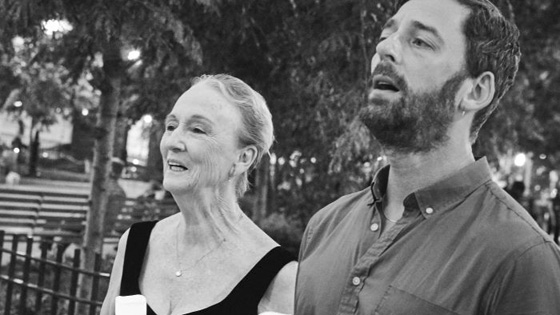
 Opening Rattlestick’s 25th anniversary season, the world premiere of Cusi Cram’s Novenas for A Lost Hospital stars Tony Award nominee (Angels in America) and four-time Obie winner, Kathleen Chalfant as Saint Elizabeth Seton. The production and cast of thirteen are under the direction of Rattlestick Artistic Director, Daniella Topol. This unique walking theatrical production is presented in partnership with Village Preservation, The Lesbian, Gay, Bisexual, & Transgender Community Center, NYC AIDS Memorial Board, NYU Rory Meyers College of Nursing, St. John’s in the Village, and Visual AIDS. For the LGBT+ community, especially gay men, the connection to St Vincent’s Hospital runs deep and very personal. Located on the border of the Village and Chelsea, it was the community’s “go-to” hospital for decades. Injured protesters from the Stonewall Uprising fifty years ago were brought to St. Vincent’s Emergency Room for first aid. When AIDS grew into an epidemic twenty-five years later, far too many men were brought there one last time and their chosen families gathering there to bear witness endless times. The one saving grace was the staff of doctors and nurses of the hospital-borne out of one plague having compassion on a community facing another.
  This is but one story in the 161-year legacy that was St Vincent’s Hospital. Its ties to some of history’s most iconic moments are so much more. As Dramaturg Guy Lancaster writes,
  More information about Novenas for a Lost Hospital