After what appears to have been a rather short engagement (a month?) after a year of dating, English comedian Stephen Fry has tied the knot with his partner Elliot Spencer.
The tabloids have been busy weighing in on the 30 year difference in ages. I say it’s no one’s business but the coouple’s.
A long-time friend of mine married his terminally ill boyfriend last year.
Since they lived in Las Vegas, they traveled to California for the legal ceremony and license.
Sadly, the husband lost his battle in March of this year.
Adding to the sadness of the loss, my friend had to battle with his deceased husband’s family who never approved of the same-sex marriage. The family apparently fought to keep the body of the deceased from my friend.
Eventually, in order to have a respectful service and burial, my friend went to court to have a judge rule that he was the “surviving spouse,” and to indicate that on the death certificate issued by the state of Nevada.
As I saw my friend recently and were talking about the sad episode, I began to wonder: was this the first instance of the state of Nevada recognizing a same-sex marriage?
We’ve seen legal wrangling in Ohio, Indiana and Arizona regarding recognition of same-sex marriages from other states due to terminal illness, etc. I’m wondering if this has already quietly happened in Nevada?
Nevada does have domestic partnerships that grants “…the same rights, protections, benefits, responsibilities, obligations and duties as…parties to any other civil contract….” But, couples legally married in other states don’t automatically gain this status. Couples married elsewhere must complete and file a notarized Domestic Partnership Declaration form with the Secretary of State’s Office. I asked my friend if they had done this and he said they were in the process of getting that done when his husband suddenly died.
See the death certificate above that lists the deceased as “Male” and the Surviving Spouse as “Michael.” (I’ve blurred the details for now for privacy’s sake).
Experts – chime in and let me know what you think.
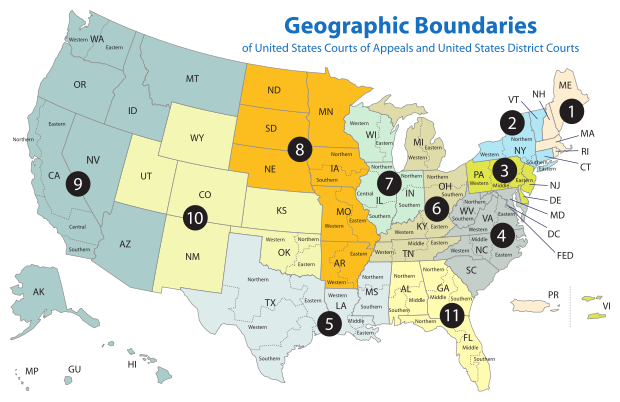
The Ninth Circuit Court of Appeals has turned down Idaho’s request to hear Latta v. Otter, the challenge to the state’s same-sex marriage ban, with a panel of eleven judges.
The state asked the court for an initial en banc hearing; in most circuit courts, that would mean all of the judges in the circuit, but since the Ninth Circuit is so large, en banc review consists of a panel of eleven judges.
Latta will be heard on September 8 along with cases from Hawaii and Nevada. Each side in the Idaho case will have 30 minutes, while each side in the Nevada case, Sevcik v. Sandoval, will have 15 minutes, and each side in Jackson v. Abercrombie, the Hawaii case, will have 10 minutes.
A Schuylkill County bakery is getting some unwanted attention after refusing to make a wedding cake for a lesbian couple, Bethanny and Jennifer Petrich.
“I loved the work they did and it tasted great. It’s a hometown bakery. I wanted to support my hometown,” said Jennifer Petrich.
(Isn’t that great? The local girl wanted to SUPPORT her local bakery…)
“My mom, who is planning our wedding, called and made the appointment for us. It was okay at that time and she was open and honest and said it’s for Bethany and Jennifer.”
Later, however, the bakery called back to say the owner had talked to Jesus for two weeks and seeing as the wedding was between two women, the bakery would not be able to fulfill the order.
(Umm, not so great. The local bakery doesn’t want to SUPPORT her local LGBT community…)
Lorraine Fleming, the bakery’s owner, said “I’m not sorry for my decision and I feel strong. I know that I’m doing the right thing.”
Fleming went on to say that although there “is homosexuality in her own family” the decision was made based on her deeply held religious beliefs. “I’m sorry for the damage that’s been done as far as hurt feelings.”
Jennifer said, “We asked her to make us a wedding cake and not marry us. I didn’t understand.”
In the United States, there are currently 29 states – including Pennsylvania – without comprehensive, sexual orientation-inclusive non-discrimination laws. And so, it is perfectly legal for The Cake Pros to discriminate in this case.
Circuit Judge Diana Lewis’ opinion was tied to a probate case surrounding the death of Frank Bangor, a man who owned property in Florida and married W. Jason Simpson in Delaware, where gay marriage is legal.
[snip]
Under Florida law, a spouse is recognized as a personal representative of an estate provided the out-of-state marriage is recognized as valid under state law. Simpson, through attorney Andrew Fein, petitioned Lewis to be recognized as Bangor’s personal representative despite a ban on gay marriage in Florida.
This is the fourth ruling in favor of marriage equality in Florida in less than a month.
Just yesterday a Broward County judge ruled against the ban in a divorce proceeding.
Florida State Attorney General Pam Bondi should seriously get a clue. The future is here.
Just hours after Utah announced it’s intention to ask the US Supreme Court to rule on the recent overturn of that state’s ban on same-sex marriage, Virginia’s Attorney General has followed suit:
Virginia Attorney General Mark Herring says he will ask SCOTUS to review the recent ruling by the 4th Circuit Court of Appeals which upheld the state’s ban unconstitutional.
On Friday, Herring, a Democrat who has said the Virginia ban is unconstitutional, will file a petition for writ of certiorari asking the nation’s highest court to hear Virginia’s marriage equality case and definitively settle the constitutional issues it raises.
Bostic v. Schaefer was originally filed on behalf of two same-sex couples in July 2013 by the legal team that challenged California’s Proposition 8, including the American Foundation for Equal Rights (AFER) along with attorneys Ted Olson and David Boies. The American Civil Liberties Union (ACLU) and Lambda Legal joined the case in March on behalf of all of Virginia’s same-sex couples.
[snip]
“Throughout this case, I have fought for the fundamental rights of Virginians and the quickest possible resolution,” Herring said in a statement. “I believe the district and appeals courts ruled correctly in striking down Virginia’s discriminatory marriage ban, but it has long been clear that the Supreme Court will likely have the final word. I want that decision to come as soon as possible and I want the voices of Virginians to be heard. This case has moved forward at an incredibly swift pace, and I look forward to a final resolution that affirms the fundamental right of all Virginians to marry.”
Clearly, lawyers in both states (and on both sides of the issue) are looking to get to SCOTUS first in what will clearly be a historic court decision.
As support for marriage equality hits 72% (Crosby Textor poll) across Australia, elected officials in the country’s Parliament are looking towards a vote where MPs can vote their conscience as opposed to being locked in line with party position.
Parliament is heading for a historic vote on same-sex marriage in which all MPs will be free to vote according to their conscience. The Coalition party rooms are likely to decide on a conscience vote during the coming spring session of Parliament, with one Liberal MP saying it is now ”almost certain” the party will dump its binding opposition to gay marriage. Prime Minister Tony Abbott, whose sister Christine Forster is in a same-sex relationship, promised before the election the Liberal Party room would be free to decide on a conscience vote.
The matter is expected to reach a crucial stage in the next two sitting fortnights of Parliament in August and September after senior Liberals asked crossbench Senator David Leyonhjelm to introduce his draft bill to legalise same-sex marriage. The government wants his proposed legislation on the notice paper so that it has time to scrutinise the exact wording before deciding which way to go. Senator Leyonhjelm has agreed, reversing his stated position when he announced the draft bill last month. At the time, he said he would not introduce it until the Liberal Party room opted for a conscience vote.
Right Wing Watch is reporting on a recent interview on the Eagle Forum Live radio show wherein former US senator and forever anti-gay Rick Santorum said that marriage equality “devalues” marriage:
The former senator and presidential candidate told host Anne Cori, Eagle Forum founder Phyllis Schlafly’s daughter, that supporters of marriage equality have “devalued marriage” and “divorced marriage from any meaning beyond a romantic relationship,” while Cori lamented the “celebration of single mothers.”
He also warned of polygamy: “If marriage is simply a romantic relationship between two people, and by the way, that’s what it’s devolved to the minds of a lot of Americans, if that’s all that marriage is well then it’s hard to make the argument that any two people or any three or four people shouldn’t be able to get married.”
Over at Slate, Mark Joseph Stern has written a disarmingly direct essay on the truth behind same-sex marriage opposition, and it goes something like this: We just don’t like the idea of gays.
The problem here, of course, is that an honest answer—“your honor, we believe gay people will destroy the marital institution altogether” — would undermine the supposedly secular, animus-free nature of these arguments. In developing them, anti-gay activists began with a conclusion — gay people don’t deserve the rights that we straight people have — then worked backward, camouflaging each prejudiced premise with a supposedly neutral talking point. Under any kind of scrutiny, these theories instantly fall apart, revealing their bigoted, constitutionally impermissible core.
That’s what happened on Monday, when the 4th Circuit held that “apprehension and inertia” lie behind resistance to marriage equality. It’s what happened when Pennsylvania and Nevada’s Republican governors gave up on their states’ gay marriage bans, and when North Carolina, Oregon, Kentucky, Illinois, California, and Virginia’s attorneys general did the same. A good lawyer knows when she’s on the losing side of an argument. And stripped of their conservative Christian underpinnings, these arguments are blindingly, blatantly hollow.
And yet the inanity continues full-throttle, because gay marriage opponents have backed themselves into the corner they’ve always dreaded. They can’t give up their quest now — but they’re barred from citing the explanations that they truly believe, deep down, to be correct. The result is the current tailspin of idiocy, a shifting argument with rootless standards roaming from rationale to rationale in a desperate attempt to find shelter from the storm of progress swirling around it. It’s a pathetic display, but not an unpleasant one to witness. Stripped of all logic and reason, the argument against gay marriage has been reduced to gibberish. Enjoy the babbling while it lasts.
The entire essay gets to the root of what LGBT advocates have known for a long time: that once you remove laws based on animus against gays (unconstitutional) and laws based on “we think gay sex is icky” (unconstitutional), you don’t have anything left.
I encourage you to read the entire article at Slate.