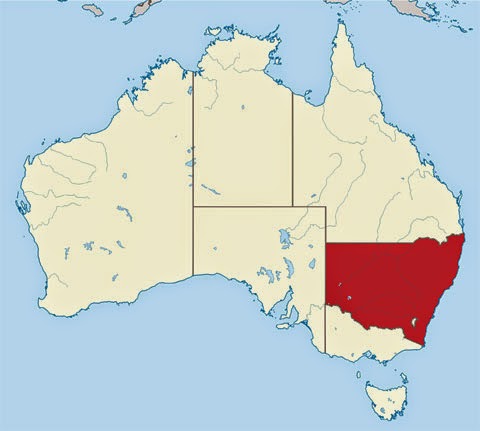
New South Wales has become the third Australian state to recognize same-sex couples who have been married abroad.
Following Queensland and Tasmania, the amendment means gay married couples will no longer have to declare that they are not married while living in the state.
Alex Greenwich, the independent member for Sydney, announced the changes today in a statement.
He said: “Under the changes, same sex couples who marry overseas will be able to reflect their marital status on relevant forms and will no longer have to declare that they are not married.
“This change acknowledges that a growing number of NSW citizens must travel overseas to marry the person they love, while waiting for the federal government to legislate for marriage equality.”
U.S. District Judge Brian Morris has canceled a hearing set for November 20 in a case challenging Montana’s ban on gay marriage, saying he will rule based on briefs already filed with the court.
The four gay couples who sued to overturn the ban along with Attorney General Tim Fox, who is defending the ban, agreed that U.S. District Judge Brian Morris has enough information to decide the case without the formal hearing that had been scheduled next Thursday.
The 9th U.S. Circuit Court of Appeals recently struck down similar gay-marriage bans in Idaho and Nevada. The American Civil Liberties Union of Montana expects a favorable ruling because the 9th Circuit includes Montana.
“We don’t think there are any material facts in dispute, and so the case can be decided without a trial.
The ban on same sex marriage in the Montana Constitution is the same as the bans that were ruled unconstitutional in Idaho, and Nevada. The four couples in our case are situated the same as the couples who won in the Idaho and Nevada cases.
We are raising the same issues that were raised in the Idaho and Nevada cases, and we are optimistic that the decisions of the Ninth Circuit in those cases will convince the District Court to rule in our favor.”
Governor Steve Bullock has spoken out in favor of same-sex marriage in Montana.
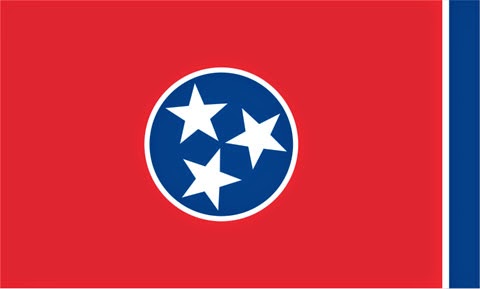
The plaintiffs in the current same-sex marriage recognition case in Tennessee have filed their petition for a writ of certiorari with the Supreme Court.
This makes Tennessee the second case to ask SCOTUS for review since the 6th Circuit Court of Appeals upheld same-sex marriage bans in Tennessee, Michigan, Ohio and Kentucky.
Earlier today, the plaintiffs from Ohio filed their similar request with SCOTUS.
After Wednesday’s oral arguments in Mississippi concerning the state’s same-sex marriage ban, hopes are high that gay and lesbian couples will be able to legally marry soon.
Emily Le Coz, for the Clarion-Ledger, wrote that most folks would be surprised if U.S. District Judge Carlton W. Reeves did not rule in favor of marriage equality after the five hour hearing considering the line of questioning by the judge.
In light of that hearing, county clerks across the state have begun preparing for long lines of same-sex couples forming at their doors should the ruling come as expected.
In Wednesday’s federal hearing, state defense attorney Paul Barnes told Reeves he believed county clerks would need “at least two weeks” to accommodate the potential change. In his argument, he cited “chaos” that ensued in Utah after a federal judge there struck down the state’s same-sex marriage ban in 2013 and did not grant a stay.
Sherrie Swenson, county clerk for Salt Lake County, which is Utah’s most populated county, told The Clarion-Ledger Thursday her office did not witness “chaos” at all when the federal judge struck down Utah’s ban.
“We had hundreds of people lined up for multiple days, but ‘chaos’ isn’t an appropriate way to describe it,” she said. “Everyone was so courteous and friendly and excited. We were able to issue about 150 licenses the first afternoon (after the ban was lifted) and about 350 that next Monday.”
According to 2010 census statistics, 3,484 same-sex couples live in Mississippi, and 417 live in Hinds County. To accommodate a potential rush on the Hinds County Courthouse if Reeves does not grant a stay, Dunn said the only foreseeable major change would be wording on marriage license paperwork, which her office has the authority to change in “under two minutes.”
The first of four expected appeals of the recent 6th Circuit Court ruling on same-sex marriage has been filed by Lambda Legal and the ACLU to the US Supreme Court by the plaintiffs from Ohio.
Those plaintiffs are comprised of married same-sex couples and widowers of men who have died and want their out-of-state marriages recognized by the state.
The appeal is predicated on the recent ruling by the 6th Circuit Court of Appeals which upheld bans on same-sex marriage in four states.
The cases in Tennessee and Ohio focus on recognition of legal same-sex marriages conducted in other states, while the Kentucky and Michigan cases request full marriage equality.
The Supreme Court declined to review appeals from Utah, Oklahoma and Virginia earlier this year saying with no disagreement between federal appellate courts there was no need.
With the 6th Circuit’s ruling which upheld the marriage bans in the four states, it’s almost certain SCOTUS will grant review to at least one of the cases.
Although SCOTUS decided 7-2 against issuing a stay on a federal judge’s ruling that Kansas’ ban on same-sex marriage is unconstitutional, clearing the way for marriage equality, the state’s Attorney General continues to fight tooth and nail to stop gays and lesbians from marrying.
Today, AG Derek Schmidt says the ruling from the high court only applies to two counties in the state. The ACLU says all 105 counties are affected by the ruling.
Marriage licenses in Kansas are issued by district court clerks’ offices after a mandatory three-day wait. Schmidt said the high court ruling applies only in Douglas County in northeastern Kansas and in Sedgwick County, in south-central Kansas.
In the state most populous county, Johnson County, Court Clerk Sandra McCurdy said about 70 applications from same-sex couples are pending.
“Until I hear something from the Kansas Supreme Court, I’m not issuing any marriage licenses,” McCurdy said Wednesday.
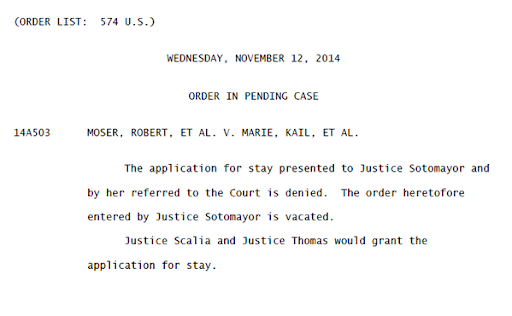
On Monday, Justice Sotomayor granted a temporary stay to Kansas regarding the recent same-sex marriage ruling from the 10th Circuit Court of Appeals.
Today, SCOTUS issued it’s decision and it’s for the good guys. No stay for Kansas.
Only Justices Scalia and Thomas would have granted the stay, making the decision 7-2 against Kansas.
Kansas can head to the 10th Circuit, but seeing how that appellate court has already set precedent – AND the Supreme Court has given that ruling it’s blessing – don’t look for the 10th to reverse itself any time soon.
Expect marriage licenses to be issued to same-sex couples immediately.
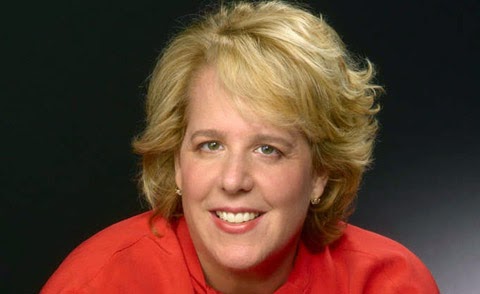
According to the Clarion Ledger, Roberta Kaplan – lead counsel for the plaintiffs in the Mississippi same-sex marriage lawsuit – ripped through her reasons in favor of same-sex marriage in rapid-fire style today.
Kaplan, who successfully argued in favor of gay marriage before the U.S. Supreme Court in the U.S. versus Edith Windsor case, had to excuse herself at times for speaking too quickly as she quickly listed her reasons why she believes the state’s gay-marriage ban violates the constitution and her clients’ rights, all the while noting documented case law in support of her arguments.
Things did not go so well for the other side, however. Actually, the Clarion Ledger used the word “stumble” in their assessment.
Lead counsel for the state, Justin Matheny, admitted a lack of working knowledge on the subject saying “When I found out I would be the one to come to court and argue this case, I had to do some research.”
This pretty much sums up how things went for the anti-gay side of the argument:
Judge Reeves to Matheny: “What is the state’s rational basis that same-sex couples can’t marry … and its prohibition of same sex couples from adopting children when all a child wants is to be loved, and they don’t care by whom?”
Matheny cited “responsible procreation” as his response, meaning that the state wants marriage only between couples who can responsibly procreate.
“You allow people in prison to be married, and there are no more conjugal visits,” Reeves argued. “Old people can marry” and they can’t bear children “with the exception of Abraham and Sarah.”
Even though Hawaii has enjoyed marriage equality for a year, and even though 1,800 same-sex marriages have taken place in the state during that time, anti-gay Rep. Bob McDermott has won his chance to bring the issue to the state supreme court at least one more time.
On Dec. 18, the state’s high court will hear oral arguments in the challenge brought by Rep. Bob McDermott, a Republican in the Hawaii Legislature. The basis of his case: Hawaii voters opposed same sex marriage in 1998 by a vote of 69.2 percent to 28.6 percent on a amendment that read: “The legislature shall have the power to reserve marriage to opposite-sex couples.”
Most voters believed they were reserving marriage to opposite-sex couples only in 1998, McDermott said, because the amendment clearly restricted the power of the Legislature on this issue, not expanded it. “The people spoke on this issue in 1998 in a clear voice. To ignore them is to disregard and disenfranchise their 1998 vote,” McDermott said. “I defy anyone to explain how those ballot instructions mean they can exercise the exact opposite of the will of the people regarding marriage. Who owns the government, politicians or the people?”
McDermott first filed a court challenge to the law while it was still being debated at the Legislature last November. “Some people fail to realize that we won on two of the three issues contested in the second hearing, as to standing and the language of the amendment, respectively,” McDermott said.
Today, U.S. District Court Judge Gergel ruled in favor of the freedom to marry in South Carolina, striking down the state’s ban on marriage between same-sex couples.
Normally, the state would now appeal to the 4th Circuit Court of Appeals for further review.
BUT….
This ruling came after the United States Supreme Court denied review in five cases involving the freedom to marry, including a case in Virginia.
Because Virginia is in the 4th Circuit, the ruling is binding for the entire circuit, including South Carolina. Since this ruling, West Virginia and North Carolina have secured the freedom to marry.
The ruling is stayed until November 20 at noon.
UPDATE: South Carolina Attorney General Alan Wilson has pledged in a statement to “immediately appeal” the ruling to the 4th Circuit:
“Today’s ruling comes as no surprise and does not change the constitutional obligation of this office to defend South Carolina law, including, but not necessarily limited to, appeal to the Fourt Circuit. Therefore we will immediately appeal to the Fourth Circuit.
“Also, the Sixth Circuit Court of Appeals recently upheld traditional marriage. Therefore, we have opposing rulings between federal circuits, which means it is much more likely that the U.S. Supreme Court could resolve the matter at the national level.
“We believe this office has an obligation to defend state law as long as we have a viable path to do so. Finally, our unique law are not the same as those in other states. Therefore, based on the time-honored tradition of federalism, this Office believes South Carolina’s unique laws should have their day in court at the highest appropriate level.”