Ignacio Pérez Rey (via Instagram) Some news items you might have missed: • InstaHunks: You’ve gotta love a guy not afraid to wear a face mask during this pandemic. Ignacio Pérez Rey (above) proves you can look good AND be safer. Follow him on Instagram here. • Instinct: An openly gay New York state senator was rejected from donating blood even though he qualifies to do so under the new federal guidelines. • LGBTQ Nation: Homophobic and transphobic rapper Boosie Badazz posted a video on social media admitting that he hired a sex worker to give oral sex to his son and nephews when they were 12- and 13-years-old. While some commenters cheered Badazz for his actions, others were horrified and said that someone should call Child Protective Services to remove the children from his care. • PEOPLE: Beckett Cypher, the son of Melissa Etheridge and Julie Cypher, has died at age 21 of an opioid overdose. Etheridge and Cypher ended their relationship in 2000 but continued to co-parent their children. Musician David Crosby was later revealed to be Beckett’s biological father. • Buzzfeed News: Twitter CEO Jack Dorsey emailed employees on Tuesday telling them that they’d be allowed to work from home permanently, even after the coronavirus pandemic lockdown passes. Some jobs that require physical presence, such as maintaining servers, will still require employees to come in. • CNN: Donald Trump voiced frustration Wednesday at the nation’s top infectious disease specialist after he warned a day earlier against reopening schools and businesses too quickly. “I was surprised by his answer, actually,” Trump said when asked about Dr. Anthony Fauci’s warnings during televised congressional testimony that reopening states too quickly could have dire consequences. Trump added, “It’s not an acceptable answer.”
President Trump says he was “surprised” by Dr. Fauci’s warning about reopening schools during the pandemic and says it’s “not an acceptable answer” https://t.co/Nj065CIsxppic.twitter.com/oX2LkydkPp
In this week’s headlines: • Brazil changes course on regulations that limit gay and bisexual me from donating blood • A gay couple in Tulsa speaks out after a neighbor posts anti-LGBTQ signs his front yard • Germany bans so-called ‘conversion therapy’ for minors • Out CNN anchor Anderson Cooper announces he’s become a dad • Two ground-breaking stars in their respective fields – rock and roll pioneer Little Richard and magician Roy Horn of Siegfried & Roy – pass away All that and more in this episode of The Randy Report
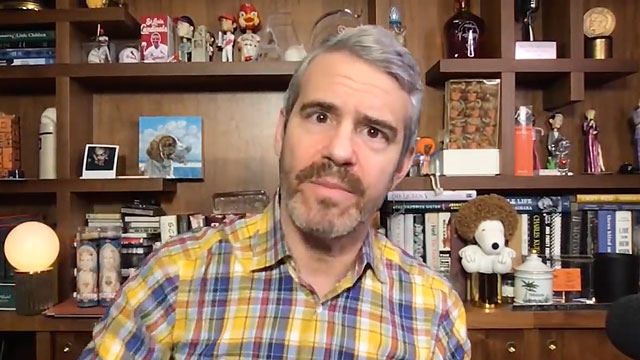
Andy Cohen on ‘Watch What Happens Next Live’ This morning, Good Morning America ran an in-depth piece about Lukus Estok, a young gay man who had recovered from COVID-19, but was turned away from donating his plasma at the New York Blood Center because he is gay. In a new statement to Good Morning America, an FDA spokesperson stated that “the FDA is committed to considering alternatives to the time-based deferral for men who have sex with men by generating the scientific evidence that will support an effective individual risk assessment-based blood donor questionnaire.” The FDA also revealed to Good Morning America that it is “working to commence a pilot study that will enroll about 2000 men who have sex with men and who would be willing to donate blood.” “The FDA is placing American lives on the line as they debate stigma, not science,” said GLAAD President and CEO Sarah Kate Ellis. “During the current crisis, the FDA is wasting time and money on a pilot study when all the scientific research and medical authorities plainly state that gay and bi man should not be restricted from donating blood.” “All blood donations, regardless of sexual orientation, are screened to ensure healthy samples and now the American Medical Association, leading elected officials, and more than 600 medical professionals have all done the work for the FDA and unequivocally state that this ban needs to end,” added Ellis. On his Thursday evening broadcast of Watch What Happens Live, Andy Cohen revealed he was denied from giving plasma after surviving COVID-19. He called out the FDA’s restrictions for being based on “stigma rather than science,” which is ultimately impeding on the urgent need for blood donations from Americans, as well as plasma donations from COVID-19 survivors. Watch Andy Cohen’s impassioned speech here.
GLAAD thanked Andy on Twitter for speaking out against the ban:
Earlier this week, attorney generals from 19 states and D.C. issued a letter to the Assistant Health Secretary, requesting that the FDA further loosen its ban on blood donations from gay and bisexual men. (via press release)
Mike Yerxa (image via Instagram) Some news items you might have missed: • InstaHunks: Who else is baking during this coronavirus thing? Toronto hottie Mike Yerxa (above – serious beard goals!!!) shows his pride in his newly-baked banana bread. • The Hill: Twitter founder Jack Dorsey, whose net worth is estimated at $3.3 billion, announced Tuesday that he will donate $1 billion to the newly-founded Start Small Foundation to support “global COVID-19 relief” efforts. Dorsey ranks 168 on the Forbes 400 list, so there are 167 American billionaires with more money than him. Will they pony-up as well? • MSNBC: Donald Trump thinks mail-in voting is “horrible,” but he voted by mail in Florida’s election last month. “Because I’m allowed to.” In 2016, there were nearly 33 million absentee votes counted, according to the U.S. Election Assistance Commission. More than 600,000 military and other overseas voters cast ballots in 2016.
President Trump: "I think mail-in voting is horrible, it's corrupt."
Reporter: "You voted by mail in Florida's election last month, didn't you?"
• Washington Blade: At a press conference last Friday, Donald Trump was asked about the FDA easing its outdated blood donation rules for gay and bisexual men from a 12-month wait to 3-months. The Donald, who frames himself as ‘good for the gays’ admitted he didn’t know anything or have anything to do with the new guidelines. • Variety: Netflix is releasing an extra episode of the hit docu-series Tiger King next week, according to zoo owner Jeff Lowe from the show. “Netflix is adding one more episode,” said Lowe in a video posted on Twitter by Justin Turner of the Los Angeles Dodgers. “It will be on next week. They’re filming here tomorrow.” #ItsNotOver • NewNowNext: Lady Gaga and advocacy group Global Citizen teamed up to raise $35 million in the fight against the coronavirus pandemic, and will celebrate with a talent-filled TV special honoring health care workers on April 18, starting at 8pm EST. In the United States, it will be shown simultaneously on CBS, NBC, and ABC. The special will include appearances by Elton John, Lizzo, John Legend, Billie Eilish, Paul McCartney, Stevie Wonder, David Beckham, Alanis Morissette, Andrea Bocelli, Kacey Musgraves, Keith Urban, Maluma, Idris Elba, and more. • Talking Points Memo: Clad in gloves, a mask and full-length gown, Wisconsin Speaker Robin Vos (R) assured voters that it is “incredibly safe to go out” on Election Day despite the COVID-19 pandemic. Vos and his fellow Republicans were behind the push to keep Wisconsin’s elections as scheduled, in part, because there’s a state Supreme Court seat on the ballot and conservatives do better when fewer folks show up. Vos looks silly telling people “incredibly safe” wearing all his hospital gear…
In this week’s podcast: • The FDA issues new guidelines regarding gay and bisexual men donating blood • A new report shows anti-LGBTQ hate groups are on the rise in the U.S. • Get ready to live-stream a global Pride celebration this June • Sean Hayes reflects on saying goodbye to Will & Gracea second time All that and more in this episode of The Randy Report
UPDATE: On April 2, the FDA posted new guidelines reducing the deferral period for men who have sex with men from donating blood and plasma from 12 months to 3 months. In a statement, GLAAD President and CEO, Sarah Kate Ellis said, “LGBTQ Americans can hold their heads up today and know that our voices will always triumph over discrimination.” “This is a victory for all of us who raised our collective voices against the discriminatory ban on gay and bisexual men donating blood,” she continued. “The FDA’s decision to lower the deferral period on men who have sex with men from 12 months to 3 months is a step towards being more in line with science, but remains imperfect. We will keep fighting until the deferral period is lifted and gay and bi men, and all LGBTQ people, are treated equal to others.“
The U.S. Food and Drug Administration gave permission last week for doctors to use plasma from coronavirus survivors as an experimental treatment for patients who become moderately ill from the virus. According to the New York Times, blood from people who have recovered may be teeming with antibodies, proteins created by the immune system to attack the virus. The approach has been used for decades in treating many infectious diseases like influenza and Ebola.
Vineet Menachery, a virologist at the University of Texas Medical Branch, told the Times, “Four to six or eight weeks after infection, their blood should be full of antibodies that will neutralize the virus and that will theoretically limit the infection.”
Although there aren’t any controlled studies to quantify the treatment, there have been reports from China regarding the approach being used on a small number of patients there. U.S. Surgeon General Jerome Adams and other health officials are asking for increased blood donations due to the ongoing COVID-19 threat, but most gay and bisexual men will not be able to donate plasma to help other patients. Even though we’re in the middle of a health crisis, the FDA still maintains gay and bisexual men who have had sex with men in the last 12 months are barred from donating blood of any type. The ban also applies to women who have had sex with bisexual men in the past year. Those requirements were established years ago due to fears of HIV infection through blood transfusions even though such thinking is now out-of-date with modern methods. The Red Cross has said that “blood donation eligibility should not be determined by methods that are based upon sexual orientation.” And a group of 17 U.S. senators have issued a public letter asking the FDA to review its current policy. The letter, signed by Sens. Elizabeth Warren, Bernie Sanders, Kamala Harris, and Cory Booker, encourages the FDA to “shift away from antiquated and stigmatizing donation policies to ones that are scientifically based.” Additionally, GLAAD and several LGBTQ organizations have launched a petition calling for the ban on gay and bisexual men to be lifted. The petition currently has over 17,000 signatures.
Max Emerson and friend (photo: Charlie Nunn) Some news items you might have missed: • InstaHunks: Cutie Max Emerson (above) offers this important public service announcement – “If you foster a doggo you don’t have to quarantine alone. Shelters need your help now more than ever, so if you’re one of the lucky people still financially stable please consider it.” • The Gaily Grind: A “traveling musical minister” who dismissed the COVID-19 threat as “mass hysteria” has just died from complications due to the virus. • Washington Blade: A cadre of 17 senators — including six former presidential hopefuls and one current candidate — are calling on the Food & Drug Administration to take another look at the ban prohibiting gay and bisexual men from donating blood amid the coronavirus crisis. • New Music: Pop sensation 5 Seconds of Summer drops their latest single, “Wildflower,” an 80s-inspired, upbeat power-pop bop. The band says they left out words from the chorus so that people can “make the chorus kind of a choose-your-own-adventure. Expect to hear “WildFlower” all over the place this spring and summer.
• Deadline: NBC has set 9 p.m. Thursday, April 23, for the series finale of Will & Graceand will precede it with a half-hour retrospective special hosted by Eric McCormack. The special will chronicle the series’ guest stars and its history-making moments from over the years, including the first male-to-male kiss on network television. Elton John and Norman Lear also will appear. • NewNowNext: In addition to her Las Vegas shows being postponed due to the coronavirus threat, Lady Gaga has announced she will also delay the release of her upcoming album, Chromatica, as well. “While I believe art is one of the strongest things we have to provide joy and healing to each other during times like this, it just doesn’t feel right to me to release this album with all that is going on during this global pandemic.” • Advocate: The gays asked for it, and #BeardEdgeEdge is here. During an Instagram Live session on Wednesday with Dr. Dara Krass, former Mayor Pete Buttigieg was looking pretty fur-tastic.
The American Red Cross has issued a statement urging the Food and Drug Administration (FDA) to reduce the restrictions for gay and bisexual men to give blood. The Red Cross is asking the FDA to “consider reducing its deferral time for men who have sex with men (MSM) from twelve to three months.” Currently, gay and bisexual men are prohibited from donating blood if they have had sexual contact with another man within the past 12 months. That policy, begun in December 2015, replaced a decades-old regulation banning MSM and transgender women from donating blood at all. The Red Cross calls its suggested revision of current policy a “scientifically-based interim step” while further options are evaluated. The statement notes a 3-month policy would be consistent with other leading countries like Great Britain and Canada. The health organization also recommends “expanded use of new technologies to work toward the elimination of donor eligibility questions that would no longer be necessary.” Underscoring a commitment to “ensure that every blood recipient receives safe, lifesaving blood,” the statement declares that donating blood “should not be determined by methods that are based upon sexual orientation.” “We are committed to working toward achieving this goal,” adds the Red Cross. In a statement to NewNowNext, the FDA characterized the current 12-month ban as “a behavior-based policy, not one based upon sexual orientation.” The FDA’s statement goes on to note that the 2015 policy change was prompted, in part, by reviewing studies in blood donors which “showed that a history of male-to-male sexual contact was associated with a 62-fold increased risk for being HIV positive, whereas the increase in risk for a history of multiple sexual partners of the opposite sex in the last year was 2.3-fold.” The FDA added, “While acknowledging at the time that the change to a 12-month deferral was less than hoped for by some, the FDA considered this to be a first step in the process of evaluating and progressing its blood donor deferral policies for all donors.” I’ve been asked in the past what would happen if a gay man who is undetectable were to donate blood? I’m not a doctor, but some thoughts: The first thing that comes to mind is when you donate you’re asked if you’ve had sex with a man in the past 12 months. If you say yes, they won’t let you donate. If you fib, the blood will be tested and could be found to have HIV antibodies. You might be contacted by health officials to inquire if you were aware you’re positive. “Undetectable” is generally defined as less than 40 copies per ml, while under 200 copies per ml is considered “viral suppression.” According to the CDC, “a person with HIV who takes HIV medicine as prescribed and gets and stays virally suppressed or undetectable can stay healthy and has effectively no risk of sexually transmitting HIV to HIV-negative partners.” During sex, only small amounts of blood and semen are exchanged which is why U=U. But in blood transfusions, a lot of blood is being transferred. So I would imagine it’s possible some amount of virus – however tiny – could be transferred. The issue I have with the FDA’s blood policy is sexually active HIV-negative gay men can’t donate, but a woman who might have unprotected sex with several partners can. It’s about the stigma attached that the current policy furthers. Plus, all donated blood is tested for a multitude of possible issues. So, I don’t see why a sexually active gay man who is HIV negative couldn’t be allowed to donate. For more information about the current blood donation policy in the U.S., check out this Q&A on the FDA’s official site. (source: Red Cross,NewNowNext)