For the first time, an HIV-positive patient has gone into long-term remission after being treated with a multi-drug cocktail raising hopes of a possible cure on the horizon. The patient, a 34-year-old Brazilian man diagnosed in 2012, was put on a three-drug regimen of antiretroviral therapy (ART) which was intensified with additional antiretrovirals plus a skin cancer preventative called Nicotinamide, a water-soluble version of vitamin B3. Dr. Andrea Savarino, of the Instituto Superiore di Sanitá in Rome, Italy, explained the approach in a presentation to the UK organization AIDSmap prior to the 2020 International AIDS conference in San Francisco. The intensified treatment was stopped after 48 weeks and he returned to his normal three-drug regimen. In March 2019, he began a medically-supervised treatment interruption, stopping his antiretroviral therapy. His last tests (taken on June 22, 2020) show his viral load has remained undetectable, meaning he has maintained viral suppression for more than 65 weeks without antiretroviral medications. The patient’s HIV antibody tests also came back negative. “The virus did not rebound, the viral DNA was maintained negative,” Savarino said. “The antibody response decreased over time, if the antibody decreases, it is possible that the virus has stopped its repetition.” (illustration of HIV cells) While exciting news, Savarino cautions “the result is highly likely not to be reproducible,” describing these results as “preliminary.” He noted that four other patients were given the same regimen but HIV was not found to have been put in check in those individuals. The Brazilian patient is still being monitored to see if HIV has truly been eradicated from his system. Since the early 1980s, scientists have worked diligently to find a cure for HIV, which has infected more than 75 million people and killed almost 33 million since the AIDS epidemic began. Modern medications available today allow patients to control the virus and keep HIV in check, but Reuters reports there are an estimated 38 million people are currently living with HIV. There have been three prior reports of individuals apparently being ‘functionally cured’ (long-term remission) of HIV, but those cases were the result of complicated, invasive bone marrow transplants. All three received transplants from donors with a mutated gene for the CCR5 protein found on white blood cells. While HIV relies on the protein to enter the cells, the mutated version apparently blocks the virus from attaching to those cells. (source: Reuters,AIDSmap)
Larry Kramer in 2010 (photo: David Shankbone – CC License) Larry Kramer, whose activism shocked the country into addressing the HIV epidemic as it killed thousands of Americans, has passed away at the age of 84. In addition to his work as an award-winning playwright including The Normal Heart, he helped co-found the Gay Men’s Health Crisis (the first public service organization for those with HIV) and the activist group ACT UP (AIDS Coalition to Unleash Power) which staged “die-in” protests to draw attention to the mounting death toll from AIDS. From the New York Times:
Larry Kramer, the noted writer whose raucous, antagonistic campaign for an all-out response to the AIDS crisis helped shift national health policy in the 1980s and ’90s, died on Wednesday morning in Manhattan. He was 84.
His husband, David Webster, said the cause was pneumonia. Mr. Kramer had weathered illness for much of his adult life. Among other things he had been infected with H.I.V., the virus that causes AIDS, contracted liver disease and underwent a successful liver transplant.
An author, essayist and playwright — notably hailed for his autobiographical 1985 play, “The Normal Heart” — Mr. Kramer had feet in both the world of letters and the public sphere. In 1981 he was a founder of the Gay Men’s Health Crisis, the first service organization for H.I.V.-positive people, though his fellow directors effectively kicked him out a year later for his aggressive approach. (He returned the compliment by calling them “a sad organization of sissies.”)
He was then a founder of a more militant group, Act Up (AIDS Coalition to Unleash Power), whose street actions demanding a speedup in AIDS drugs research and an end to discrimination against gay men and lesbians severely disrupted the operations of government offices, Wall Street and the Roman Catholic hierarchy.
Dr. Anthony S. Fauci, longtime director of the National Institute of Allergy and Infectious Diseases, credits Kramer with playing an “essential” role in the development of drug regimens that could help those living with HIV, and in urging the FDA to streamline its process for vetting and approval of new drugs.
Kramer’s play, The Normal Heart, opened at the Public Theater in April 1985 and ran for nine months. The play chronicled the early years of the HIV/AIDS crisis and his often aggressive activism to get people engaged in solving the epidemic. In 2011, The Normal Heart was revived on Broadway winning the Tony Award for Best Revival. And in 2014, Kramer wrote a television adaptation for HBO (directed by Ryan Murphy) which won the 2014 Emmy for outstanding television movie. In his review of the revival, Ben Brantley of the New York Times wrote, “By the play’s end, even people who think they have no patience for polemical theater may find their resistance has melted into tears. No, make that sobs.” I encourage you to read the full profile by the New York Timeshere.
Larry Kramer valued every gay life at a time when so many gay men had been rendered incapable of valuing our own lives. He ordered us to love ourselves and each other and to fight for our lives. He was a hero.
He was fierce, he was important, he never backed down. He criticized the homophobes and the community itself. He wouldn't tolerate complacence or "thinking with your d**k". If he made you angry, yeah, well, that's what he did. RIP to a true legend.https://t.co/FeMX6N862f
Don’t know a soul who saw or read The Normal Heart and came away unmoved, unchanged. What an extraordinary writer, what a life. Thank you, Larry Kramer. pic.twitter.com/M3hA0cNrCU
RIP Larry Kramer, a true American hero, an angry prophet, a founder of GMHC and ACT UP, a great playwright and a proud gay man. Known for his completely justified rage, he was also a savior, a husband and someone who made a difference in so many lives pic.twitter.com/05zmQxudkD
When Americans tried to ignore the AIDS crisis, Larry Kramer and his allies in ACT UP forced the nation to reckon with the public health emergency head-on. His work remains a model for aggressive activism in the face of a pandemic. https://t.co/WWBecap6Oq
Larry Kramer has died, at 84 years old. “There is no question in my mind that Larry helped change medicine in this country,” Anthony Fauci said in a 2002 Profile of the activist and author. https://t.co/Z3BshxhN7p
(image via Depositphotos) Could this be PrEP 2.0? A large-scale clinical trial found that the injectable antiretroviral drug cabotegravir administered once every 8 weeks resulted in fewer new cases of HIV than daily doses of Truvada taken as pre-exposure prophylaxis (PrEP). Begun in December 2016, the study involved more than 4,500 participants around the world. All were deemed to be at risk of contracting HIV and randomly assigned to receive either a daily dose of Truvada or an injection every eight weeks. Those in the injectable group also were given a placebo pill, and those given Truvada received placebo injections. After conducting an interim review of the trial, the study’s results clearly showed cabotegravir actually reduced HIV infection rates more than daily oral doses of Truvada. According to Science Magazine, 12 infections occurred in the cabotegravir group versus 38 in the group that received Truvada. Both control groups were of the same size. Statistically, that represents a 0.38% incidence in the cabotegravir group versus 1.21% in the Truvada one, a 69% difference in new infection rates. The results were deemed so impressive that all participants, including those receiving placebos, will be offered the injections beginning this week. Science Magazine reports the apparent success (the results of the study haven’t been published in a peer-reviewed journal yet) could be a more attractive alternative than a daily regimen of pills which has proved difficult for many people. One drawback to the daily oral dose of Truvada has been the difficulty for some people to stay on schedule. A missed dose here or there can reduce the regimen’s effectiveness. On the flip-side of that equation, though, those who choose to use the long-acting injectable medication might miss a scheduled clinic visit which could reduce its effectiveness. (source: ScienceMag.org)
A new policy proposal from the Trump administration could affect a lot of LGBTQ Americans in terms of healthcare and their wallets. The Washington Blade reports the Centers for Medicare and Medicaid Services issued a draft rule last month that would allow insurance companies to ignore ‘co-pay coupons’ for prescription drugs in regard to computing a patient’s out-of-pocket spending. In the past, insurance companies have allowed copay coupons (which reduce prices at checkout) to count towards a patient’s deductible and out-of-pocket limits. For instance, if you are a gay man who takes PrEP (pre-exposure prophylaxis) as protection against HIV infection, you may be acquainted with Gilead’s Advancing Access co-pay coupon card which pays up to $7,200 annually towards your copay and/or deductible if you have health insurance. As many have found, when used to cover your PrEP prescription, within one or two months many patients find their deductible or out-of-pocket maximums have been met because the co-pay coupon counts towards those limits. From that point on, you might have low or zero out-of-pocket medical expenses. But if the proposed rule is adopted, insurance companies could block those coupon payments from being applied towards a patient’s deductible and out-of-pocket maximums – even though the insurance company isn’t having to pay. Why does an insurance company care where the funds come from as long as the bill gets paid??? In those cases, you would have to pay much more in regard to out-of-pocket spending before reaching your deductible. And it’s not just HIV medications in play here. The new policy could affect Americans with hepatitis B or C, who need daily medications to stay healthy in the case of hepatitis B, and for medications to cure hepatitis C which requires treatment for up to 12 weeks. Donald Trump has said in the past he wants to lower the cost of prescription drugs, but this certainly won’t do the trick. As the Blade notes, some patients with limited funds often skip a dose of medications here or there to stretch out the drugs they have. But studies have shown that missing just two days of HIV meds can increase an individual’s viral load. It’s not just HIV or hepatitis patients that could be affected. A study from the IQVIA Institute for Human Data Science shows in 2017 69 percent of insured Americans did not fill their new prescriptions when they had to pay more than $250 out of pocket. Such non-adherence leads to tens of thousands of preventable deaths each year. In the end, while Trump may profess to want to help the American people with their healthcare costs, this new policy would only favor insurance companies. Here’s hoping the new policy proposal is rejected. (source: Washington Blade)
A new report from Public Health England shows HIV infection rates in the UK have taken a steep decline since 2012. According to the figures released today, new infections among gay and bisexual men have dropped from 2,800 in 2012 to 800 in 2018, which represents a 71% decrease. Health authorities attribute the decrease to a number of factors. For one thing, encouraging the use of pre-exposure prophylaxis (PrEP) has become a focus for health officials. Studies show the once-a-day pill is almost 99% effective in preventing HIV infection. PrEP is currently available for high-risk patients in Wales and Scotland, but the BBC reports “many in England have had to wait until they can gain access to an impact trial that first began in September 2017.” That trial is scheduled to end later this year. Also aiding in reducing new infections is a public campaign encouraging people to get tested regularly for HIV. And when new infections are discovered, those patients are immediately placed on HIV medications to bring their viral load down to undetectable levels, which means the virus can’t be passed on to others. Of the estimated 103,800 people believed to be living with HIV in the UK in 2018, 93% of those had been diagnosed and 97% of those diagnosed were receiving treatment. Among the HIV patients on medications, 97% were found to have undetectable viral loads. Contrast that with the United States where the Centers for Disease Control estimate 83% of folks living with HIV have been diagnosed and just 63% have been deemed to be virally suppressed. However, Debbie Laycock, head of policy at the Terrence Higgins Trust, noted the new report isn’t all good. Laycock told BBC News that 43% of new diagnoses are being discovered at a late stage, particularly with men who identify as straight and those over 50 in age. Late-stage infections result in a much higher risk of death compared with early detection. And, there have been slight increases in new HIV infections among black people and south Asian men. But Health Secretary Matt Hancock told the BBC he feels the UK is on track to reach its goal of ending HIV transmission by the year 2030. “HIV has brought untold hurt and suffering to so many, so it is encouraging to see transmissions continue to fall across the UK,” said Hancock.
The Department of Health and Human Services announced details Tuesday for applying for free PrEP medications through the federal government. The new program – called Ready, Set, PrEP – will distribute pre-exposure prophylaxis (PrEP) medications to help prevent people currently HIV-negative from becoming infected with the virus. Drugstore chains CVS Health, Walgreens and Rite Aid, which have a combined 21,000 locations across the country, will donate prescribing services for the program. Folks can go to the new website GetYourPrEP.com to apply for the medications or call toll free 855-447-8410. In order to qualify, an individual must be HIV-negative, lack prescription drug coverage, and obtain a valid prescription for the medication. Earlier this year, drugmaker Gilead Sciences announced it would donate 2.4 million bottles of Truvada to up to 200,000 uninsured people annually through 2030. Gilead is the manufacturer of both Truvada and Descovy, which was approved by the Food and Drug Administration for PrEP use on October 3 this year. They are the only approved drugs for use as PrEP by the FDA. In its announcement, Gilead said the offer would “transition to Descovy if it is approved for use as PrEP.” Gilead has also announced a generic version of Truvada will become available by 2020. Ready, Set, PrEP is part of the current administration’s ‘Ending the HIV Epidemic Plan’ which was announced during President Trump’s State of the Union address this year. The plan has a goal of reducing the number of new HIV diagnoses in the U.S. by 75 percent in five years and by 90 percent in 10 years. Today’s news comes as the federal government is currently suing Gilead for patent infringement regarding PrEP. In a press release on November 6, the Health and Human Services Department announced the United States had filed a complaint in federal district court alleging Gilead had profited from research funded by hundreds of millions of taxpayer dollars and reaped billions from PrEP through the sale of Truvada® and Descovy®. Currently, a month supply of Truvada in the United States sells between $1,600 to $2,000 for those without prescription drug coverage, while in other parts of the world it is available for as low as $70. In 2018 alone, Gilead amassed $3 billion in the sale of Truvada.
In this week’s podcast: • A journalist wrote a scathing piece about Mayor Pete Buttigieg and the mayor called his critic to listen • NYC sees a significant drop in new HIV infections • A Palo Alto police brutality case reaches a settlement • The gay panic defense could be bye-bye in New Jersey • Kasey Musgraves has a new ‘tres gay’ Christmas special on Amazon Prime • Award-winning out singer Matt Zarley drops his take on the holiday classic, “Have Yourself A Merry Little Christmas” * Observing World AIDS Day this year Link to Mark King’s essay – Link to JoeMyGod’s essay
World AIDS Day 2019. Yes, we still do this. Someday, I believe we won’t have to, but even then we will continue the tradition. Because it’s important to remember. One day, when the virus is gone, the world will still need to know this ‘thing’ happened. That millions of people died. They didn’t have ‘a bad day.’ They suffered and died. Some folks stood up; some became complicit through their silence. We tell young people today “it gets better.” And, it does. That phrase today is associated with bullying and self-acceptance. But in the 1980s and 90s, the ‘better’ we needed seemed far, far away. And an uplifting mantra repeated at our reflections in a mirror didn’t solve the problem. I can remember a couple of firsts when that ‘problem’ collided with my life on a first-person basis. In December 1986, on the road with the national touring company of CATS (my first big job as an actor), we’d been told Tom Michael Reed, the show’s dance supervisor who had put our company together, had become ill. No more information than that was offered. We didn’t need it. We knew. We would see Tom one more time, in the Spring of 1987 in Baltimore, Maryland. A few months later, while the tour was in Kansas City, the company was called out into the hallway backstage after a performance. We were told Tom had passed. I remember grabbing my best friend as we burst into tears. My journey to CATS had been a long rollercoaster ride, and Tom had taken a chance on 22-year-old me. In that moment, I realized how much someone’s belief in me could hold so much gravity. A few years later, I met an impossibly handsome and talented actor in NYC who, for reasons I could not fully understand, looked at me in a way that made me like myself more. On what would be our first date, sitting at a diner on the Upper West Side of Manhattan, he paused and then said, “I have to tell you something – I’m HIV positive.” I took a breath and somehow, from somewhere in my 20-something body/mind/spirit, replied, “Well, you’ll have to help me with that.” He smiled. I smiled. And we went on with our date. Happily, he’s still a very good friend today with whom I know we have our own special connection. And life went on beyond the barricades. Each year, I make a point to read a couple of essays by writers much more talented than myself. They share these collections of words that capture a time now in the rearview mirror. Even when moving forward, it’s important to check in on the past. Writer Mark King was honored by the National Lesbian Gay Journalists Association for a post he originally penned in 2007 about the courage he was forced to summon at a time when folks were holding to the ground as the ground kept shifting. Here’s just a bit:
There is compassion here, enough for all the world’s deities and saints acting in concert. Infinite compassion for men who lived in fear and checked every spot when they showered for Kaposi sarcoma, and for disowned sons wasting away in the guest room of whoever had the space. But we get older, and friends don’t ask us to hold their hand when they stop breathing, and the fear fades, and I bought new leather loafers and the White Party is coming. The truth is simply this, and no one will convince me otherwise: My most courageous self, the best man that I’ll ever be, lived more than two decades ago during the first years of a horrific plague. He worked relentlessly alongside a million others who had no choice but to act. He secretly prayed to survive, even above the lives of others, and his horrible prayer was answered with the death of nearly everyone close to him. To say I miss that brutal decade would only be partially true. I miss the man I was forced to become, when an entire community abandoned tea dances for town hall meetings, when I learned to offer help to those facing what terrified me most. Today, the lives of those of us who witnessed the horror have become relatively normal again, perhaps mundane. We prefer it. We have new lives in a world that isn’t choking on disease. But once, there was a time when we were heroes.
The other piece I’d like you to read is from Joe Jervis of JoeMyGod. Each year, Joe shares his essay “Membership,” originally written in 2004. The post chronicles a chapter in his life from 1985 when he and his friends suddenly joined a “new and modern group” of people who were forced to grieve much earlier than they should have. For more than 30 years now, World AIDS Day has encouraged us to observe and remember. But we also celebrate this place and time when medications keep people alive with fewer and fewer complications. And, for a huge number of people in treatment, viral loads can become undetectable. And undetectable = untransmittable. New York City recently reported new diagnoses of HIV have hit a 17-year low. And generic drug manufacturer Cipla has announced a new drug for treating children with HIV, Quadrimune, that can be mixed with milk or sprinkled on baby cereal that has an estimated cost of $1 a day. Those are good things. We are still here. Tomorrow will come, the horizon will still loom in the distance, even as we check the rearview mirror out of the corner of our eye. So, remember. And, please don’t ever forget to dance. Because we can. p.s. know your status
By Lawrence Pfeil, Jr Every year as World AIDS Day approaches, I struggle with what to write about a subject so deeply woven into the fabric of our community, but this year the story was unfortunately clear. Three decades after “the first-ever world health day” was declared by the World Health Organization as “an opportunity for people worldwide to unite in the fight against HIV; show their support for people living with HIV and to commemorate people who have died,” World AIDS Day is largely forgotten. In New York City, the epicenter of the AIDS crisis, home of GMHC, BroadwayCares/EquityFightsAIDS, ACTUP, and openly HIV-positive City Council Speaker Corey Johnson, the Empire State Building won’t be lit red in recognition again this year. The last time was in 2015 when I noticed World AIDS Day wasn’t on the lighting schedule and submitted the request as a private New Yorker living with HIV/AIDS. (Requests are usually made by a major organization/corporation.) When I made the same request the following year, it was denied even though nothing else was scheduled. The Empire State Building hasn’t recognized World AIDS Day since. Empire State Building World AIDS Day isn’t important enough to get the attention of mainstream media. It even goes largely ignored by our own LGBTQ media. The argument is, HIV/AIDS is not a “serious” problem, but the facts* are:
9 million people across the globe with HIV/AIDS in 2018.
2 million were adults and 1.7 million were children
7 million were newly infected
770,000 died
And there is still no cure and no vaccine. What they’re really saying is HIV/AIDS isn’t killing enough people anymore; it’s not the “disease of the month;” and/or it won’t get enough “clicks” for their advertisers. Here are the results of that attitude and the stories not getting told. Current retroviral medications that are allowing people like me to live healthy full lives and PrEP – which is helping prevent the spread of HIV/AIDS – are lifesaving, but only if you have access to them. Many people in our community, especially people of color, don’t have the same access to treatment let alone afford the medication’s $1800/month price tag. Moreover, only 79% of people with HIV know their status. The 21% who don’t is due in great part to a lack of access to testing. A recent article on The Randy Report published the data from a study on the attitudes and behaviors of the youngest generations towards people with HIV and the results were horrifying.
28% of HIV-negative millennials said they have avoided hugging or interacting with HIV-positive people.
41% of Gen Z respondents were either somewhat informed or not at all informed about HIV, compared to 23% of millennials.
*via HIV.gov Even in our own community, there is a shocking lack of knowledge about HIV transmission which has fostered a campaign to educate, “Undetectable = Untransmittable.” Still, the stigma of HIV/AIDS continues, not so much out of fear as before but out of sheer ignorance. At the other end of the spectrum are the long-term survivors of the AIDS epidemic which even fewer are talking about. I know many with severe health issues caused by the ravages of early drug treatments like AZT which are only now catching up with them. Coupled with growing older in a Community obsessed with youth who are oblivious to the basic facts of HIV/AIDS, it’s yet another bitter pill to swallow. Finally, an original purpose of World AIDS Day was to commemorate those lost in the plague, and those people still deserve to be remembered especially by our Community. The health care providers, researchers, activists, fundraisers, caregivers who fought for them (and continue to fight) expect nothing less. If we don’t care about their lives who will? Their stories are part of Our Story. World AIDS Day – attention must be paid because lives depend on it.
 For the first time, an HIV-positive patient has gone into long-term remission after being treated with a multi-drug cocktail raising hopes of a possible cure on the horizon. The patient, a 34-year-old Brazilian man diagnosed in 2012, was put on a three-drug regimen of antiretroviral therapy (ART) which was intensified with additional antiretrovirals plus a skin cancer preventative called Nicotinamide, a water-soluble version of vitamin B3. Dr. Andrea Savarino, of the Instituto Superiore di Sanitá in Rome, Italy, explained the approach in a presentation to the UK organization AIDSmap prior to the 2020 International AIDS conference in San Francisco. The intensified treatment was stopped after 48 weeks and he returned to his normal three-drug regimen. In March 2019, he began a medically-supervised treatment interruption, stopping his antiretroviral therapy. His last tests (taken on June 22, 2020) show his viral load has remained undetectable, meaning he has maintained viral suppression for more than 65 weeks without antiretroviral medications. The patient’s HIV antibody tests also came back negative. “The virus did not rebound, the viral DNA was maintained negative,” Savarino said. “The antibody response decreased over time, if the antibody decreases, it is possible that the virus has stopped its repetition.”



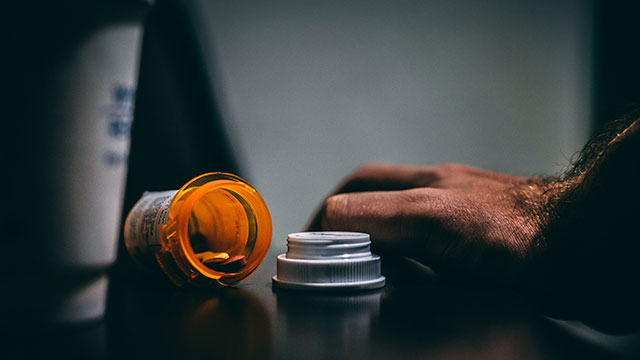 As the Blade notes, some patients with limited funds often skip a dose of medications here or there to stretch out the drugs they have. But studies have shown that


 At the other end of the spectrum are the long-term survivors of the AIDS epidemic which even fewer are talking about. I know many with severe health issues caused by the ravages of early drug treatments like AZT which are only now catching up with them. Coupled with growing older in a Community obsessed with youth who are oblivious to the basic facts of HIV/AIDS, it’s yet another bitter pill to swallow. Finally, an original purpose of World AIDS Day was to commemorate those lost in the plague, and those people still deserve to be remembered especially by our Community. The health care providers, researchers, activists, fundraisers, caregivers who fought for them (and continue to fight) expect nothing less. If we don’t care about their lives who will? Their stories are part of Our Story. World AIDS Day – attention must be paid because lives depend on it.