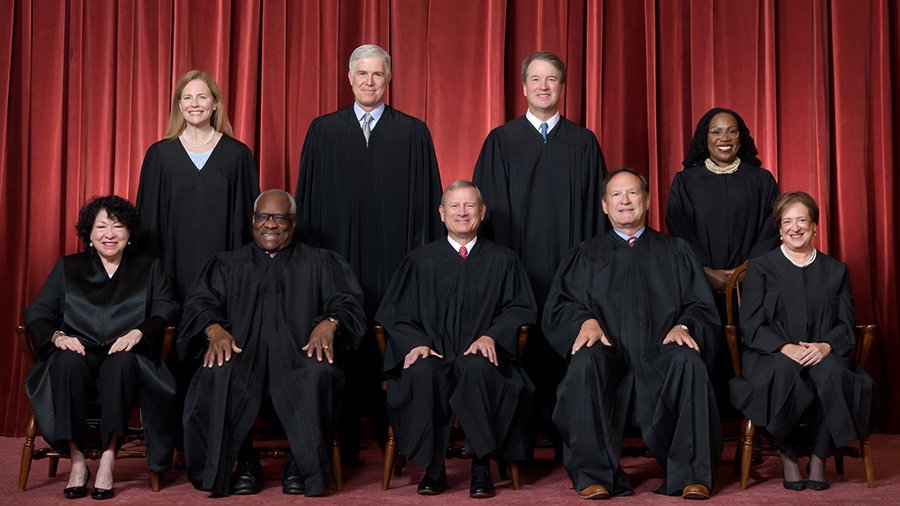
The U.S. Supreme Court heard a case today regarding Donald Trump’s claim he can revoke birthright citizenship. But the arguments centered on whether a ruling by federal judge in a single district can stop such a policy nationwide.  From the New York Times:
Several of the justices appeared torn between two concerns: They appeared skeptical that single district judges should have the power to freeze executive actions throughout the country.
But they also seemed troubled by the legality — and consequences — of the executive order underlying the case: An order issued by President Donald J. Trump on his first day in office ending birthright citizenship, or the practice of granting automatic citizenship to all babies born in the United States.
Three lower federal judges said the order violated the 14th Amendment of the Constitution as well as longstanding precedent and blocked its implementation for the whole country.
The justices also signaled that they may try to find a middle ground, perhaps by issuing guidance that would allow such temporary blocks only for some kinds of cases, or by requesting more briefing on the merits of the underlying executive order.
BREAKING: Supreme Court finishes hearing arguments over Trump’s challenge to birthright citizenship www.nbcnews.com/politics/tru… [image or embed]
— MSNBC (@msnbc.com) May 15, 2025 at 9:44 AM
For the record, the Supreme Court affirmed the right of birthright citizenship in the landmark case, United States v. Wong Kim Ark, in 1898. Read more at the NY Times (gift link). Earlier today, Trump wrongly asserted on his Truth Social that the U.S. is the “only Country in the World that does this (offer birthright citizenship).” Actually, more than 30 countries currently offer full birthright citizenship (including Canada, Brazil, and Mexico) and many more have mixed policies on the issue. 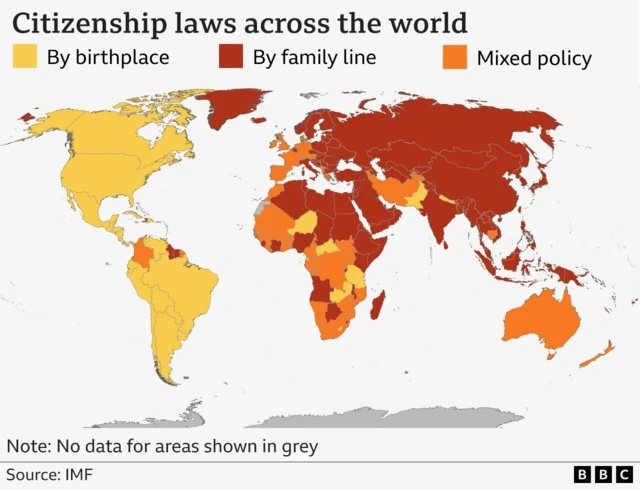
Discover more from The Randy Report
Subscribe to get the latest posts sent to your email.