Aimee Stephens (image via GoFundMe) NBC News reports that Aimee Stephens, the transgender funeral home worker whose firing led to legal proceedings that ended up at the U.S. Supreme Court, died Tuesday of renal failure. She was 59. The ACLU, which has been handling her case, announced the news on Twitter. In 2013, Stephens came out as transgender to her employer and was subsequently fired. Stephens sued and her case, Stephens v. R.G. & G.R. Harris Funeral Home, became part of a combined LGBTQ employment rights case. The high court heard oral arguments in October. In doing so, Stephens became the first transgender person to have their case heard in the highest court of the land.
A ruling from SCOTUS could be handed down any day now which could affect the employment rights of transgender people across the entire U.S. Years of kidney disease took its toll on Stephens and she required lengthy dialysis treatments. A GoFundMe campaign was launched last week to fundraise for her end-of-life costs.
With heavy hearts, we must share the news that Aimee Stephens, whose landmark case was the first case about the civil rights of transgender people to be heard by the Supreme Court, died today at her home in Detroit with her wife, Donna Stephens, at her side. She was 59.
Those who met Aimee Stephens know that her power was in her humbleness and sincerity. She has been an inspiration to millions of people around the world. We mourn with Aimee’s wife Donna, their daughter Elizabeth, and all of you. And we honor her life by fighting onward. pic.twitter.com/lzkmxviimv
The LGBTQ community owes Aimee Stephens our deepest gratitude for her bravery in standing up for the right of LGBTQ people to live as ourselves. We share our condolences with all of her friends & family, and especially her wife, Donna Stephens. https://t.co/wbMJpMgERu
“Somebody’s gotta do it” — Aimee Stephens, after bringing the first transgender rights case to SCOTUS Thank you for being the one to do it. We will continue your fight with your words and actions in our hearts. https://t.co/5AnnPZvk0V
— National Center for Transgender Equality (@TransEquality) May 12, 2020
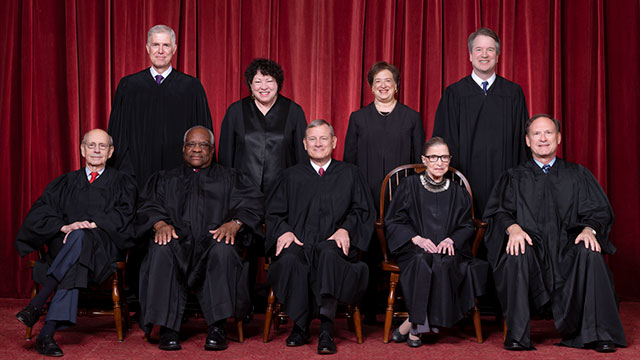
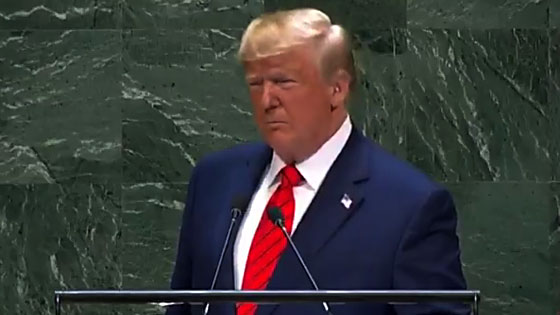
The current U.S. Supreme Court (image: public domain) The U.S. Supreme Court heard three hours of oral arguments today in multiple cases regarding whether Congressional committees or district attorneys can subpoena the financial records of a president. Donald Trump is trying to fight two sets of subpoenas — one from three House committees and another from Manhattan District Attorney Cy Vance. Reading several legal experts, Vance’s office appeared to have fared better during today’s oral arguments than the House’s lawyer. From the New York Times:
The court’s ruling, expected by July, could require disclosure of information the president has gone to extraordinary lengths to protect. Or the justices could rule that Mr. Trump’s financial affairs are not legitimate subjects of inquiry.
But some of the justices’ questions raised a third possibility: that the court could return the cases to lower courts for reconsideration under stricter standards. That would have the incidental effect of deferring a final decision beyond the 2020 presidential election.
The first argument of two the court heard, which dealt with the congressional investigations, seemed to go better for Mr. Trump.
The justices seemed more skeptical of the president’s case during the second argument, in which Jay Sekulow, a lawyer for Mr. Trump, argued that he was absolutely immune from criminal investigation while he remained in office.
The subpoenas ask for documents from Trump’s accountants or bankers, not from Trump himself. The firms have previously said they are willing to comply with the court’s ruling. Chief Justice John Roberts appears to be an apparent swing vote in the eventual ruling.
Early read on Supreme Court argument:
— Liberal four (RBG, Breyer, Sotomayor, Kagan) entirely dug in against President’s position; — Conservative four (Thomas, Alito, Gorsuch, Kavanaugh) not thrilled with Trump’s absolute positions; — Roberts searching for middle ground. — Elie Honig (@eliehonig) May 12, 2020
“Not a single thing is required of the President or the White House” to comply with these subpoenas.
The most impt words spoken by the House General Counsel at this Supreme Court argument. These subpoenas don’t demand anything of Trump–other than not putting him above the law. — Joshua A. Geltzer (@jgeltzer) May 12, 2020
Each case raises different issues: 1: Can House enforce its subpoenas in court in the face of widespread resistance from the Trump administration? 2: Is a sitting president subject to ANY criminal process while in office?
Supreme Court appears less divided in second case on NY subpoena. Not receptive to the broad argument of presidential immunity made by Trump lawyers. More interested in potential need for some heightened standard for such subpoenas, which NY lawyer is trying to address
If Justices are merely “umpires” as CJ Roberts claimed, than Trump should lose these cases 9-0, just as Clinton lost his claim to presidential immunity. Any other result would expose something rotten at the Supreme Court. And in a way, it’s good to know that now.
At issue today in SCOTUS is essentially this: Is the president an American citizen, subject like us to the rule of law? -or- Does the presidency confer a special status, which exempts POTUS for a time (and sometimes forever) from the laws that bind the rest of us?
Donald Trump, who claims to be ‘the most transparent president in history,’ has asked the Supreme Court to prohibit his accounting firm from turning over eight years of his tax returns to Manhattan prosecutors per an appeals court ruling last week. What is it he’s hiding???
President Trump asked the Supreme Court on Thursday to bar his accounting firm from turning over eight years of his tax returns to Manhattan prosecutors.
The case, the first concerning Mr. Trump’s personal conduct and business dealings to reach the court, could yield a major ruling on the scope of presidential immunity from criminal investigations.
Last week, a unanimous three-judge panel of a federal appeals court in Manhattan ruled against Mr. Trump, rejecting his argument that he was absolutely immune from criminal investigation while he remains in office. The court, in a focused ruling, said state prosecutors may require third parties to turn over a sitting president’s financial records for use in a grand jury investigation.
Prosecutors have reportedly agreed not to pursue the Donald’s tax returns until SCOTUS either agrees to take the case or not. The case could result in a major ruling on the scope of presidential immunity from criminal investigations.
(Photo: Fred Schilling, Collection of the Supreme Court of the United States/Public Domain) The U.S. Supreme Court heard oral arguments on Tuesday for three cases considering whether federal civil rights laws protect LGBTQ people in the workplace. Two of the cases (Zarda v. Altitude Express and Bostock v. Clayton County) involve the firing of gay men and question whether anti-gay discrimination is illegal under Title VII of the Civil Rights Act of 1964. The third case, EEOC v. Harris Funeral Homes, looks for resolution on whether anti-transgender discrimination is illegal under the law. The basic premise of the arguments hinges on whether discrimination based on “sex” – which Title VII prohibits – includes any discrimination involving sexual orientation. In other words, are employers allowed to discriminate against an employee based on the sex of the person they may date or marry? Conservative Justice Samuel Alito seemed to take the position that Congress in 1964 did not foresee covering sexual orientation or gender identity when passing Title VII. “You’re trying to change the meaning of ‘sex,’” said Alito according to the Associated Press. But Justice Elena Kagan suggested ‘sexual orientation’ is clearly a subset of sex discrimination in that a man who loves other men shouldn’t be treated differently by an employer than a woman who loves men. Here are the immediate reactions by some reporters who attended the oral arguments. Chris Johnson, of the Washington Blade, tweets that the ruling could come down, surprisingly, to Justice Neil Gorsuch who asked several questions “if sex is also in play” in cases regarding anti-LGBTQ discrimination. Johnson also notes that Chief Justice John Roberts, who has become something of the ‘moderate/swing vote’ on the court since the retirement of Anthony Kennedy, should not be counted on to rule in our favor.
Gorsuch, a textualist, asked many Qs about if “sex is also in play” in cases of anti-LGBT discrimination.
To be sure, Gorsuch also asked Qs about whether employers could keep sex-segregated bathrooms under LGBT-inclusive Title VII. — Chris Johnson (@chrisjohnson82) October 8, 2019
Gorsuch was the only justice U.S. Solicitor General Noel Francisco address during his time.
Perhaps Francisco sensed Gorsuch would come down on the side opposite of the anti-LGBT view of the Trump administration. — Chris Johnson (@chrisjohnson82) October 8, 2019
Justice Kavanaugh was very quiet during the Title VII arguments. It’s hard to tell what he’s thinking.
He asked only one technical legal question about the plain vs. ordinary meaning of the statute. — Chris Johnson (@chrisjohnson82) October 8, 2019
Justice Alito was obsessed with this hypothetical about an employer refusing to hire a job applicant after learning they’re gay, but not knowing their sex.
To him, that hypothetical shows anti-gay discrimination isn’t sex discrimination. — Chris Johnson (@chrisjohnson82) October 8, 2019
Legal blogger Amy Howe, formerly of SCOTUS Blog, also came away thinking Gorsuch may be the swing vote.
#SCOTUS finished with oral arguments on whether federal civil rights laws protect LGBT employees. Justices are closely divided; decision could hinge on Justice Neil Gorsuch, who acknowledged that question is “close” but also expressed concern about “massive social upheaval.”
Gorsuch claimed that interpreting Title VII to protect LGBTQ employees will cause “massive social upheaval.” He gestured toward open-mindedness on the textual argument but I think he will vote against LGBTQ rights.
Gorsuch seemed ambivalent, but said that “when a case is really close on the textualist evidence,” the court should refuse to work “a drastic change in this country.” I think he will cast an anti-LGBTQ vote and claim judicial modesty.
Kavanaugh asked one question: Whether the anti-LGBTQ side was “drawing a distinction between the literal and ordinary meaning” of discrimination “because of sex.” I’m not sure he has made up his mind. I suspect that when he does, he will side against LGBTQ rights.
Anyway I think the court will reject the argument for LGBTQ equality by a 5–4 vote, with the five conservatives claiming judicial modesty and saying Congress has to deal with this. But I wouldn’t say there’s NO cause for hope. It was not a wipeout for LGBTQ rights by any means.
The Trump administration, in its never-ending campaign against LGBTQ rights, has filed a brief in support of allowing private companies to legally fire employees based solely on their sexual orientation. From Dominic Holden at Buzzfeed News:
An amicus brief filed by the Justice Department weighed in on two cases involving gay workers and what is meant by Title VII of the Civil Rights Act of 1964, which bans discrimination “because of sex.” The administration argued courts nationwide should stop reading the civil rights law to protect gay, lesbian, and bisexual workers from bias because it was not originally intended to do so.
That view conflicts with some lower court rulings that found targeting someone for their sexual orientation is an illegal form of both sex discrimination and sex stereotyping under Title VII. Those courts have found, to illustrate the point, that a gay man wouldn’t be targeted if he were instead a woman dating a man; thus he faced discrimination because of his sex.
But the administration said in its brief Friday that Title VII’s ban on sex discrimination only prohibits unequal treatment between “biological sexes,” as it argued last week in a related brief against transgender rights, in which the Justice Department said companies should be able to fire people because they are transgender as well.
Earlier this week, the Donald sidestepped a question about his administration’s position on the cases claiming he has deep support from LGBTQ Americans. “I think I’ve done really very well with that community,” said Trump citing his endorsement by the conservative LGBTQ group Log Cabin Republicans. “They like the job I’m doing.” The U.S. Supreme Court will hear the cases beginning October 8.
By comparison, almost every Democratic Senator signed an amicus brief urging SCOTUS to find that Title VII bars employment discrimination against LGBT people — as did the highest ranking relevant House members. https://t.co/mexWW6qVVupic.twitter.com/517SRWUlaX
The Trump administration has filed a brief with the U.S. Supreme Court in support of a Michigan funeral home that fired a longtime employee for coming out as transgender and beginning her transition.
Aimee Stephens worked for Harris Funeral Homes for five years before she began to transition in 2012.
Saying she was “violating God’s commands,” fired Stephens two weeks later.
Stephens is suing the funeral home saying she experienced sex discrimination the workplace under Title VII of the Civil Rights Act of 1964.
It is the Trump administration’s position that transgender people can be fired just for being trans.
The Justice Department’s brief on Friday contends the word refers to a person’s “biological sex” and, further, that transgender discrimination isn’t addressed by a 1989 Supreme Court ruling that found Title VII bans sex stereotyping.
“Title VII does not prohibit discrimination against transgender persons based on their transgender status,” says a filing by the Justice Department, adding, “It simply does not speak to discrimination because of an individual’s gender identity or a disconnect between an individual’s gender identity and the individual’s sex.”
The counterargument from LGBTQ advocates and several lower courts, however, is that the intent of lawmakers does not limit a law’s reach, but rather its meaning is defined by the statute’s plain text. They say anti-transgender discrimination can result from a person defying traditional sex stereotypes or because the person transitioned from one sex to another — and thus, it is inherently a type of sex discrimination.
The case at issue is one of three currently before the court about the rights of LGBTQ workers under Title VII — and the only one concerning a transgender worker.
The Trump administration maintains that when the Civil Rights Act of 1964 was authored, the idea of transgender people wasn’t present in the “ordinary public meaning of ‘sex'” as biological sex.
But here’s the double-standard: if you can only apply laws as what people knew or understood at the time the were written, that would mean military assault-style weapons would not be protected under the 2nd Amendment because the Founding Fathers didn’t know such weapons would ever exist. And that’s just the beginning.
Stephens’ legal team maintains the plain text of Title VII addresses “sex” discrimination. And it’s impossible to consider her being transgender without taking into account the concept of her sex.
SCOTUS will hear oral arguments in the case on Oct. 8, along with two additional cases that address whether sexual orientation discrimination is protected by Title VII.
The Supreme Court said Friday that it would lift a freeze on the money put in place by a lower court. The Supreme Court’s action means the Trump administration can tap the funds and begin work on four contracts it has awarded. Four liberal justices wouldn’t have allowed construction to start.
A trial court initially froze the funds in May and an appeals court kept that freeze in place earlier this month. The freeze had prevented the government from tapping approximately $2.5 billion in Defense Department money to replace existing sections of barrier in Arizona, California and New Mexico with more robust fencing.
In advance of the upcoming oral arguments at the U.S. Supreme Court regarding whether Title VII of the Civil Rights Act of 1964 protects LGBTQ workers from discrimination based on sexual orientation or gender identity, many sectors of America are urging SCOTUS to rule in favor of LGBTQ people.
Additionally, over 34 prominent LGBTQ-friendly Republicans, led by former Republican National Committee chairman Ken Mehlman, have offered their own amicus brief which aims to ‘resonate’ with the conservative members of the high court on the issue.
Advocacy groups Family Equality, The Trevor Project, and PFLAG National submitted an their own amicus brief in support of queer employees in the critically-important LGBTQ employment discrimination cases that will be considered by SCOTUS in the 2019-2020 term.
And big business has weighed in as well with over 206 major corporations (including Apple, Amazon, American Airlines, Bank of America, Ben & Jerry’s, Coca-Cola, Domino’s Pizza, Goldman Sachs, IBM, Microsoft, Morgan Stanley, Nike, Starbucks, Viacom, Walt Disney and Xerox) signing on to their own brief in support of LGBTQ protections.
The U.S. Supreme Court has scheduled oral arguments for October 8 on whether Title VII of the Civil Rights Act of 1964 applies in banning LGBTQ discrimination.
There will be three cases regarding Title VII heard that day. The crux of the cases concerns whether anti-LGBTQ discrimination is a form of sex discrimination.
LGBTQ advocates say discrimination against gay people is sex discrimination because anti-gay bias is borne out of opposition to people who love others of the same sex.
A brief filed by the ACLU last week read, in part, “Firing a man because he is attracted to other men is like refusing to hire a woman because she has school-age children, failing to promote a woman because she is too ‘macho,’ or countenancing the sexual harassment of a man who is perceived by his coworkers to be vulnerable.”
Some court watchers say they are not overly-hopeful for a pro-LGBTQ ruling in light of Donald Trump’s choices for far-right leaning justices on the high court.
But Chief Justice John Roberts has, at times, surprised the LGBTQ community.
During arguments for the Obergefell decision in 2015, which made marriage equality the law of the land, Roberts made comments wondering if banning same-sex marriage would constitute a kind of sex discrimination.
The list of companies includes big tech like Facebook, Apple and Adobe; food giants like Coca-Cola, Starbucks and Domino’s Pizza; also Uber, Zillow, MGM Resorts, Hilton, HSBC Bank and more.
The Human Rights Campaign reports the amicus brief has the largest number of business signers than any other brief filed in an LGBTQ discrimination case.
The brief reads, in part, “Even where companies voluntarily implement policies to prohibit sexual orientation or gender identity discrimination, such policies are not a substitute for the force of law.”
“Only a uniform federal rule can enable businesses to recruit and retain, and employees to perform, at their highest levels,” says the brief.
The brief was organized by several LGBTQ advocacy groups including the Human Rights Campaign, Out & Equal, Freedom for All Americans and Lambda Legal.
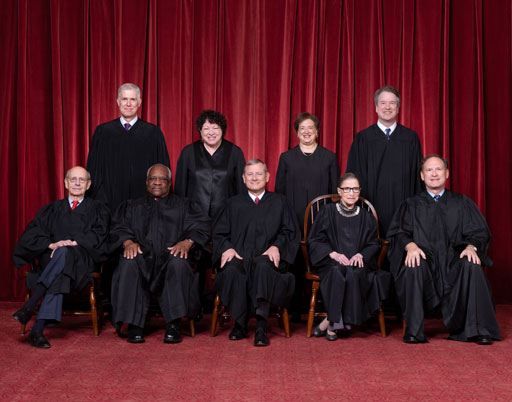
The current U.S. Supreme Court (image via SupremeCourt.gov)
The United States Supreme Court has announced it will weigh in on whether existing civil rights laws prohibits discrimination based on sexual orientation or gender identity.
Currently, federal law bans discrimination in the workplace on the basis of religion, race, color, sex or national origin. While there is no specific federal law that protects LGBTQ individuals at work, advocates for the LGBTQ community say Title VII of the Civil Rights Act of 1964prohibits being fired due to sexual orientation because that is a form of sex discrimination.
Lower courts have been split on the issue.
Of the cases that SCOTUS accepted for review Monday, two appeals courts ruled that the firings of a gay man and a transgender woman were illegal discrimination under Title VII, while a third case court ruled being fired for being gay does not fall under the purview of the civil rights law.
• A New York skydiving instructor, Donald Zarda, said he was fired after telling a female client she didn’t need to worry about being tethered together by confiding he is gay. The 2nd Circuit Court of Appeals found, in that case, that sexual orientation discrimination is a subset of sex discrimination.
• A transgender woman in Michigan, Aimee Stephens, sued her former employer, a funeral home, after she was fired in the aftermath of sharing that she is transgender. The 6th Circuit Court of Appeals said transgender discrimination is banned due to Title VII.
• A Georgia man, Gerald Bostock, was dismissed by his employer after discovering his participation in a gay softball league (yes, that really happened), the 11th Circuit Court of Appeals ruled the 1964 civil rights law does not include sexual orientation.
Judge Diane Wood, of the 7th Circuit Court of Appeals, wrote in a 2017 ruling that “it is actually impossible to discriminate on the basis of sexual orientation without discriminating on the basis of sex.”
But over in the 11th Circuit, Judge William Pryor pointed to lawmakers in his ruling saying that Congress “has not made sexual orientation a protected class.”
The high court will hear the cases during its next term that begins in October.
JoLynn Markison, a partner at the international law firm Dorsey & Whitney in its labor and employment practice and an advocate for the LGBTQ community, has been following this issue closely.
“This shift in the Supreme Court’s willingness to rule on the issue of whether Title VII’s prohibition on sex discrimination extends to gender identity and sexual orientation—which are quintessential expressions of “sex”—has been a long time coming,” Markison says.
Markison points to the newest member of the high court, Justice Brett Kavanaugh, as a fairly substantial ‘unknown’ in the upcoming deliberations in that he doesn’t have a clear judicial record on LGBTQ issues.
However, we do know his nomination was heavily supported by far-right, conservative groups like the Family Research Council, which has long advocated against LGBTQ equality.
That said, there’s another wild card player to watch here.
“Is there a swing vote on the Supreme Court? Or is this issue already as good as decided? The balance could lie with Chief Justice John Roberts, who notably did not join the conservative dissenters in Pavan v. Smith, in which the Supreme Court held that married same-sex couples are entitled to be listed on their children’s birth certificates the same as married heterosexual couples,” said Markison.
GLAAD, the world’s largest LGBTQ media advocacy organization, tweeted, “With more than 100 anti-LGBTQ attacks from the Trump Administration, this is exactly why we need to pass the #EqualityActnow and look toward explicitly protecting LGBTQ people with a constitutional amendment.”
With more than 100 anti-LGBTQ attacks from the Trump Administration, this is exactly why we need to pass the #EqualityAct now and look toward explicitly protecting LGBTQ people with a constitutional amendment. https://t.co/9AlJCy6qUz
Sarah Kate Ellis, CEO of GLAAD, followed that with her own tweet: “With Trump stacking the Supreme Court with anti-LGBTQ judges it’s clear that we need a constitutional amendment that protects LGBTQ people and all marginalized communities.”
With Trump stacking the Supreme Court with anti-LGBTQ judges it’s clear that we need a constitutional amendment that protects LGBTQ people and all marginalized communities. https://t.co/l5r00C97FB