Federal Judge Upholds Puerto Rico’s Ban On Same-Sex Marriage

Yesterday, U.S. District Judge Juan M. Perez-Gimenez ruled that Puerto Rico’s ban on same-sex marriage should stand based on a 42 year old ruling by the Supreme Court (Baker V Nelson) saying the lawsuit “fails to present a substantial federal question.”

The judge based his decision on the absence of any guarantee of same-sex marriage present in the US Constitution, defaulting to the 42 year old ruling which said there is no inherent right to marriage without regard to gender.

Acknowledging the long list of federal court rulings since Windsor striking down state same-sex marriage bans, Judge Perez-Gimenez simply disagreed, attributing those rulings to the “ingenuity and imagination” of the judges involved.

From the ruling:

Baker, which necessarily decided that a state law defining marriage as a union between a man and woman does not violate the Fourteenth Amendment, remains good law. Because no right to same-gender marriage emanates from the Constitution, the Commonwealth of Puerto Rico should not be compelled to recognize such unions. Instead, Puerto Rico, acting through its legislature, remains free to shape its own marriage policy. In a system of limited constitutional self-government such as ours, this is the prudent outcome. The people and their elected representatives should debate the wisdom of redefining marriage. Judges should not.

Lambda Legal issued this statement via press release:

“The court’s ruling directly conflicts with the wave of recent decisions finding these marriage bans unconstitutional and perpetuates the discrimination and harm done to same-sex Puerto Rican couples and their families,” said Omar Gonzalez-Pagan, Staff Attorney for Lambda Legal.

“It defies the unmistakable import of the Windsor decision and flies in the face of the blizzard of rulings of the last year, the reasoned rulings of the Courts of Appeals for the 4th, 7th, 9th and 10th Circuits, and the decision by the U.S. Supreme Court to let stand the rulings striking down five bans similar to Puerto Rico’s.

“One struggles to understand how this judge came to a different conclusion. We will, of course, appeal this ruling to the 1st Circuit Court of Appeals,” Gonzalez-Pagan said. “All families in Puerto Rico need the protections of marriage.”

An appeal of the ruling sends the case to the 1st Circuit Court of Appeals where every state has adopted marriage equality as the law of the land.

Interestingly, the court is located in Massachusetts – the first state to adopt the freedom to marry.

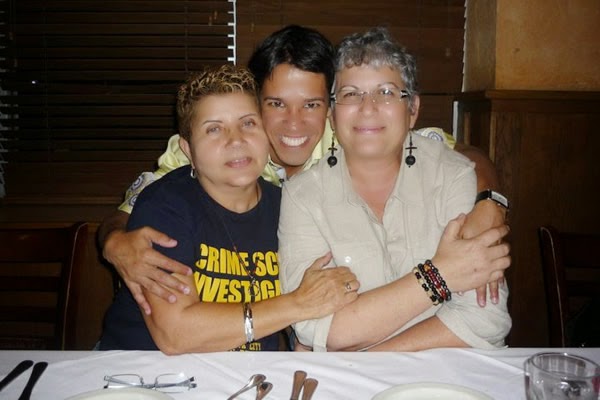
Lambda Legal sues for freedom to marry in Puerto Rico

Lambda Legal has filed a motion for summary judgment to overturn the ban on same-sex marriage in Puerto Rico:

Lambda Legal joined the lawsuit, Conde v. García Padilla, in June on behalf of five gay and lesbian couples and Puerto Rico Para Tod@s, an organization that represents lesbian, gay, bisexual, transsexual and transgender (LGBT) people and their families.

Lambda Legal Staff Attorney Omar Gonzalez-Pagan, said: “All families deserve to have their love and commitment recognized in Puerto Rico; they need the protections only marriage can provide as soon as possible, without discrimination. Every day that passes, our gay, lesbian, bisexual and transgender family members are told they are inferior to our other family members. They are living, working and caring for each other now and need the dignity and respect of marriage.”

The lawsuit began on March 25, 2014, when married in Massachusetts sued for legal recognition of their marriage. That was amended on June 25th when Lambda Legal joined the suit and added four more couples – two seeking recognition of their marriages from other jurisdictions and two seeking for the right to marry in Puerto Rico.

Puerto Rico: Lesbian couple files lawsuit for marriage recognition

A lesbian couple married in Massachusetts has filed suit in their native Puerto Rico asking the US territory to recognize their marriage.

Together for 14 years and married since 2004, Ada Conde Vidal and Ivonne Álvarez Velez are unable to have their relationship recognized in their home territory because the 1999 amendment to Puerto Rico’s civil code restricts marriage recognition to only those unions involving opposite-sex couples.

In the suit, filed Tuesday in the U.S. District Court for Puerto Rico in San Juan, contends that the commonwealth’s policy violates the Due Process and Equal Protection clauses of the 14th Amendment to the U.S. Constitution and heavily cites last summer’s landmark Supreme Court ruling in favor of marriage equality, U.S. v. Windsor.

In detailing the harm they’ve suffered through the territory’s lack of equal marriage rights, Conde recounts how, when her daughter had open-heart surgery, she was unable to designate her wife, Alvarez, to make even “simple decisions or determinations regarding her health. This also included simple decisions and/or determinations regarding her education.”

Ultimately, the suit contends that by denying the married same-sex couple the same rights afforded to other legally married couples, the Commonwealth of Puerto Rico causes the plaintiffs “severe humiliation, emotional distress, pain, suffering, psychological harm and stigma.”

(via the Advocate)

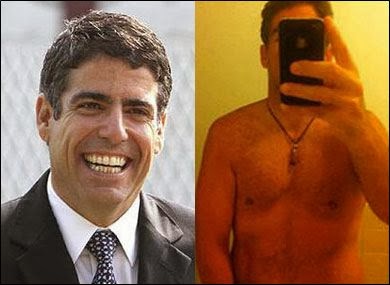
Former Puerto Rico Sen. Roberto Arango finally comes out of the closet

Former Senator of Puerto Rico and Grindr fan Roberto Arango

I was just thinking about this douchebag yesterday.

Longtime readers will remember the scandal back in August of 2011 when Puerto Rico’s Sen. Roberto Arango, who chaired the local 2004 campaign to reelect George W. Bush, has been found showing his anus (NSFW) on the gay hook-up site Grindr.

Arango acknowledged that the photos were of him, but says he was merely posting images to show off his recent weight loss.  IN HIS ANUS.

Well, now Arango – who in 2009 voted in favor of an amendment to Puerto Rico’s constitution to ban the recognition of same-sex marriages and opposed to civil union bills – has come out.

Yes, ladies and gentlemen, now we know why he was sending selfies of his anus. And it wasn’t to show off his “weight loss.”

You can’t make this stuff up.

Puerto Rico approves wide ranging protections for LGBT community

Via press release from the National Lesbian & Gay Task Force

The Puerto Rican House of Representatives today approved a sweeping nondiscrimination bill that protects lesbian, gay, bisexual and transgender (LGBT) people in employment, housing, governmental services, public accommodations and private entities.

Last week, the Senate approved the bill in a 15-11 vote and Gov. Alejandro García Padilla has vowed to sign the bill into law.

The House today also approved a bill to add protections for sexual orientation, marital status and gender identity to the domestic violence law. It now moves to the Senate.

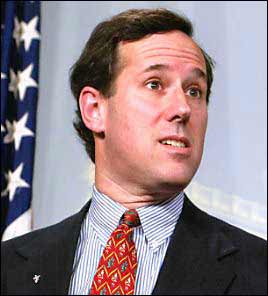
Rick Santorum makes up a law saying Puerto Rico must adopt English as official language to join US

Republican presidential hopeful Rick Santorum said Wednesday that Puerto Rico should only gain statehood if the territory makes English its main language.

In an interview with a San Juan newspaper, El Vocero, Santorum said English would have to be the “main language” if Puerto Rico were to become a state.

“As in any other state, you have to comply with this and any federal law. And that is that English has to be the main language,” Santorum told the paper. “There are other states with more than one language as is the case in Hawaii, but to be a state in the United States, English has to be the main language.”

There is no federal law designating English as the country’s official language, although some states and local governments have adopted such “English only” laws.

Article IV, Section 3 of the U.S. Constitution spells out how states can be admitted to the union, making no mention of language requirements. The passage states: “New States may be admitted by the Congress into this Union; but no new State shall be formed or erected within the Jurisdiction of any other State; nor any State be formed by the Junction of two or more States, or Parts of States, without the Consent of the Legislatures of the States concerned as well as of the Congress.”