The NBA is just one of many major businesses concerned about anti-LGBT law HB2
In response to North Carolina’s new anti-LGBT law, HB2, which strips all protections for LGBTs off the books, the NBA has issued a statement hinting that Charlotte could lose the 2017 All-Star Game.
“The NBA is dedicated to creating an inclusive environment for all who attend our games and events,” the statement read. “We are deeply concerned that this discriminatory law runs counter to our guiding principles of equality and mutual respect and do not know yet what impact it will have on our ability to successfully host the 2017 All-Star Game in Charlotte.”
On Wednesday, North Carolina Governor Pat McCrory signed a bill that blocks its cities from allowing transgender individuals to use public restrooms of the gender they identify as, per Dave Philipps of the New York Times. Individuals will instead be forced to use the restrooms of their birth gender.
The law superseded an attempt by Charlotte’s city government to allow transgender individuals to pick their restroom based on the gender of their choosing. The city council approved the bill in February despite the Republican governor’s protestation.
North Carolina’s new law has been widely criticized in the LGBT community as being discriminatory not only toward transgender individuals but gays and lesbians as well.
The NBA awarded the 2017 All-Star Game last summer. It would be an unprecedented step to strip a city of the event based on legislation outside the citizens’ control, but it would also be a strong message in support of the LGBT community.
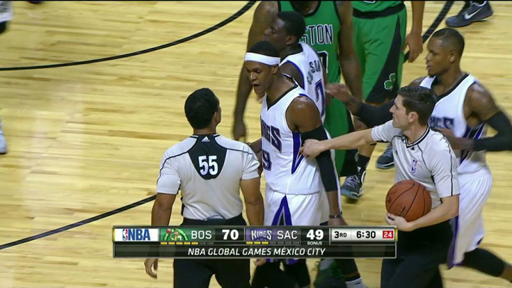
In the aftermath of an ugly altercation between NBA referee Bill Kennedy and Sacramento Kings guard Rajon Rondo, two moments emerged.
First, the backstory – the on-court altercation happened when referee Bill Kennedy called a technical foul on Rondo. Rondo began stalking the referee on the court, eventually getting in Kennedy’s face telling him “You’re a mother———- faggot. … You’re a f——— faggot, Billy.”
“I am proud to be an NBA referee and I am proud to be a gay man,” Kennedy told Yahoo Sports on Sunday night. “I am following in the footsteps of others who have self-identified in the hopes that will send a message to young men and women in sports that you must allow no one to make you feel ashamed of who you are.”
And yesterday, Rondo issued a non-apology via Twitter:
My actions during the game were out of frustration and emotion, period!
Because nothing says “respect” more than calling someone a “mother-f**king-faggot.”
Rondo initially denied using the slur until video taped evidence was examined by two independent experts, and the other officials were interviewed privately and all accounts confirmed the report.
Rondo will make $9.5 million this season, and his one game suspension for tonight’s game against the Houston Rockets will cost him $86,300.
You can watch the aggressive behavior that led to Rondo’s ejection below.
UPDATE: Rondo has issued a statement via the Sacramento Kings to clarify his tweets and make it clear he is, indeed, apologizing.
“Yesterday, I said that my words toward Bill Kennedy were unacceptable and did not reflect my feelings toward the LGBT community. Some have interpreted my comments as a non-apology. I want to be clear, from the bottom of my heart that I am truly sorry for what I said to Bill. There is no place on or off the court for language that disrespects anyone’s sexual orientation. That is not who I am or what I believe and I will strive every day to be a better person.”
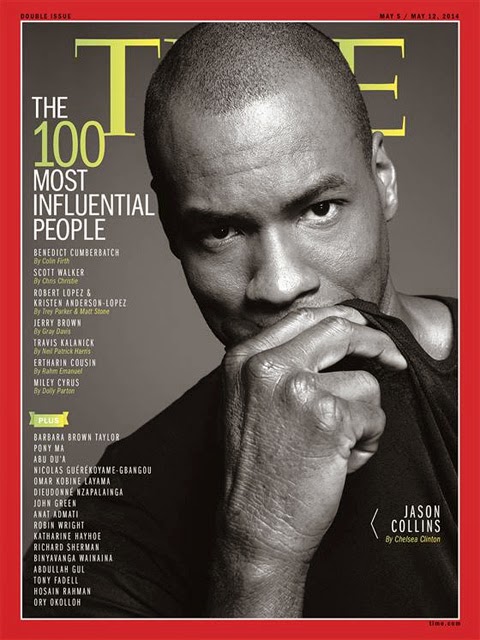
The NBA has released a powerful video – “Barrier Breakers” – in honor of Martin Luther King Day. Jason Collins’ coming out is included in the clip as one of the many barriers shattered over the decades in the NBA.
The NBA has a strong history of firsts when it comes to breaking down racial barriers and proverbial glass ceilings.
In this spot, we explore the strides made within the NBA that not only embody Martin Luther King Jr.’s “I Have a Dream” speech, but the overall guiding principles of the Civil Rights movement.
In an open letter written for Sports Illustrated, Jason Collins has announced his retirement from the NBA.
In April 2013, the 13 year veteran became the first openly gay basketball player in the NBA. Although there was talk of the announcement ending his career, it did not. He went on to play last season with the Brooklyn Nets.
His first appearance on the court after coming out was an electrifying moment in sports history.
It has been 18 exhilarating months since I came out in Sports Illustrated as the first openly gay man in one of the four major professional team sports. And it has been nine months since I signed with the Nets and became the first openly gay male athlete to appear in a game in one of those leagues. It feels wonderful to have been part of these milestones for sports and for gay rights, and to have been embraced by the public, the coaches, the players, the league and history.
On Wednesday at the Barclays Center, I plan to announce my retirement as an NBA player. The day will be especially meaningful for me because the Nets will be playing the Bucks, who are coached by Jason Kidd, my former teammate and my coach in Brooklyn. It was Jason who cheered my decision to come out by posting on Twitter: “Jason’s sexuality doesn’t change the fact that he is a great friend and was a great teammate.”
There are still no publicly gay players in the NFL, NHL or major league baseball. Believe me: They exist. Every pro sport has them. I know some of them personally. When we get to the point where a gay pro athlete is no longer forced to live in fear that he’ll be shunned by teammates or outed by tabloids, when we get to the point where he plays while his significant other waits in the family room, when we get to the point where he’s not compelled to hide his true self and is able to live an authentic life, then coming out won’t be such a big deal. But we’re not there yet.
I met Jason earlier this year at the National Lesbian and Gay Journalists Association convention in Chicago. He spoke to the entire convention, and it was impossible to walk away without noting the ease and confidence with which Collins carried himself. He is clearly someone comfortable in his own skin.
Clearly it was that confidence that allowed him to make the decision to come out. And that decision paved the way for others to follow him out of the closet. From the Washington Post:
What Collins accomplished, however, was hardly irrelevant. His decision to bust through barriers has made it easier for other high-profile male athletes to do the same. In April of this year, the University of Massachusetts’s Derrick Gordon came out to become the first openly gay athlete in NCAA Division I basketball. And a month later, Michael Sam, who had announced he was gay shortly after the Super Bowl this year, became the first openly gay athlete to be drafted by the NFL. Both Sam and Gordon have credited Collins as inspiration for them to be themselves openly.
I look forward to what lies ahead in his journey.
Out NFL-er Michael Sam congratulated Collins on his long, successful career via Twitter:
Congrats to @jasoncollins98 on the end of a long and successful career. Wishing you the best on what's to come next, I know it'll be great— Michael Sam (@MichaelSamNFL) November 19, 2014
Jason Collins recently stopped by TakePart Live to chat on the media firestorm that happens when you’re the first out athlete to play in a major sports league.
Collins breaks down NFL coach Tony Dungy’s offensive comments about not wanting to coach openly gay football player Michael Sam, and dangerous code words the athletic community uses to describe homosexuality.
“I think that personnel, coaches, owners — can look at my example, my journey in the NBA and see that after two weeks back, it was about basketball,” Collins says in reference to Dungy’s comments.
“There were games, especially a month after I was signed that reporters didn’t even ask me any questions. It will always go back to the sport because there are only so many ways they can write the article. There are only so many ways they can keep talking about LGBT issues when you’re a professional athlete because you’re a professional athlete first.”
“I kinda laugh every time I hear a code word being used…. Any kind of minority group, and you hear people use different code words and you’re like, ‘I know what you’re really saying and I’m above that,'” Collins remarks.
ESPN is reporting that out NBA-er Jason Collins, currently on his second 10-day contract with the Brooklyn Nets, will finish out the season with the team:
Sources told ESPN.com on Tuesday that the Nets, who feel they’re getting everything they expected from Collins when they signed him for frontcourt depth Feb. 23, are already operating under the premise that the 34-year-old will finish the season with them even though his second 10-day deal doesn’t expire until after Friday.
Sources say that the internal expectation all along was that Collins would be a Net for the rest of the season, from the moment he signed his first 10-day deal, as long he proved that could still be an effective defender, which he did immediately.
Collins recently played 20 minutes in a 104-89 win over Sacramento last Sunday.