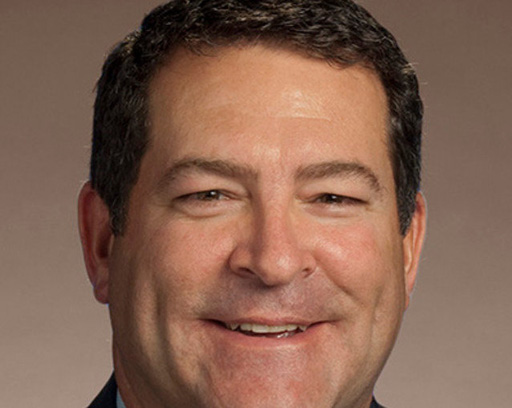
Tennessee state Sen. Mark E. Green, President Trump’s second nominee for Secretary of the Army, has withdrawn his name from contention for the position following weeks of outrage and phone calls made in light of past anti-LGBT rhetoric.
Human Rights Campaign members alone made over 6,800 calls to the U.S. Senate expressing their concern for his past anti-LGBT comments.
Five Democratic Senators, including Sens. Tammy Baldwin (D-Wisc.) and Charles Schumer (D-N.Y.), had announced this week they could not vote in favor of his nomination.
Even veteran Republican Sen. John McCain, who chairs the Senate Armed Services Committee, Republican Sen. John McCain, chairman of the Senate Armed Services Committee, had said that Green’s past comments about gays and lesbians and Muslims are “very concerning” and that Green would need to explain himself to the committee.
Additionally, it appears Secretary of Defense James Mattis had lost confidence in Green. When asked whether Mattis still supported Green’s nomination, the Pentagon declined to comment.
Green has said transgender people are an “evil” that must be “crushed” and compared them to terrorists; he told a Tea Party group that being transgender is a “disease.” As a right-wing state senator, he encouraged Tennessee officials to defy the Supreme Court ruling legalizing same-sex marriage. He also sponsored an anti-transgender bill and opposed nondiscrimination protections for LGBT people. He was also caught crudely criticizing the integration of transgender people in the military, writing on Facebook that, “Mr. Obama supports transvestites in uniform but you cannot have a bible on your desk, saying it disrupts good order in the military.”
Had he been confirmed, Green would have replaced Eric Fanning as Secretary of the Army. Fanning was the first openly gay man to serve in the position.
Vincent Viola, a Wall Street billionaire who was Trump’s first Army Secretary nominee, removed himself from consideration in February saying he was unable to appropriately clear conflict-of-interest rules.
In a statement on Friday, Green cast himself as the victim:
“Tragically, my life of public service and my Christian beliefs have been mischaracterized and attacked by a few on the other side of the aisle for political gain.
“While these false attacks have no bearing on the needs of the Army or my qualifications to serve, I believe it is critical to give the president the ability to move forward with his vision to restore our military to its rightful place in the world.”
President Obama’s Army Secretary, Eric Fanning, was the first openly gay man to serve in that position.
President Trump, being everything anti-Obama, now logically picks for his Army Secretary Tennessee state Senator Mark Green – a man who is currently sponsoring anti-LGBT legislation in his state.
Green is the sponsor of SB 127, a bill that would bar government entities from taking “discriminatory action against a business entity on the basis of the internal policies of the business entity.”
Tennessee does not currently have nondiscrimination protections on the basis of sexual orientation or gender identity, although some municipalities do have stronger rules protecting LGBTQ government employees. Green’s bill, however, would bar local governments and public universities from looking at companies’ internal policies when doing business or giving out contracts ― because it would be considered discrimination against the business.
“You [wouldn’t be able to] have a provision in your contracting rule saying, ‘We’ll only contract with organizations that treat married same-sex couples equally. You couldn’t do that,” explained Chris Sanders, executive director of the Tennessee Equality Project. “Or you couldn’t say, ‘We’ll only subcontract with companies that have contraception as part of their health insurance.’ It’s not just LGBT [issues].”
Green’s bill has already passed the state Senate, and is under consideration in the state House.
Green is Trump’s second pick for Army Secretary, after Vincent Viola, a billionaire and owner of the Florida Panthers NHL team, pulled out of consideration saying he couldn’t separate himself from his businesses enough so as not to pose a conflict of interest.