Indiana Republican candidate: No one has the guts to let poor people die

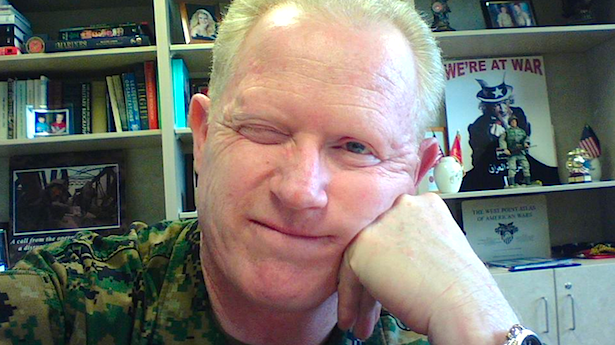
An Indiana Republican candidate for the 10th District is backtracking on statements he made about the poor in an online discussion.

John Johnston, taking part in a discussion on a Mad Mac page which covers local politics had this to say:

“I was not trying to hurt anybody’s feelings,” Johnston said. “I saw the opportunity to say something. I think a lot of the poor have no way out, and there’s no motivation to improve your position. It’s like training a child, either you enable them or force them out at some point.”

“For almost three generations people, in some cases, have been given handouts,” Johnston said during the discussion. “They have been ‘enabled’ so much that their paradigm in life is simply being given the stuff of life, however meager.”

“What you see is a setting for a life of misery is life to them never-the-less,” he continued. “No one has the guts to just let them wither and die. No one who wants votes is willing to call a spade a spade. As long as the Dems can get their votes the enabling will continue. The Republicans need their votes and dare not cut the fiscal tether. It is really a political Catch-22.”

“The voters are the ones in charge,” Johnston said. “(H)owever when only 10-11 percent show up to vote, not much will change. People simply are not hurting enough, or simply happy enough that they will do nothing. consequently the dole continues.”

Describing his comments to The Post Tribune as “hyperbole,” Johnston has since backtracked saying he has no intention of ending welfare or food stamp programs.

 That happened, of course, after his comments came to light.
(via Raw Story)

Indiana appeals ruling which would recognize terminally ill couple’s out-of-state marriage

ABC News is reporting that the state of Indiana is appealing U.S. District Judge Richard Young’s ruling which said the state must recognize the out-of-state marriage of a lesbian couple. 

The state of Indiana says that “the ruling could raise false hopes for other same-sex couples.”

Young issued a preliminary injunction Thursday extending last month’s temporary restraining order forcing the state to list Amy Sandler as the spouse of Niki Quasney on a death certificate after Quasney dies of cancer.

Young did not rule on whether Indiana’s gay marriage ban is unconstitutional. That ruling is expected to come later.

The Indiana attorney general’s office said in court documents that recognition of the couple’s marriage now could raise false hopes for others because courts might eventually uphold the state’s gay marriage ban.

“The traditional definition of marriage has been around for a long time. Its validity is hotly contested, but the outcome of these legal disputes is uncertain,” the state said in its request for a stay.

Young’s order “cannot conclusively resolve the legality of same-sex marriages,” the state said, and added that the best course of action would to be to wait for a final decision.

Quasney and Sandler were among five couples challenging the ban with help from the national gay rights group Lambda Legal. Lambda Legal did not return messages from The Associated Press seeking comment Friday.

The couple, who have two young daughters, had argued that lack of recognition would endanger Sandler’s ability to collect Social Security and other death benefits. Quasney has stage 4 ovarian cancer and has undergone numerous surgeries and chemotherapy.

There may not be time for appeals as medical experts say Quasney will reach the average survival rate for her disease next month.

Indiana: Judge orders state to recognize the marriage of terminally ill lesbian

A federal judge, U.S. District Judge Richard L. Young, on Thursday extended a previous ruling ordering Indiana officials to recognize the marriage of a terminally ill lesbian.

Niki Quasney and Amy Sandler, who married last year in Massachusetts, asked Young to order the state to recognize their marriage so that Quasney, who has stage 4 ovarian cancer, can be listed as married on her anticipated death certificate and Sandler listed as her surviving spouse.

And today, he did just that.

“[T]he State of Indiana must recognize their marriage,” Young wrote in Thursday’s 14-page order. “In addition, should Niki pass away in Indiana, the court orders William C. VanNess II, M.D., in his official capacity as the Commissioner of the Indiana State Department of Health and all those acting in concert, to issue a death certificate that records her marital status as ‘married’ and lists Plaintiff Amy Sandler as the ‘surviving spouse.’”

The couple have been together 13 years and are raising two daughters.

(via OnTopMag)

Judge orders Indiana to recognize same-sex couple’s marriage

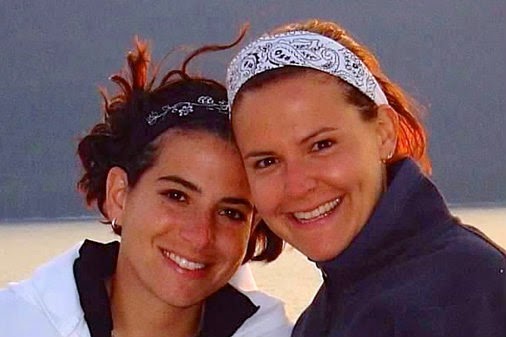
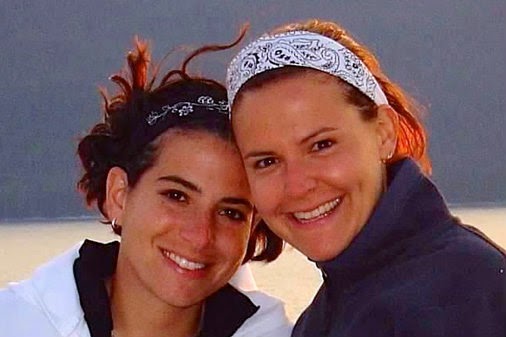
Amy Sandler and Niki Quasney

A federal judge ordered the state of Indiana to recognize the Massachusetts marriage of a lesbian couple in light of terminal illness diagnosis.

From IndyStar:

Judge Richard Young heard arguments in Evansville, where attorneys for Amy Sandler and Niki Quasney argued for immediate recognition of the couple’s Massachusetts marriage via a temporary restraining order. Quasney, of Munster, was diagnosed in 2009 with ovarian cancer and is terminally ill.

The order will last for 28 days. A preliminary injunction hearing will be scheduled by that time, though Young could choose to extend the order.

The couple argued that the emergency request for recognition is about recognizing a family. The couple have said that they need their marriage to be recognized so they can access federal and state safety nets for surviving spouses and their children.

Solicitor General Tom Fisher, arguing for the state, said that the current ban on same-sex marriage doesn’t have a “hardship exception” and that if the law should change after Quasney’s death a petition could be filed to amend the death certificate.

Lesbian couple asks Indiana to recognize their marriage now due to terminal cancer diagnosis

Niki Quasney (right) and Amy Sandler

A lesbian couple in Indiana is asking the state to legally recognize their marriage performed in Massachussetts immediately as one spouse is terminally ill with cancer.

Lambda Legal filed the lawsuit on behalf of Amy Sandler and Niki Quasney, who live in Munster, Indiana. Quasney has been diagnosed with Stage IV cancer.

From the Advocate:

The women entered into a civil union in Illinois and married in Massachusetts in 2013, but they need their home state to recognize their marriage in order for them to receive numerous protections and benefits, including “the ability to access federal and state safety nets for surviving spouses and their children, and the right to a death certificate that accurately reflects their marriage,” notes a Lambda blog post. “Further, Ms. Quasney and Ms. Sandler frequently travel far from their home to receive medical treatment as a result of their prior experience with the local hospital suggesting it would defer to state law to determine whether a couple is married.”

Indiana law bans same-sex marriage, including recognition of such unions from other states. Unlike in some other states, though, the ban is not written into the state constitution.

Two more marriage equality lawsuits filed in Indiana

Friday saw two more lawsuits filed in Indiana seeking marriage equality.

The third lawsuit was filed on behalf of four legally married lesbian couples saying Indiana’s marriage law discriminates by refusing to recognize marriages performed elsewhere.

The couples include police officers and a retired firefighter. The lawsuit points to denial of survivor benefits for police and fire fighters. The plaintiffs concern regards the same support for their families should they be injured or killed in the line of duty as other first responders.

The fourth lawsuit was filed by the ACLU on behalf of 15 plaintiffs challenging the same-sex marriage ban and the state’s refusal to recognize gay unions legally performed in other states.

“The government is a powerful teacher of discrimination,” said Sean Lemieux, an attorney working on the ACLU case. “There is no justification for Indiana to treat these families as second-class citizens. The families in this case want the responsibility, security and dignity that only marriage provides, and their children deserve the same protections that other Indiana families enjoy.”

Indiana bakery denies wedding cake to same-sex couple despite public accommodation law

From the Facebook page of 111 Cakery in Indianapolis:

We have made it our commitment to treat every person that walks through the door with Respect & Kindness. It is important to know that we have never refused to do business with any person based on who they are or what they believe. As Christians we have a sincere love for people.

As artist we must find the inspiration to create something special for our clients. When asked to do a cake for an occasion or with a theme (alcohol explicit in nature) that is in opposition to our faith, that inspiration is not found. We feel that it is important for a paying customer to know when this is the case. Why would you want a cake that is less then inspired for your special event. That is why this week we told a man that requested a cake for a same sex ceremony that it was against our policy but we would be happy to help him with anything else. It was not that we wanted to deny them a cake it’s just tough to create something that goes against your beliefs. Was this the right thing to say? Maybe not but this phone call caused us to do a lot of soul searching because we want to be right with our God as well as respect others. We have not heard from this man but would welcome a chance to meet with him. We sincerely wish them the best.

Please know that there is zero hate here. We are not judging the lives of our clients. We are not trying to make a political statement or change someone’s mind. We respect the fact that everyone has different values and believes. Everyone is entitled to their opinion we would encourage you to share those in a respectful way. We have happily done cakes for gay people, as well as people with different believes. We are just a small family business trying to bring happiness with cake. You may criticize this response but realize it is sincere and from the heart not a letter drafted by an attorney. We thank our friends, customers and others in the community for your support. – The McGath Family

The comments to the post are overwhelmingly in support of the LGBT community.

While Indiana as a state does not have public accommodation protections for sexual orientation, the city of Indianapolis (where 111 Cakery is located), does have such protections. For the bakery to discriminate based on sexual orientation at it’s present location would be against the law.

By the way, it should be noted that the bakery is apparently in or very near a primarily gay neighborhood.

Three states see new lawsuits seeking marriage equality – Arizona, Florida and Indiana

Lots of legal action happening today in the world of marriage equality.

Via press release, Freedom To Marry announces a trio of federal lawsuits concerning marriage protections for same-sex couples filed in three different states today.

The cases – filed in Arizona, Florida, and Indiana – join more than 50 other lawsuits where same-sex couples are seeking the freedom to marry or respect for their marriages performed in other states.

Marriage equality litigation is currently pending in 28 different states, and in seven of these states, appeals are now before federal appellate courts.

Filed today:

ARIZONA

Lambda Legal filed this federal lawsuit – Majors v. Roche – in Arizona on behalf of seven same-sex couples – and the surviving spouses of two other same-sex couples – seeking the freedom to marry or respect for legal marriage licenses received in other states.

The plaintiffs include married same-sex couples, couples who want to marry in Arizona, and individuals whose same-sex spouses have passed away without Arizona ever respecting their status as a married couple. The lead plaintiffs are Nelda Majors and Karen Bailey (pictured), who are both in their 70s and have been together for more than 55 years.

FLORIDA

The American Civil Liberties Union of Florida filed this federal lawsuit – Grimsley and Albu v. Scott – on behalf of SAVE, an LGBT organization in Miami and eight married same-sex couples seeking respect for their marriages legally performed in other states.

The lead plaintiffs are Sloan Grimsley and Joyce Albu, who work as a firefighter and a consultant assisting parents of children with developmental disorders, respectively. The women have been together for nine years, married in New York in 2011, and are raising a 2-year-old child together.

INDIANA

Lambda Legal filed this federal lawsuit – Baskin v. Bogan -on behalf of three same-sex couples seeking the freedom to marry in Indiana.

AVENGERS in prime-time and more news

Some news stories you may have missed:

• ABC to air prime-time “behind the scenes” special for upcoming Marvel movies

• Michigan “expert witness” says gays are going to hell, but he’s not biased against them

• This gay Marine made the long journey from homeless teen to Ivy League graduate

• Isaiah Washington returns to Grey’s Anatomy seven years after gay slur scandal

• Four couples file lawsuit to overturn Indiana’s ban on marriage equality

• GOP Rep. Josh Miller opposes Medicaid for others after it saved his life

Indiana: State Senate approves amended marriage equality ban

The Indiana state Senate just approved HJR-3 which would send a referendum to voters for approval of a constitutional ban on same-sex marriage.

Lawmakers in the GOP-controlled chamber voted 32-17 on House Joint Resolution 3, which the body advanced to a final reading last week even though it was stripped of language banning civil unions and other similar arrangements by the state’s House — disqualifying the ban from appearing on this November’s ballot.

A referendum on a constitutional change requires passage of the bill with the exact same language in consecutive General Assemblies.

Because a line was removed from the version passed last year,  the clock restarts and must the bill must be passed in 2015 or 2016 before it could go to voters in the 2016 election.

By that point in time, the Supreme Court may have already ruled on the issue.  OR, with the polls showing shifting attitudes towards marriage equality, the bill may have no chance at all with voters in Indiana.