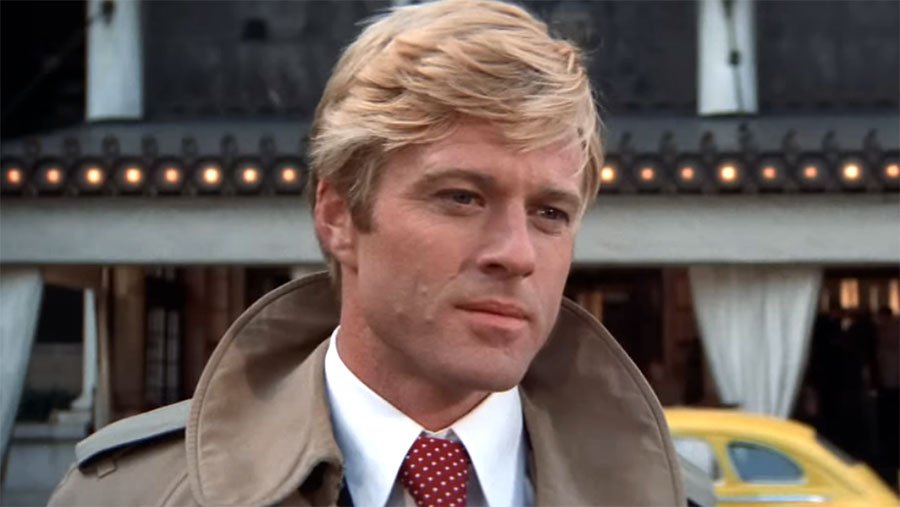
Robert Redford, truly one of the biggest movie stars of all time, died today at his mountain home outside Provo, Utah. He was 89. No cause of death has been shared.
From leading man to acclaimed director to Sundance Institute founder, there’s not a part of the movie industry he didn’t touch.
Over his lengthy career, he received numerous accolades including an Academy Award; a BAFTA Award; and five Golden Globe Awards, as well as the Cecil B. DeMille Award (1994); the Screen Actors Guild Life Achievement Award (1996); the Academy Honorary Award i(2002); the Kennedy Center Honors (2005); and the Presidential Medal of Freedom (2016).
Whle his first major film role came in “War Hunt” (1962), it was his 1965 film “Inside Daisy Clover,” in which he played bisexual film star Wade Lewis, that was seen as a big breakthrough for the star. That year, he won the Golden Globe Award for “Most Promising Male Newcomer.”
Robert Redford, who died at 89, will be remembered as much for the vast universe of American independent film he supported as for the movies he made.
From his early roles in Hollywood to his work as a director and elder statesman, here are our favorite Redford movies:… pic.twitter.com/5afGcclxit
— The Washington Post (@washingtonpost) September 16, 2025
From the Washington Post (gift link):
With [Paul] Newman as his fast-talking partner, he was the sardonic outlaw Sundance in “Butch Cassidy and the Sundance Kid” (1969) — a western buddy comedy that branded him into the national consciousness and featured a memorable cliff-dive sequence as they evade the law.
In what film critic Pauline Kael dubbed “the golden yes-yes” of two of the world’s sexiest male stars, Mr. Redford and Newman reteamed as Depression-era con men who pull an audacious scheme against a gangster in “The Sting” (1973); it earned Mr. Redford his only Oscar nomination as an actor.
He had another touchstone role as Post reporter Bob Woodward in “All the President’s Men” (1976), a political and journalistic thriller about the investigation of the Watergate scandal that drove President Richard M. Nixon to resign.
He also traded liberally on his glamour — as a conformist writer to Streisand’s liberal activist in “The Way We Were” (1973), as the enigmatic, snappily dressed protagonist of “The Great Gatsby” (1974), as a dashing CIA researcher hunted by corrupt forces in his own agency in “Three Days of the Condor” (1975) and as Streep’s dreamy but elusive English lover in “Out of Africa” (1985), winner of a best picture Oscar.
And, of course, there are his successes as a director including one of my favorite films of all time – his 1980 directorial debut “Ordinary People,” which won him an Academy Award.
That was followed by several more including the acclaimed “A River Runs Through It” (1992) and the Oscar-nominated “Quiz Show” (1994).
In 1981, he founded the Sundance Institute and Sundance Film Festival (named after his character in “Butch and the Sundance Kid”) in Park City, Utah, which provided a vital platform for filmmakers and helped widen the definition of commercial fare in a risk-averse industry.
Redford was also an outspoken ally to the LGBTQ community.
At an Equality Utah event in 2013, two years before same-sex marriage was legalized across the U.S., Redford said it “un-American” to discriminate against queer people.
“I’m here for the same reason you are – equal rights for all,” he continued. “Like you, I believe there’s no place in our world for discrimination. None. I think it is un-American.”
Rest well, Robert Redford.
We are deeply saddened by the loss of our founder and friend Robert Redford.
Bob’s vision of a space and a platform for independent voices launched a movement that, over four decades later, has inspired generations of artists and redefined cinema in the U.S. and around the… pic.twitter.com/O0MNc192MC
— Sundance Film Festival (@sundancefest) September 16, 2025
Discover more from The Randy Report
Subscribe to get the latest posts sent to your email.