
Trump promised to end taxes on tips, and his proposal is now part of the “big, beautiful bill” that the House recently passed. But how much does the legislation really help the average tipped worker?
An Illustrated Guide to Who Really Benefits From Trump’s ‘No Tax on Tips’
Should a bartender and a retail salesperson be treated differently by the tax system? www.nytimes.com/interactive/… [image or embed] — The Upshot (@upshot.nytimes.com) June 4, 2025 at 11:39 AM
The folks at the New York Times’ The Upshot examined the legislation. Here’s what they found:
Roughly 3 percent of U.S. employees work for tips: They include bartenders and blackjack dealers, waiters and delivery drivers. But the policy would create a huge incentive for workers like cashiers and retail salespeople to start earning tips.
How much will tipped employees gain? It depends on how much they earn in tips. Though most would see some benefit, many — about a third — wouldn’t. Those who make enough to receive the break might typically pay around $1,800 less in taxes.
More tips, more benefits: Workers who earn more in tips — at expensive restaurants or Vegas casino tables — stand to save more. This fits a broader theme of the bill: Higher earners have the most to gain.
That has a limit, though: The legislation would halt the exemption for tipped workers who make more than $160,000. It’s a hard cutoff: A tipped worker making $160,001 would receive nothing and pay thousands in additional taxes.
It’s worth noting that workers would still owe payroll taxes, like the 6.2 percent Social Security tax, on tipped income. They would also owe state income taxes on their tips if their state has state income taxes.
Upon analysis, the experts found the tip policy would add $40 billion to the federal debt over four years, experts estimate.
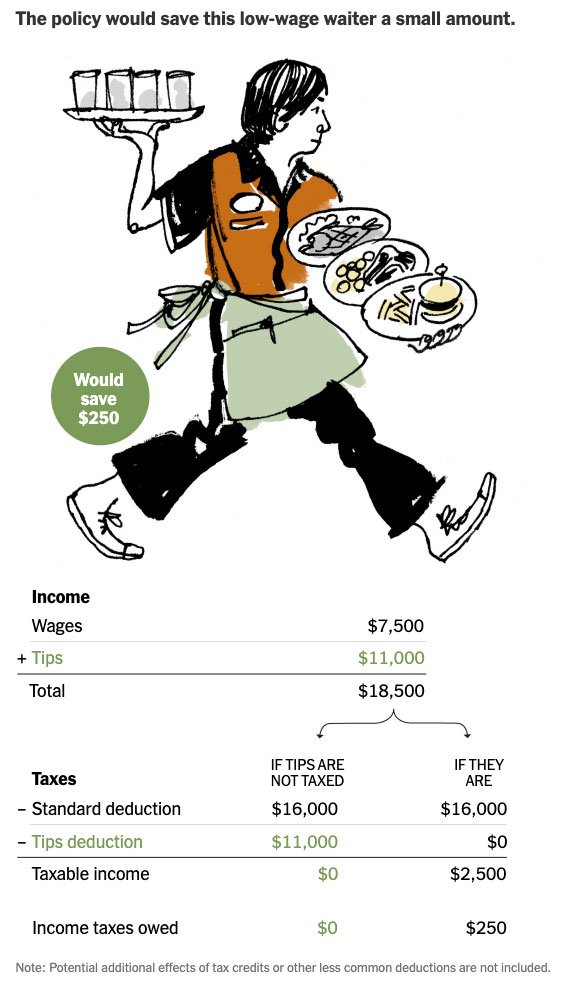 (graphic via The Upshot)
Discover more from The Randy Report
Subscribe to get the latest posts sent to your email.