The Washington Post
did a deep dive into five approaches used in “wellness spaces” to build connections, gain trust and sow doubt all seemingly in the name of “healthy living.” https://twitter.com/washingtonpost/status/1451566399260930052 From the Washington Post:
“This is what makes some in the wellness community so dangerous,” said Stephanie Alice Baker, a sociologist at City, University of London, who is careful to add that not everyone in the wellness space is trying to cast doubt on vaccines.
“It’s not that the wellness community per se is conspiratorial, or that everyone has these kinds of nefarious interests where they intend to manipulate and deceive,” she said.
“It’s that once you trust leaders and influencers in this space, then when they become more conspiratorial and extreme, you are susceptible to go down that path with them because you already trust them.”
. I totally recognize behavior described in the report. Here’s a brief encapsulation of the five approaches used by some in the wellness communities to spread misinformation about vaccines:  (image via Depositphotos)
• Encouraging skepticism of institutions
The online wellness community really found its footing as trust in traditional authorities, such as government, health and science institutions and mainstream media began to erode.
Those authorities may be replaced by nutritionists, physical trainers, lifestyle bloggers, spiritual coaches, naturopaths, yoga teachers and holistic health experts. Marketers say that sometimes micro-influencers (10,000 to 50,000 followers) and nanoinfluencers (fewer than 10,000 followers) may be seen as more truthful and authentic.
 (image via Pexels/Olya Kobruseva)
• Framing themselves as truth-seekers
Many in the wellness community present themselves as “truth-seekers” who may be in constant danger of being silenced by mainstream authorities or online moderators.
When their posts are flagged online they often claim they are victims of platforms are trying to “silence” them via “shadow-banning” or “Facebook jail.”
Sometimes, ‘truth-seeker’ framing helps influencers promote other therapies, like herbal tinctures and essential oils, which undergo far less regulation than vaccines, AND may pay an affiliate commission to the influencer.
 (photo: Pexels.Artem Podrez)
• Taking science out of context
“Do your own research” is a common refrain in anti-vaccination spaces. But, it’s often said by people “sharing links to sites that are very aligned in a particular way, usually an anti-vaccine way.”
They may also cherry pick data from a reputable source but use the information out of context or twist its true nature.
 (image via Pexels/Mikhail Nilov)
• Appealing to natural and holistic health interests
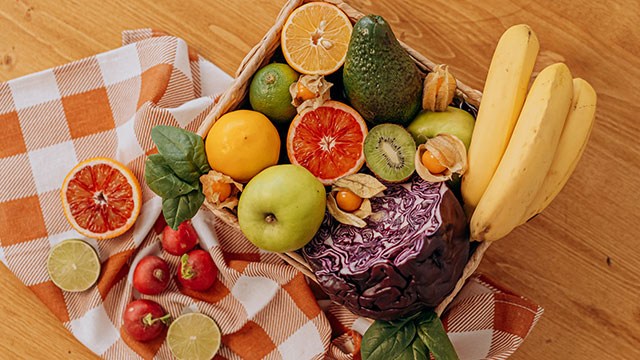
An interest in natural remedies and holistic health can be a gateway into the vaccine-hesitant community, experts said.
Some Instagram accounts may highlight natural and holistic living content, and then slip vaccine misinformation in between posts. This “blending” along with visually pleasing visuals like photos of food, flowers and landscapes as well as serene palettes and attractive fonts.
 (image via Depositphotos)
• Building community
Online wellness spaces also can feel like a welcoming community where people may affirm beliefs on a personal level, as opposed to scientific institutions might come off somewhat dry in sharing fact-based information.
In these communities, sharing self-care routines, or workouts, or daily activities can be viewed as “openness” and “relatable.”
Sharing personal moments via online interactions can create what experts call parasocial relationships, or a sense of closeness to a person you don’t actually know.
I personally have friends that I see living these approaches on social media every day. I highly encourage you to read the full article at the Washington Post.
Discover more from The Randy Report
Subscribe to get the latest posts sent to your email.