A photo posted by Stafford Arima (@staffordarima) on Apr 29, 2015 at 8:49am PDT
Breaking Down Supreme Court Oral Arguments For Marriage Equality
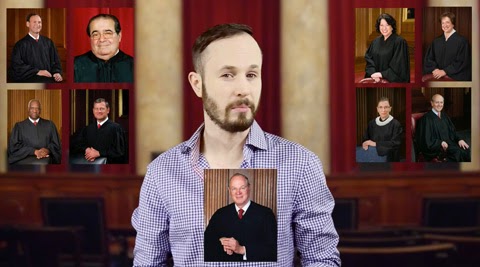
From Matt Buame:
What is the Supreme Court thinking about marriage?
They just heard oral argument from gay couples, from the states that want to preserve their bans, and from the US Government.
And we can make a couple guesses about what’s going through their heads.
Poll: Majority Of Iowans Now Support Same-Sex Marriage

A new PPP poll shows for the first time a majority of Iowa voters (50%) support marriage equality versus 41% who are opposed.
Every age group except seniors supports it and even with them favor for gay marriage has hit the 40% mark.
80% of voters in the state say that gay marriage being legal has either had a positive impact on their lives or none at all, with only 20% claiming it’s had a negative impact.
Even among the minority of voters who remain opposed to gay marriage, 55% admit it hasn’t actually had any dire effect on their lives.
Bolding is mine 🙂
LGBT Legal Experts Weigh In On Marriage Equality Arguments At SCOTUS
Chris Geidner of Buzzfeed:
At Tuesday’s marriage arguments over same-sex couples’ marriage rights, the majority of the court appeared to be comfortable with Justice Anthony Kennedy’s understanding of human dignity as including gay people’s equal treatment under the law.
While Kennedy, who is considered the key swing vote in the case, did not make any unambiguous statement about the end result of the case, he harshly questioned the state of Michigan’s argument that it should be allowed to exclude same-sex couples from marriage.
At one point, Kennedy commented to Michigan’s lawyer that its law banning same-sex couples from marrying “assumes” that those couples can’t have the same “more noble purpose” as opposite sex couples have for entering marriage.
Although questions were asked, including by Kennedy, about the length of the understanding of marriage as only an institution between one man and one woman, Kennedy also noted that “about the same time” passed between the Supreme Court’s decision ending “separate-but-equal” with regards to racial discrimination and its landmark decision ending interracial marriage as has passed between the Supreme Court’s decision ending sodomy laws and today’s arguments.
Chris Johnson of the Washington Blade:
(Justice) Kennedy, who write numerous gay rights cases for the Supreme Court including the 2013 decision against the Defense of Marriage Act, expressed a wariness about a decision instituting the right to gay nuptials across the country, saying a word to which he keeps returning on marriage is “millennia.”
“This definition has been with us for millennia, and it’s very difficult for the court to say we know better,” Kennedy said.
But Kennedy also offered a contrasting view when John Bursch, the Michigan attorney defending a state’s right to refuse marriage licenses to same-sex couples, delivered his arguments.
Bursch drew upon as an example of need for the law number of children being born out of wedlock, saying since 1970, the out-of-wedlock birth rate has gone from 10 percent to 40 percent, but Kennedy shot back, insisting that statistic “cuts quite against” having a ban on same-sex marriage.
“Under your view, it would be very difficult for same-sex couples to adopt these children,” Kennedy said.
In a discussion about the benefits of marriage, Kennedy also spoke about same-sex couples wanting access to the institution because it has a “noble purpose” and is a “dignity that can be fulfilled.”
Adam Liptak of the New York Times:
Justice Kennedy said he was concerned about changing a conception of marriage that has persisted for so many years. Later, though, he expressed qualms about excluding gay families from what he called a noble and sacred institution. Chief Justice John G. Roberts Jr. worried about shutting down a fast-moving societal debate.
Justice Samuel A. Alito Jr. asked whether groups of four people must be allowed to marry, while Justice Antonin Scalia said a ruling for same-sex marriage might require some members of the clergy to perform ceremonies that violate their religious teaching.
Justice Stephen G. Breyer described marriage as a fundamental liberty. And Justices Ruth Bader Ginsburg and Elena Kagan said that allowing same-sex marriage would do no harm to the marriages of opposite-sex couples.
Full Audio From SCOTUS Oral Arguments On Same-Sex Marriage
Full audio of the U.S. Supreme Court’s Question 1 argument on whether the U.S. Constitution requires states to issue marriage licenses to same-sex couples. The full transcript can be read here.
And here’s the audio for Question 2 regarding whether the U.S. Constitution requires states to respect marriage licenses issued to same-sex couples legally in other states. Full transcript for Question 2 can be read here.
(via Freedom To Marry)
SCOTUS: Swing Vote Justice Kennedy Sends Mixed Messages On Marriage Equality
Reuters correspondent David Ingram reports from the live oral arguments for same-sex marriage at the Supreme Court.
Assumed “swing-vote” Justice Kennedy mentioned the idea that marriage has been the same for “millenia:”
Kennedy: “This definition has been with us for millenia, and I think it’s very difficult for this court to say we know better.” #SCOTUS
— David Ingram (@David_Ingram) April 28, 2015
Kennedy multiple times talked about marriage being the same for “millenia.” He said he “kept coming back” to that thought. #ReutersSCOTUS
— David Ingram (@David_Ingram) April 28, 2015
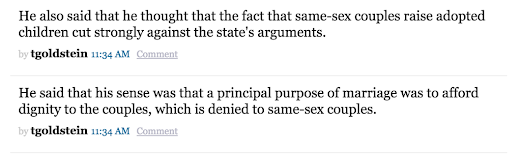
Later, Kennedy offered a couple of encouraging signs as he noted that a principal purpose of marriage was to afford dignity, which is denied to same-sex couples. He also said the fact that same-sex couples raise children hurt state’s arguments against marriage equality. Via SCOTUSblog:

Typewriter Rodeo: A Wall Of 5 Men
For today’s #scotus #gaymarriage args. #lgbt #love. pic.twitter.com/AgN8dNbtwq
— Typewriter Rodeo (@TypewriterRodeo) April 28, 2015
As SCOTUS Considers Marriage Equality, A Look At The High-Stakes
|
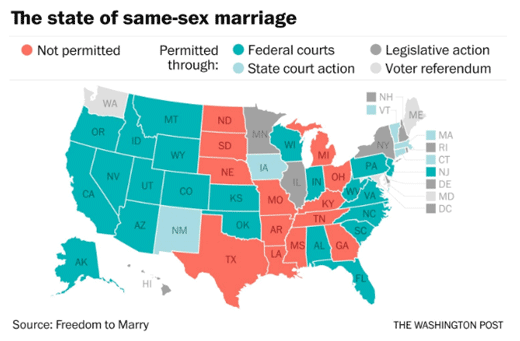
| The dark green indicates states where marriage equality is permitted via federal court rulings. Should we lose at SCOTUS, these could be thrown into disarray. |
I’m cautiously hopeful today as oral arguments take place at the U.S. Supreme Court over marriage equality.
Most observers, even haters, have a measured expectation that SCOTUS will rule in favor of same-sex marriage. Mainly because they seemed to have indicated a leaning in our favor by allowing states to permit same-sex marriage last fall while the appeals were flying fast and furious.
Surely the court wouldn’t allow tens of thousands of marriages to take place if they didn’t think they would rule in favor? The results of ruling against same-sex marriage now would be a mess of catastrophic proportions.
The Washington Post today imagines the worst case scenario should we – horrors! – not prevail.
“It would be a mess,” said Dale Carpenter, a professor of constitutional law at the University of Minnesota, noting that marriage confers 1,100 rights and benefits at the federal level and hundreds more from the states, from filing taxes jointly to inheriting hunting licenses. “There would be great uncertainty in the aftermath of such a ruling. All kinds of possibilities we can’t even think of would arise.”
The effect would be explosive in the 21 states where same-sex-marriage bans were struck down by federal courts. Groups for and against these unions say such a decision would set off a cascade of fresh litigation and spark dramatic new fights in state capitals, with each side jockeying to have its version of marriage enshrined in state law.
Some legal experts say the old laws in those states would snap back into place, immediately shutting the door on future marriages, while others contend that would require another round of litigation. Some believe the thousands of marriages that have taken place in those states would be deemed valid, though others think the matter would need to be settled by the courts — perhaps even the Supreme Court.
In states such as Oregon, where the political climate has become more favorable to gay marriage in recent years, there probably would be a scramble to enact legislation to allow same-sex marriages.
But the process could be more drawn out in places such as California, whose prohibition on same-sex marriage was part of the state constitution. If that ban was reinstated as a result of a Supreme Court decision, a voter referendum would be needed to get rid of it.
Elsewhere, the battles could be more pitched. In Virginia and Pennsylvania, for instance, freshly minted Democratic governors may resist attempts to revert to old laws, potentially clashing with conservative state lawmakers.
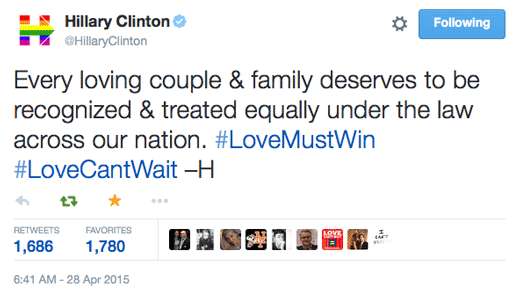
Hillary Clinton Tweets Support For Marriage Equality At SCOTUS
Today: Marriage Equality At The Supreme Court
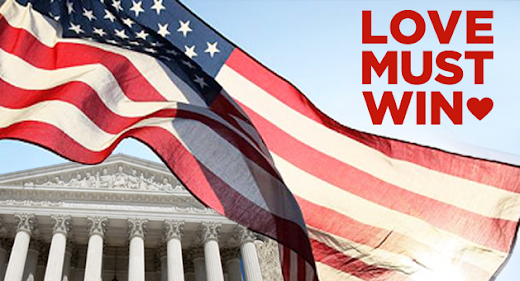

The U.S. Supreme Court hears oral arguments today in the cases that could bring the freedom to marry to same-sex couples nationwide.
Check back here throughout the day and join the conversation on Twitter with #SCOTUSmarriage.