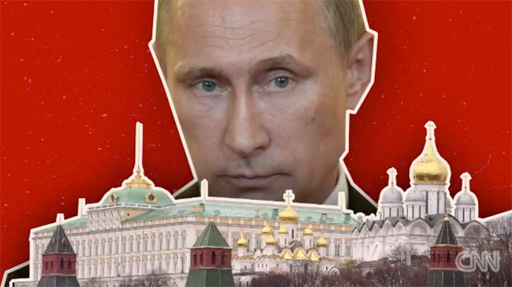
Washington Post: Intel Agencies Had Proof Putin Ordered Russian Interference

Bombshell reporting from the Washington Post this morning on the Russian interference in the 2016 elections, including the confirmation that U.S. intelligence officials captured Putin’s specific instructions to disrupt the elections.

It’s a long read, but very worth it. The Post reporters chronicle each chapter of the Russian attack from the day President Obama was informed, to the very closed circle of high level officials who dealt with the issue, to how the public was finally informed.

The report consists of interviews with more than three dozen current and former U.S. officials in senior positions in government, including at the White House, the State, Defense and Homeland Security departments, and U.S. intelligence services.

Of particular note:

• Former administration officials admit that the sense of urgency was “contained” to some degree because a Clinton win was expected by virtually everyone. Obama continued to believe he would be handing over the Oval Office to Hillary. There was concern that coming forward with the details of Russian interference would further Trump’s cries of a “rigged election.”

• Obama ordered the planting of digital cyber-bombs in Russia’s infrastructure to be used at a later date should frictions escalate. It was left to President Trump whether or not to ever use them.

Here’s just an excerpt of the article:

Early last August, an envelope with extraordinary handling restrictions arrived at the White House. Sent by courier from the CIA, it carried “eyes only” instructions that its contents be shown to just four people: President Barack Obama and three senior aides.

Inside was an intelligence bombshell, a report drawn from sourcing deep inside the Russian government that detailed Russian President Vladi­mir Putin’s direct involvement in a cyber campaign to disrupt and discredit the U.S. presidential race.

But it went further. The intelligence captured Putin’s specific instructions on the operation’s audacious objectives — defeat or at least damage the Democratic nominee, Hillary Clinton, and help elect her opponent, Donald Trump.

The CIA breakthrough came at a stage of the presidential campaign when Trump had secured the GOP nomination but was still regarded as a distant long shot. Clinton held comfortable leads in major polls, and Obama expected that he would be transferring power to someone who had served in his Cabinet.

[sic]

Obama’s approach often seemed reducible to a single imperative: Don’t make things worse. As brazen as the Russian attacks on the election seemed, Obama and his top advisers feared that things could get far worse.

They were concerned that any pre-election response could provoke an escalation from Putin. Moscow’s meddling to that point was seen as deeply concerning but unlikely to materially affect the outcome of the election. Far more worrisome to the Obama team was the prospect of a cyber-assault on voting systems before and on Election Day.

They also worried that any action they took would be perceived as political interference in an already volatile campaign. By August, Trump was predicting that the election would be rigged. Obama officials feared providing fuel to such claims, playing into Russia’s efforts to discredit the outcome and potentially contaminating the expected Clinton triumph.

I haven’t bought into actual collusion theories between the Trump campaign and Russia before, but this morning I do wonder: how did Trump happen to begin dropping the “rigged election” comments when he did? Was that the collusion? Did Russia tell the Trump campaign to get out ahead of the Obama administration with the “rigged” comments expecting it might silence the administration?
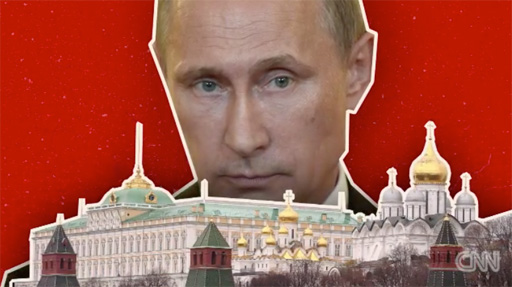
Putin: “Patriotically Minded” Private Russian Hackers Could Have Interfered In U.S. Election

Russian President Vladimir Putin admits “patriotically minded” private Russian hackers could have been involved in U.S. election interference.

Via the New York Times:

Raising the possibility of attacks by what he portrayed as free-spirited Russian patriots, Mr. Putin said that hackers “are like artists” who choose their targets depending how they feel “when they wake up in the morning.”

“If they are patriotically minded, they start making their contributions — which are right, from their point of view — to the fight against those who say bad things about Russia,” he added.

His remarks echoed ones by Mr. Trump, who has dismissed accusations of Russian meddling and said that the person responsible for the attack on the Democratic National Committee “could be somebody sitting on their bed that weighs 400 pounds.”

The firing of James B. Comey as director of the F.B.I. has led several lawmakers to call for an independent investigator or commission on top of the current investigations into potential links between Russia and the Trump campaign.

All the same, Mr. Putin stuck firmly to earlier denials that Russian state bodies or employees had been involved, an accusation leveled by United States intelligence agencies. They concluded in January that Mr. Putin himself had directed a Russian “influence campaign” involving cyberattacks and disinformation intended to tilt the November election in Mr. Trump’s favor.

Putin also theorizes that “someone” could be creating a fake trail back to Russia with today’s technology.

Riiiiiight.

Trump Attorney Declines “Invitation” To Provide Information Regarding Russia

Michael Cohen

One of Donald Trump’s personal lawyers, Michael Cohen, has received and declined an “invitation to provide information and testimony” regarding the current investigation into contact between the Trump campaign and Russian officials.

From CNN:

“I declined the invitation to participate, as the request was poorly phrased, overly broad and not capable of being answered,” Cohen told CNN Tuesday, adding that he considered it a “total fishing expedition.”

“They have yet to produce one single piece of credible evidence that would corroborate the Russia narrative,” Cohen said. He called the investigation a “rush to judgment.”

Cohen is the second person in Trump’s orbit to flatly deny a request from congressional investigators. Former national security adviser Michael Flynn refused to respond to a Senate subpoena and rebutted a House request last week through his lawyer.

Washington Post: Jared Kushner Is Now A Focus In Russian Investigation

The Washington Post is reporting that President Trump’s son-in-law, Jared Kushner, has become a focus in the current investigation into possible ties between the Trump campaign and Russia.

Kushner, who held meetings in December with the Russian ambassador and a banker from Moscow, is being investigated because of the extent and nature of his interactions with the Russians, the people said.

The Washington Post reported last week that a senior White House official close to the president was a significant focus of the high-stakes investigation, though it did not name Kushner.

FBI agents also remain keenly interested in former Trump national security adviser Michael Flynn and former campaign chairman Paul Manafort, but Kushner is the only current White House official known to be considered a key person in the probe.

The Post has not been told that Kushner is a target — or the central focus — of the investigation, and he has not been accused of any wrongdoing. Target is a word that generally refers to someone who is the main suspect of investigators’ attention, though prosecutors can and do bring charges against people who are not marked with that distinction.

According to reports, Kushner did not include December meetings with Russian officials on his security clearance forms.

Trump Asked Intelligence Chiefs To Deny Any Evidence Of Russian Collusion During 2016

President Trump

Apparently, when then-FBI Director James Comey failed to comply with President Trump’s request to “drop” the investigation into former National Security Adviser Michael Flynn’s communication with Russia, Trump turned to the Director of National Intelligence and the National Security Agency Director for similar favors.

In separate appeals, Trump asked them to publicly deny the existence of any evidence of collusion during the 2016 election.

They declined.

From CNN:

The President’s treatment of Comey has raised questions about whether he abused his powers by seeking to discredit the FBI investigation or risked giving the impression that he was obstructing justice, a debate now given new life by the latest revelations.

Trump spoke to Director of National Intelligence Dan Coats and National Security Agency Director Adm. Michael Rogers after Comey revealed in March that the bureau had launched a probe into alleged collusion. Both Coats and Rogers were uncomfortable with the nature of the President’s request and refused to comply, the sources with knowledge of the situation told CNN.

Coats declined to comment during a Senate armed services committee hearing Tuesday, that had been previously scheduled.

The White House declined to comment on the details of Trump’s contacts with Rogers and Coats.

The revelations deepen the intrigue over alleged links between Trump’s campaign and Russia, and follow the President’s firing of Comey and subsequent statement he sacked him because of the Russia probe.

After the first story regarding Trump and Comey, you could almost buy into a “well, he’s new with governmental politics.” “He’s a little naive about how these things work.”

But bouncing from Comey to Coats to Rogers, clearly Trump knew he was asking something far outside normal protocol.