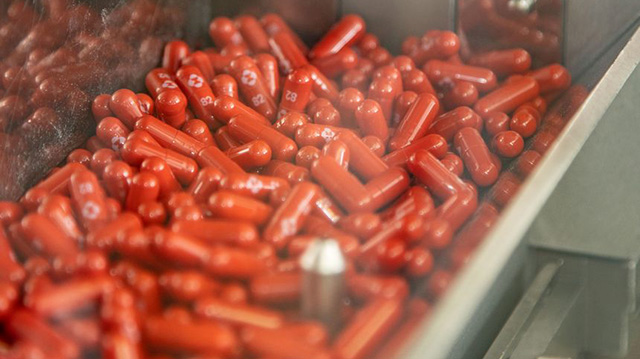
An experimental pill developed by Merck to treat COVID-19 has done so well in late-stage clinical trials – reducing risk of hospitalization and death by nearly half – that an independent board of experts recommended stopping the trial early. https://twitter.com/DrEricDing/status/1443880627837734946 From the Washington Post:
A global trial of the pill enrolled 775 people with mild or moderate covid-19. Participants had at least one risk factor for severe covid-19, such as obesity or advanced age. They had to start the drug regimen within five days of symptom onset and be unvaccinated.
Half of study participants received the drug and half received a placebo. No deaths were reported among people receiving the drug, but eight deaths were recorded among those who received a placebo. The rate of hospitalization and death in people who received the drug was 7.3 percent — about half the level for those who received a placebo.
The treatment consists of taking one pill twice a day for five days. The company predicts it will make 10 million courses of treatment by the end of the year. It’s important to note that a previous study showed the antiviral had little effect when given to patients already hospitalized with severe disease. As the new study shows, the drug seems to work best in mild to moderate cases. Merck and partner Ridgeback Biotherapeutics have announced they are applying for emergency use authorization for the new drug – molnupiravir – in the U.S. as soon as possible. This would be the first oral antiviral medication developed for use against COVID-19. The U.S. has agreed to pay Merck $1.2 billion for 1.7 million courses of treatment, should the FDA green light use of molnupiravir. Merck has already licensed the medication to 5 generic drug manufacturers to speed availability in low/middle income countries, many of which have struggled to obtain vaccine doses. https://twitter.com/AP/status/1443880234965667886 An easy-to-prescribe pill that would keep mild or moderate cases of COVID-19 from turning more deadly would be a huge boon in the fight against the coronavirus. The vaccines have been very effective but remain limited for many countries. And monoclonal antibodies have shown to be effective but require injections or infusions and are expensive. The Post also reports that Pfizer and Atea Pharmaceuticals (working with pharmaceutical giant Roche) are also developing oral antiviral drugs. https://twitter.com/Reuters/status/1443893520759132182
Discover more from The Randy Report
Subscribe to get the latest posts sent to your email.