
Observed each year on December 1 since 1988, World AIDS Day is an opportunity for people worldwide to unite in the fight against HIV.
The annual event, the first-ever global health day, serves as an expression of support for people living with HIV, and to commemorate those who passed from the virus.
Research shows that spreading awareness genuinely works in reducing HIV stigma.
When people understand the facts, fear drops and support grows. On this World AIDS Day 2025 let’s keep educating, and talking openly. Awareness isn’t just information, it’s protection, empowerment, and change.
Being diagnosed with HIV today means something very different than it did 20 or 30 years ago. HIV is no longer a death sentence.
During this brief episode of The Randy Report podcast from 2023, I take a look into the history of the day, how the world looks at the ongoing epidemic, and the future of treatment.
During his administration, President Joe Biden took several steps to bring an end to HIV/AIDS ranging from reestablishing the White House Office of National AIDS Policy to launching a new National HIV/AIDS Strategy – a roadmap for using innovative community-driven solutions to end the HIV/AIDS epidemic in the United States by 2030.
The Biden administration also ended the disgraceful practice of banning gay and bisexual men from donating blood.
Things are different under the current Trump administration. Not only are budgetary cuts affecting the fight against AIDS, the Trump administration has announced the U.S. federal government won’t even recognize World AIDS Day today.
In any case, here’s a snapshot of where we are today in the fight against HIV/AIDS.
From the World Health Organization:
• In 2024, an estimated 40.8 million people were living with HIV globally
• Approximately 630 000 people died from HIV‑related causes in 2024
• An estimated 1.3 million people acquired HIV in 2024
But there’s good news – the new drug Lenacapavir could change everything because instead of taking daily pills, people can now get injections every six months. Studies show the twice-yearly shot can reduce transmission of HIV by 96%.
At the time where funding for HIV is limited, Lenacapavir looks to be a huge game-changer.
For more information about HIV/AIDS, check out Help Stop The Virus.
Each year, I make a point to read a couple of essays by writers much more talented than myself. They share these collections of words that capture a time now in the rearview mirror.
Even when moving forward, it’s important to check in on the past.
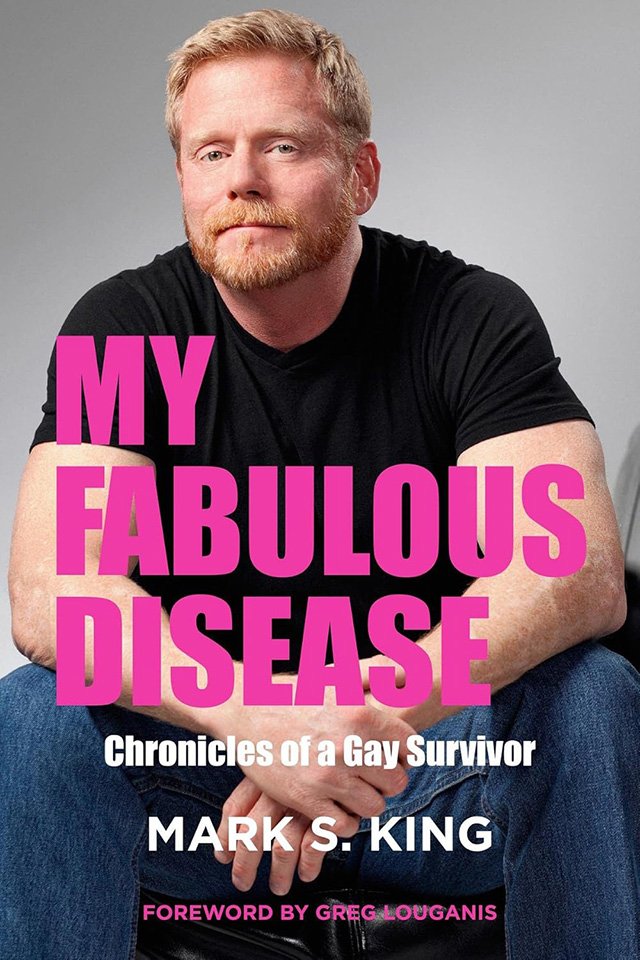
Writer Mark S. King was honored by the National Lesbian Gay Journalists Association for an essay he originally penned in 2007 about the courage he was forced to summon at a time when folks were holding to the ground as the ground kept shifting.
He’s now turned years of brilliantly penned blog posts into an excellent book, My Fabulous Disease: Chronicles of a Gay Survivor. Here’s a brief excerpt:
The truth is simply this, and no one will convince me otherwise: My most courageous self, the best man that I’ll ever be, lived more than two decades ago during the first years of a horrific plague.
He worked relentlessly alongside a million others who had no choice but to act. He secretly prayed to survive, even above the lives of others, and his horrible prayer was answered with the death of nearly everyone close to him.
To say I miss that brutal decade would only be partially true. I miss the man I was forced to become, when an entire community abandoned tea dances for town hall meetings, when I learned to offer help to those facing what terrified me most.
Today, the lives of those of us who witnessed the horror have become relatively normal again, perhaps mundane. We prefer it. We have new lives in a world that isn’t choking on disease.
But once, there was a time when we were heroes.
Also – each year Joe Jervis of JoeMyGod shares his moving personal essay “Membership,” originally penned in 2004.
The post chronicles a chapter in his life from 1985 when he and his friends suddenly joined a “new and modern group” of people who were forced to grieve much earlier than they should have. I highly recommend it.
Membership: A Memory For World AIDS Day https://t.co/PfBTzkyUb0 pic.twitter.com/c3iUhVTWTw
— JoeMyGod (@JoeMyGod) December 1, 2025
Discover more from The Randy Report
Subscribe to get the latest posts sent to your email.